Provenance & certification

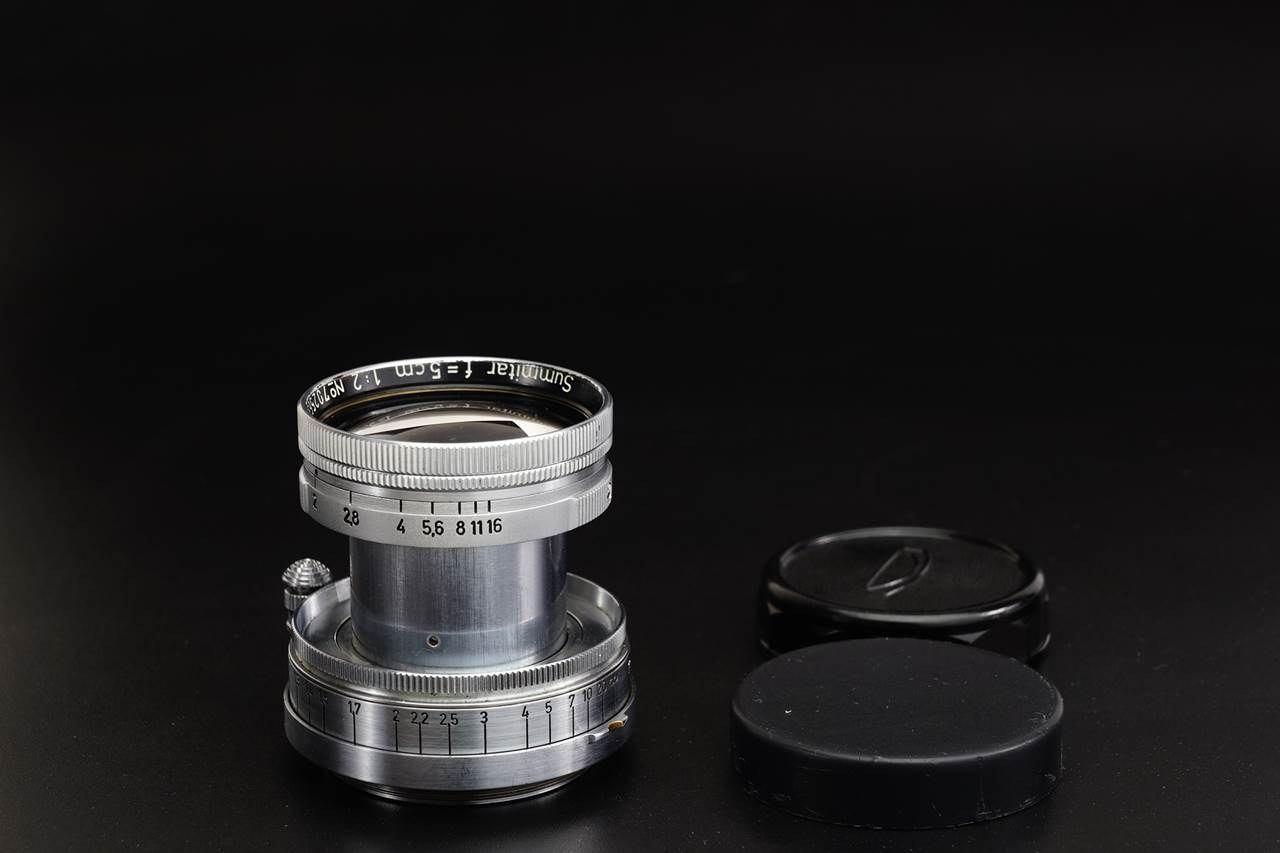
Leica Summitar 50mm f2
Want one like this? Message us directly — we can source it.
Condition assessed 20/1/2026
How we gradeInspector’s condition notes
This Summitar 50mm f/2 lens is in good condition. It was first produced in 1939, with the final units manufactured in 1953. Based on the serial number, this lens was made in one of Leica's earliest production runs and is at least 70 years old. This is the 10-blade version, which is more popular than the 6-blade version (the 6-blade version often suffers from mechanical issues and is not as durable as the 10-blade version). With 10 blades, the bokeh appears round. The front element uses Lanthanum glass, similar to the Summicron, which makes the glass soft and prone to cleaning marks. However, in this particular copy, the marks are barely visible to the naked eye — you have to look carefully to spot any faint traces. The key highlight of this lens is its high sharpness and excellent ability to render fine details. Color rendition and contrast are also at a good level. It is another lens worthy of collecting. As for the mechanics, the focus remains smooth. The aperture blades can still be adjusted at every f-stop. This lens is collapsible, so it must be extended out before each use before you can shoot. For a lens of this age with such soft front glass, finding one in this condition means it must have been very well cared for over the years. *Lanthanum is a mineral used as an ingredient in older lenses. It helps improve the lens's optical properties, increasing sharpness across the frame, equivalent to modern LD (low dispersion) lenses. The optical is in perfect condition, free of scratches, but has more dust than usual, though this does not affect photos. The focus and aperture ring operate as smoothly as a new lens. Internal components are solid, with no sound of internal elements shifting. The exterior of the lens body is like new, but there are 2-3 small areas of paint loss or scratches around the lens barrel edges or near the focus ring and aperture ring (you have to look carefully to notice them).
How this lens renders
Compared to 50mm lenses of the same spec from the same era, the Summitar f/2 was Leitz's finest normal lens before the Summicron took over in 1952. The lens is collapsible — very compact and easy to carry. Wide open at f/2, the center is tack-sharp in true Leica fashion, while the edges go soft in the typical style of lenses from that period. Stop down to f/2.8 through f/8, and sharpness climbs steadily across the full frame. Overall contrast is lower than modern lenses, giving a soft, filmic tonality that's a pleasure to grade in post. And thanks to the larger front element design compared to the Summar, light falloff at the edges is reduced, making it well-suited to color work right from its earliest days. One thing to note about this version is that the front lens element is made of soft glass that scratches easily, so when cleaning, wipe gently and carefully. As for flare — if you'd rather avoid it, I'd recommend using a lens hood when shooting into the light. But if you learn to work with the light, you get a classic look that modern lenses simply can't replicate. All in all, a classic Leica lens worth collecting — and one that still pulls its weight in actual use.
In the box
ฝาหน้าเทียบ ฝาหลังเทียบ
Honest disclosure
Leica Summitar 50mm f2
The Leica Summitar 50mm f/2 was Ernst Leitz's highest-performance normal lens from 1939 until replaced by the Summicron in 1952/1953, a compact collapsible screw-mount classic with sharp center rendering and gentle vintage character.

What this lens can do
Example photos of this lens model, gathered from around the web — not shots of this exact copy.