Production
1939 – 1953
Country
-
Optical
7 elements in 4 groups
Updated
Jul 1, 2026
Leica Screw (L39) · 50mm · f/2
Production
1939 – 1953
Country
-
Optical
7 elements in 4 groups
Updated
Jul 1, 2026
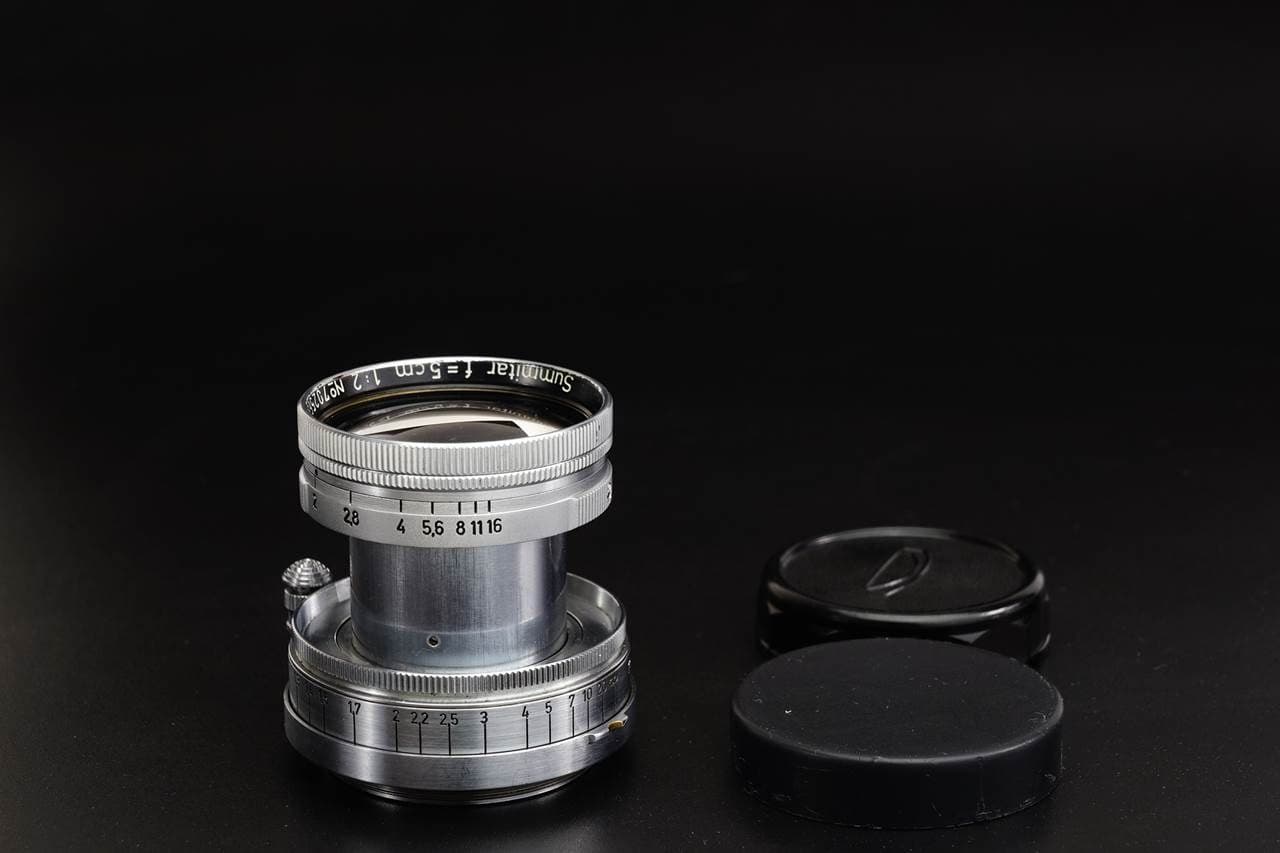
The Leica Summitar 50mm f/2 was Ernst Leitz's highest-performance normal lens from its introduction in 1939 until it was replaced by the Summicron in 1952/1953. It was developed as the successor to the earlier Summar 50mm f/2 (1933-1939), which had been 'the hot, must-have LEICA lens' of its era. According to the reviews, the Summitar used much larger front optical components than the Summar to greatly reduce mechanical vignetting and light falloff, something Leica pitched as especially important for the emerging field of color photography, for which the Summitar was said to be particularly well suited. The front group was upgraded from the Summar's single front element to two cemented elements. Production ran roughly 1939-1953 (one reviewer notes copies made through 1955), with pre-war examples being uncoated and lenses from about 1946 (around serial nr. 601,001) receiving a single blue coating on the front element. No established nicknames or community jargon are evidenced in these reviews. It retains a following largely for being a compact, collapsible, character-rich vintage 50mm that is very sharp in the center yet renders with a gentler, lower-contrast quality than modern optics.
Verdict: The Leica Summitar 50mm f/2 is a compact, collapsible classic that rewards photographers who want a genuinely sharp yet characterful vintage normal lens. It offers strong central sharpness with a gentle, lower-contrast rendering that suits portraiture, plus improved light falloff over the Summar. It is best for character-seekers who accept vintage quirks: soft, scratch-prone front glass, potential haze, stiff old lubrication, and flare from early coatings. If you want clinical modern perfection, look to the later Summicron; if you want vintage rendering in a tiny package, the Summitar delivers.
Considered particularly well suited to early color work due to reduced light falloff; specific palette unknown.
Extremely sharp in the center, softer on the sides/corners compared to modern Leica lenses.
Uncoated/early single-coated examples are prone to flare, especially in bright conditions; use of a hood advised.
Lower overall contrast than modern lenses, yielding a gentle rendering rather than harsh high contrast.
Designed with larger front elements than the Summar to greatly reduce mechanical vignetting and light falloff.
The Leica Summitar 50mm f/2 is a compact, collapsible classic that rewards photographers who want a genuinely sharp yet characterful vintage normal lens. It offers strong central sharpness with a gentle, lower-contrast rendering that suits portraiture, plus improved light falloff over the Summar. It is best for character-seekers who accept vintage quirks: soft, scratch-prone front glass, potential haze, stiff old lubrication, and flare from early coatings. If you want clinical modern perfection, look to the later Summicron; if you want vintage rendering in a tiny package, the Summitar delivers.