Production
1971
Country
Japan
Optical
-
Updated
Jul 17, 2026
Canon FD · 35mm · f/3.5
Production
1971
Country
Japan
Optical
-
Updated
Jul 17, 2026
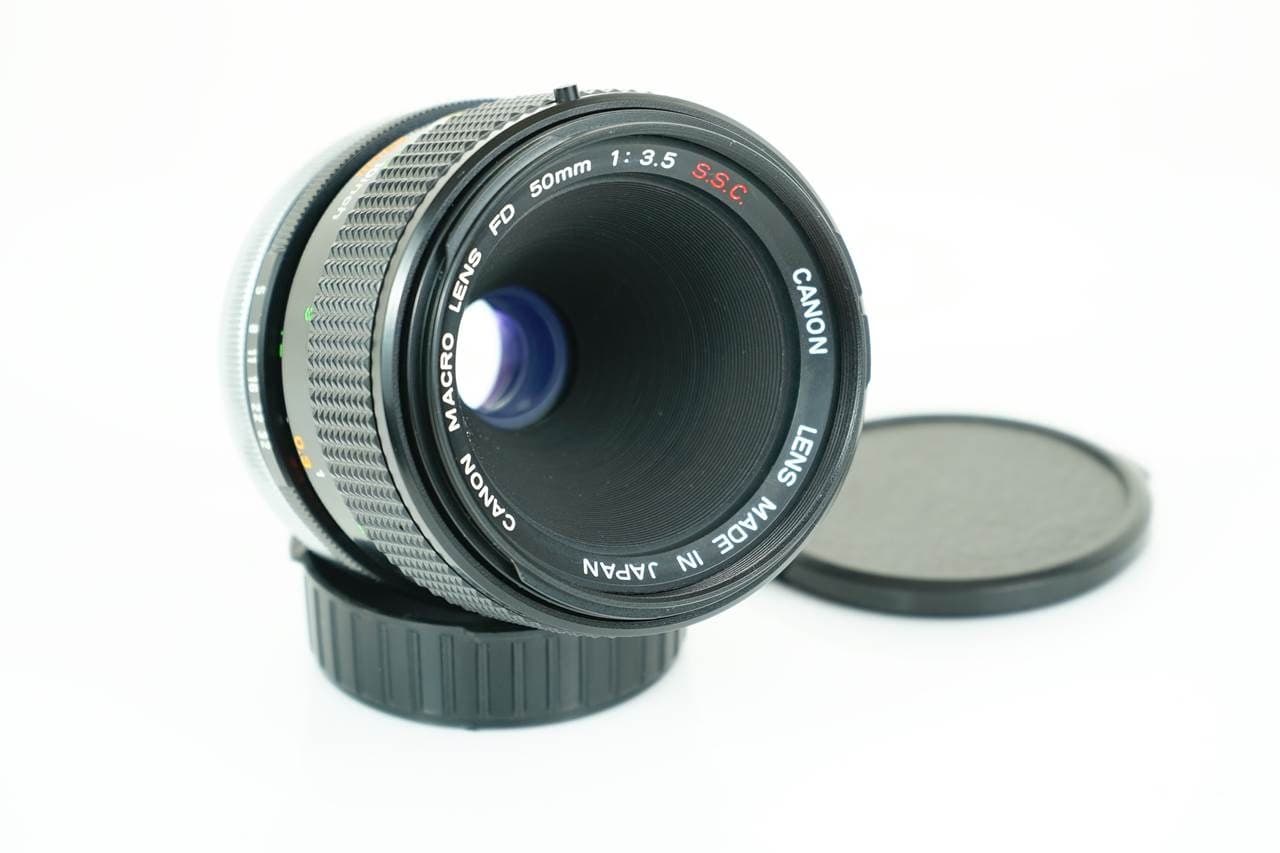
Canon FD is not a single lens but Canon's manual-focus SLR lens mount, introduced in 1971 and produced into the 1980s. The system split across two generations: the original breech-lock FD (where a knurled locking ring was turned to secure the lens) and the later New FD bayonet, which kept the same optical communication but adopted a conventional bayonet-style mount. Across the range the lenses earned a reputation for solid, all-metal construction, smooth and well-damped focus and aperture rings, strong value, and a distinctly vintage rendering signature. Canon differentiated its coatings openly on the barrel: single-coated optics were marked S.C., while the improved multi-coated versions carried the S.S.C. mark for Super Spectra Coating, which cleaned up contrast and flare. The reviews do not establish a single universal nickname for the FD family; certain individual optics — notably the 85mm f/1.2 Aspherical — are described as 'legends,' but that status is model-specific rather than a name for the whole line. The cult following is real and largely driven by two audiences: filmmakers, who prize the manual aperture rings and the character, and adapted-mirrorless shooters, who value the same qualities plus the vintage look and the still-reasonable prices. The standout is the fast normal, the 50mm f/1.4 S.S.C., celebrated for creamy bokeh and a dreamy soft glow wide open that sharpens dramatically once stopped down.
Verdict: Canon FD is a system, not a single lens, so the right buyer depends on the model — but the throughline is vintage character with genuine optical reward when stopped down. The fast normals, led by the 50mm f/1.4 S.S.C., are ideal for shooters who want a dreamy, glowing wide-open look that snaps into Planar-like sharpness from f/2.8, making them a favorite of filmmakers and adapted-mirrorless photographers who value manual aperture rings and rendering over clinical perfection. Wide-angle FD glass is more of a mixed bag, with busier bokeh and weaker flare control, so pick by specific model. If you want well-built, smooth-handling vintage optics with real character and strong value, the FD range delivers — just choose the model that matches the look you're after.
Real adapters from our shop that fit this lens mount.
Standard · ฿540 · In stock
Standard · ฿540 · In stock
Standard · ฿540 · In stock
Standard · ฿1,250 · In stock
Premium · ฿1,200 · Out of stock
Standard · ฿890 · Out of stock
Standard · ฿890 · Out of stock
Standard · Out of stock
Standard · Out of stock
Standard · Out of stock
Canon FD is a system, not a single lens, so the right buyer depends on the model — but the throughline is vintage character with genuine optical reward when stopped down. The fast normals, led by the 50mm f/1.4 S.S.C., are ideal for shooters who want a dreamy, glowing wide-open look that snaps into Planar-like sharpness from f/2.8, making them a favorite of filmmakers and adapted-mirrorless photographers who value manual aperture rings and rendering over clinical perfection. Wide-angle FD glass is more of a mixed bag, with busier bokeh and weaker flare control, so pick by specific model. If you want well-built, smooth-handling vintage optics with real character and strong value, the FD range delivers — just choose the model that matches the look you're after.