Production
1969
Country
Japan
Optical
-
Updated
Jul 14, 2026
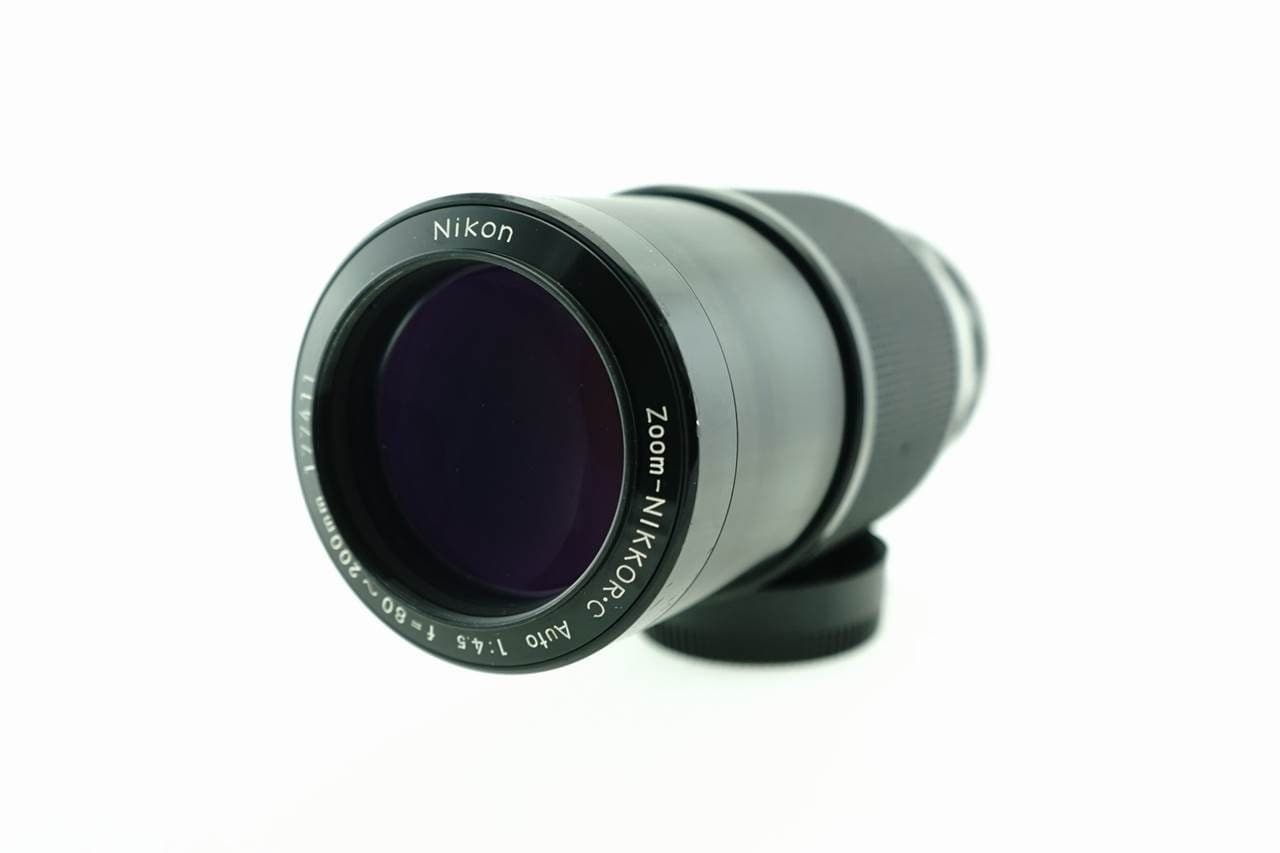
Nikon Non-AI · 80mm · f/4.5
Production
1969
Country
Japan
Optical
-
Updated
Jul 14, 2026
Introduced in December 1969, the Zoom-Nikkor 80-200mm f/4.5 Auto holds a genuine place in photographic history as the first 80-200mm zoom lens ever made — the design that established the template every modern 70-200mm telephoto still follows. At a time when serious photographers dismissed zooms as an optical compromise, this lens delivered prime-rivaling results and, in the words of the reviewers, became 'the zoom that changed many people's attitude towards zoom lens quality.' Bjørn Rørslett is quoted saying it 'delivered outstandingly sharp pictures,' and Moose Peterson noted that sharpness even wide open is excellent across every version. It has no established proper nickname; the only jargon attached to it is generic and mechanical — it is a 'pumper' or 'pumper-zoom,' referring to its one-touch push-pull zoom action, and the wear trait where that action loosens over time is called 'zoom slap' or 'zoom-creep.' Its cult following rests on that historical firsts status combined with tough, beautifully made construction and a rendering that flatters foliage and portraits without harshness — a professional-grade compact telephoto zoom that earned the respect zooms had previously been denied.
Verdict: This is a lens for the photographer who values smoothness and sharpness over spectacle, and who appreciates handling a genuine milestone — the zoom that made zooms respectable. Its rendering is honest and flattering: bitingly sharp in the centre even wide open, with creamy, non-harsh bokeh that treats foliage kindly. You accept its era-appropriate flaws — notable distortion, some colour fringing, and weak flare resistance — in exchange for a tough, beautifully built classic telephoto zoom with a character that still holds up. Best suited to portrait and nature shooters who work in controlled or soft light and want a gentle, sharp, classic look.
Smooth, creamy bokeh that renders foliage without ugly superimposed lines and won't render anything harshly.
Good, pleasing colour rendering, though older coatings can invite colour fringing in uncontrolled conditions.
Outstandingly sharp in the centre even wide open, with stopping down improving little; excellent across every version.
Rather poor resistance to flare and ghosts from the older coatings, prone to ghosting into the sun; improved in the .C and 12-element versions.
Global contrast limited by older coatings, reduced when shooting into light; improved somewhat in .C and later versions.
Real adapters from our shop that fit this lens mount.
Standard · ฿325 · In stock
Standard · ฿385 · In stock
This is a lens for the photographer who values smoothness and sharpness over spectacle, and who appreciates handling a genuine milestone — the zoom that made zooms respectable. Its rendering is honest and flattering: bitingly sharp in the centre even wide open, with creamy, non-harsh bokeh that treats foliage kindly. You accept its era-appropriate flaws — notable distortion, some colour fringing, and weak flare resistance — in exchange for a tough, beautifully built classic telephoto zoom with a character that still holds up. Best suited to portrait and nature shooters who work in controlled or soft light and want a gentle, sharp, classic look.