Production
1980
Country
-
Optical
15 elements in 9 groups
Updated
Jul 4, 2026
Canon FD · 100mm · f/5.6
Production
1980
Country
-
Optical
15 elements in 9 groups
Updated
Jul 4, 2026
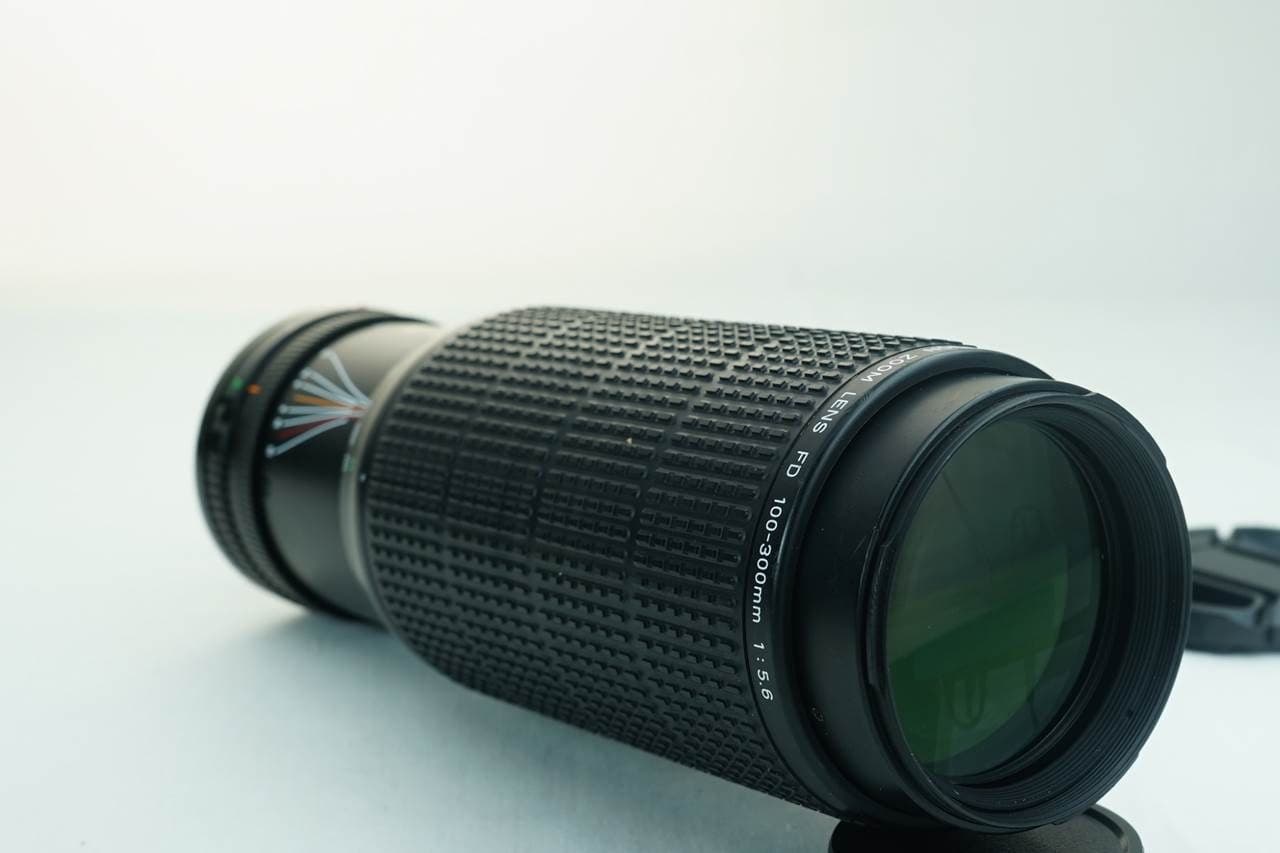
The Canon New FD 100-300mm f/5.6 was introduced in 1980 as an affordable, entry-level telephoto zoom for Canon's FD-mount SLR system. It was designed to give amateur photographers a long focal range at a modest price rather than to compete with Canon's premium optics. The reviews note it was produced as an affordable, large-focal-length zoom, and its cheap used prices (copies found mint for around €50) reflect that its appeal today is budget-driven vintage experimentation. Some adapted-lens users on modern mirrorless bodies (such as the Sony NEX-7) have found it a surprisingly capable performer for the money, praising its sharpness and color, while others find its performance at the long end disappointing. No established nicknames or community jargon are evidenced in the reviews for this lens. Its modest following stems from cheap availability, light weight, easy handling, and pleasingly rendered results when kept away from its weakest 200-300mm range.
Verdict: The Canon New FD 100-300mm f/5.6 is a cheap, lightweight, easy-handling entry-level telephoto zoom best suited to budget-minded vintage shooters and adapters who value good color and respectable sharpness in the 100-200mm range. It rewards those who keep it away from its weak, PF- and glow-prone 300mm end and who accept modest contrast, but anyone needing consistently sharp long-tele performance may prefer a 70-210mm f/4 instead.
One reviewer describes a 'creamy bokeh' and interesting character, though out-of-focus rendering is otherwise not detailed.
Very good and consistent color across focal lengths and apertures.
Very good sharpness with pixel-level detail even wide open on 24MP APS-C, but drops visibly and disappoints approaching 300mm.
Contrast is described as not great even where sharpness is strong.
The Canon New FD 100-300mm f/5.6 is a cheap, lightweight, easy-handling entry-level telephoto zoom best suited to budget-minded vintage shooters and adapters who value good color and respectable sharpness in the 100-200mm range. It rewards those who keep it away from its weak, PF- and glow-prone 300mm end and who accept modest contrast, but anyone needing consistently sharp long-tele performance may prefer a 70-210mm f/4 instead.