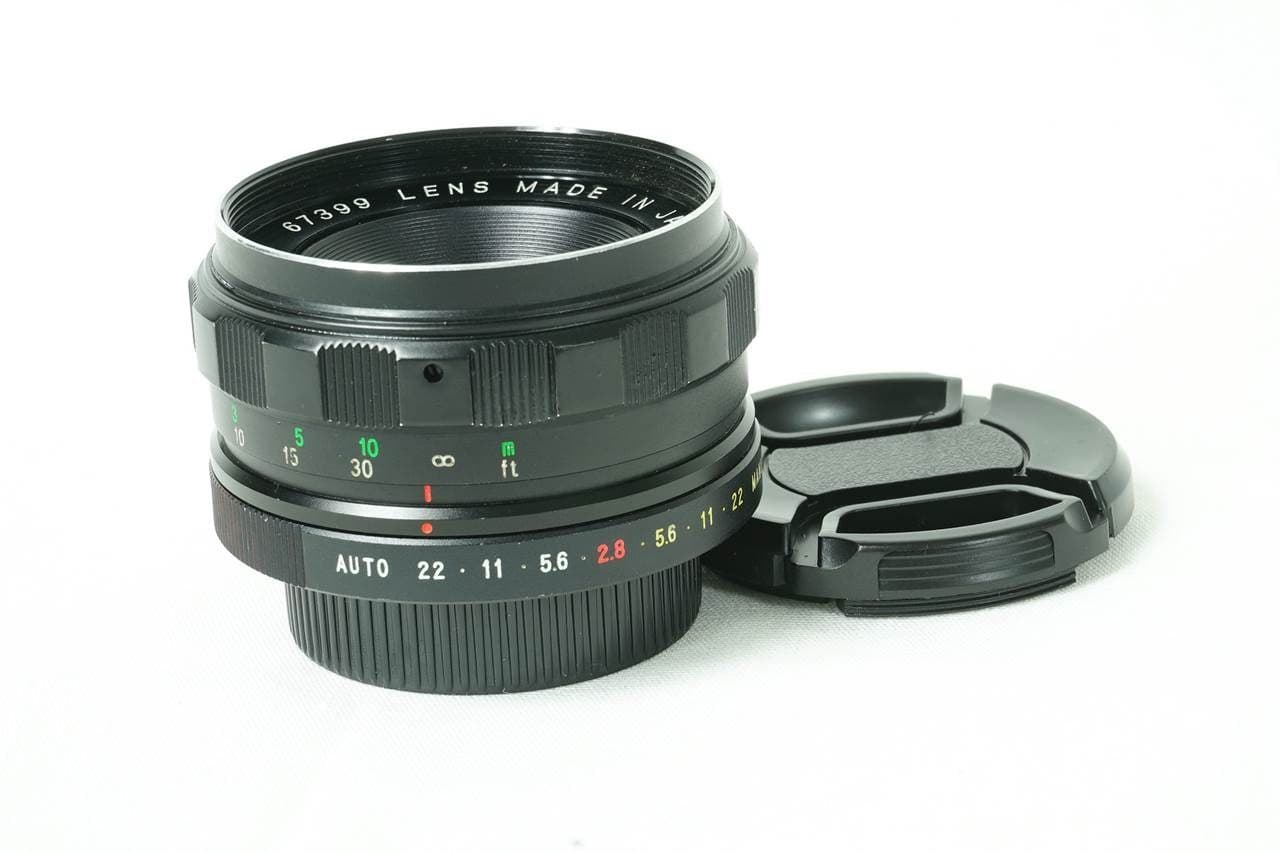
Rikenon Rikenon 50mm f2

Pentax K · 50mm · f/2

No photo available for this lens

Production

1977

Country

Japan

Optical

6 elements in 5 groups

Updated

Jul 4, 2026

Overview

The Rikenon 50mm f/2 was produced by Ricoh for the Pentax K-mount, with the family's roots reaching back to 1977. According to the reviews, there are four principal versions produced across the years: the original 'XR Rikenon', the 'XR Rikenon L', the 'XR Rikenon S', and finally the 'Rikenon P'. The first two of these (the early XR Rikenon and the XR Rikenon L) are said to have been made by the famed Tomioka Optical, a Japanese optical maker with a strong reputation for lens quality. One notable mechanical distinction: only the early XR Rikenon focuses down to 45cm, while the other three types focus to 60cm. The 'P' designation (produced early-to-mid 1980s) indicates full Program mode compatibility with Pentax-A bodies thanks to electronic contacts and an 'A' setting on the aperture ring; it uses a 6-element/5-group design and is shorter and lighter than the XR version. The lens has a genuine cult following: it is famously nicknamed the 'poor man's Summicron' for delivering image quality reminiscent of Leica's revered Summicron at a fraction of the price (reviewers repeatedly cite buying prices around US$20). People love it for its sharpness, character, and its ridiculous value-to-performance ratio.

Verdict: The Rikenon 50mm f/2 is a budget-legend standard prime that punches far above its price — deservedly nicknamed the 'poor man's Summicron.' It's ideal for the curious vintage shooter or first-time adapter who wants genuine sharpness, pleasant character, and a fun dual bokeh personality for very little money. Bargain hunters and walk-around shooters will love it; those wanting a premium build or clinical wide-open performance should look elsewhere.


Optical Character

Bokeh

Dual-character bokeh: smooth against simple backgrounds and bubble bokeh against busy or complex ones.

Color

Unknown, though aged copies may yellow (non-radioactive), warming the rendering.

Sharpness wide open

Very sharp with strong detail, sharp from f/2.8 onward, with some softness and glow wide open at f/2.

Contrast

Decent to good contrast, though wide open glow reduces it slightly.

Community Insights

What people love
  • Exceptional value — routinely bought for around US$20, earning the 'poor man's Summicron' nickname for Leica-like results on a budget
  • Surprising sharpness and good contrast that impressed both film and digital (mirrorless and DSLR) shooters
  • Interesting dual bokeh character — smooth against simple backgrounds, bubbly against busy ones
  • Lightweight and compact (around 135–150g), making it an excellent walk-around lens
  • Wide, comfortable focus ring; smooth focus on good copies
  • Easy adaptability to modern digital bodies, and native use on Pentax K-mount DSLRs without an adapter
  • Charming wide-open glow and softness that some enjoy for dreamy, vintage-style images
What people dislike
  • Softness, glow, and chromatic aberration wide open at f/2
  • Aperture ring can feel stiff, making it difficult to change while handholding
  • Plastic-feeling body and utilitarian build rather than a luxurious feel
  • Coatings can yellow with age
  • Pentax K-mount lenses can get stuck when adapted to other bodies (e.g. Canon)
Pro Tips
  • Stop down to f/2.8 or beyond for maximum sharpness and cleaner contrast; use f/2 deliberately when you want the dreamy glow
  • Seek out the early XR Rikenon or XR Rikenon L if you specifically want the Tomioka-made versions
  • Choose an uncluttered background for smooth bokeh, or introduce busy/complex background elements to trigger the bubble bokeh look
  • The early XR Rikenon's 45cm minimum focus gives a slight edge for closer shots versus the 60cm of the other versions
  • On a Pentax K-mount DSLR you can mount it natively with no adapter; use appropriate adapters (e.g. PK-NEX) for other mirrorless systems

Sources (1)

Web-grounded synthesissecondary

The Rikenon 50mm f/2 was produced by Ricoh for the Pentax K-mount, with the family's roots reaching back to 1977. According to the reviews, there are four principal versions produced across the years: the original 'XR Rikenon', the 'XR Rikenon L', the 'XR Rikenon S', and finally the 'Rikenon P'. The first two of these (the early XR Rikenon and the XR Rikenon L) are said to have been made by the famed Tomioka Optical, a Japanese optical maker with a strong reputation for lens quality. One notable mechanical distinction: only the early XR Rikenon focuses down to 45cm, while the other three types focus to 60cm. The 'P' designation (produced early-to-mid 1980s) indicates full Program mode compatibility with Pentax-A bodies thanks to electronic contacts and an 'A' setting on the aperture ring; it uses a 6-element/5-group design and is shorter and lighter than the XR version. The lens has a genuine cult following: it is famously nicknamed the 'poor man's Summicron' for delivering image quality reminiscent of Leica's revered Summicron at a fraction of the price (reviewers repeatedly cite buying prices around US$20). People love it for its sharpness, character, and its ridiculous value-to-performance ratio.

Want Rikenon Rikenon 50mm f2?

Not in stock right now. Leave your LINE or email and we'll alert you the moment one arrives.

LINEEmail