Production
-
Country
East Germany (DDR)
Optical
Cooke triplet, 3 elements in 3 groups, derived from the Trioplan 50 f/2.8.
Updated
Jul 4, 2026
M42 · 50mm · f/2.8
Production
-
Country
East Germany (DDR)
Optical
Cooke triplet, 3 elements in 3 groups, derived from the Trioplan 50 f/2.8.
Updated
Jul 4, 2026
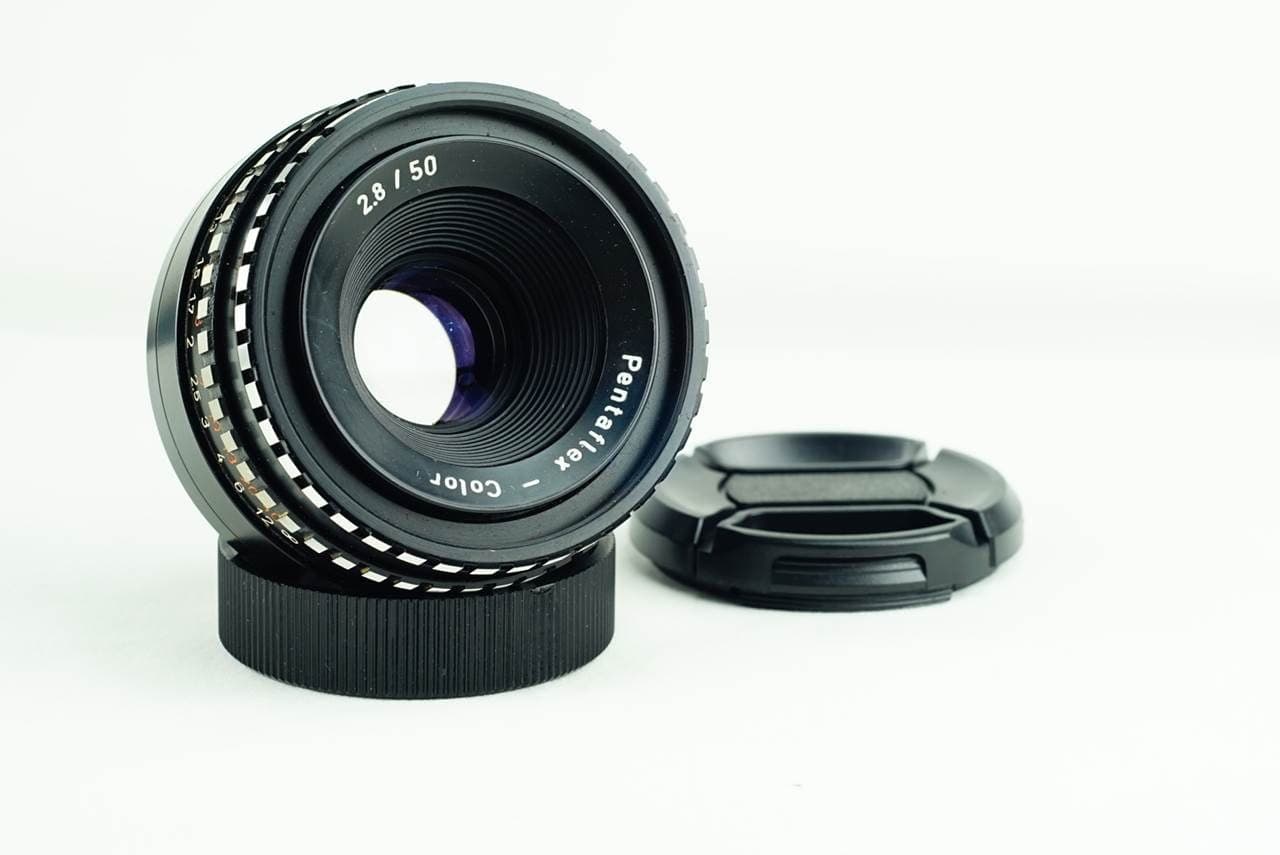
The 'Pentaflex Color 2.8/50' is one of the many rebadged names under which the Meyer-Optik Görlitz Domiplan 50mm f/2.8 was sold. According to the reviews, the Domiplan was produced in East Germany and, near the end of its production run, appeared under different names including 'Orestor 2.8/50', 'Automatic Lens 2.8/50', and 'Pentaflex Color 2.8/50'. The lens descends from the 'Trioplan 50 f/2.8' and uses a classic Cooke triplet design of 3 elements in 3 groups, the same fundamental optical formula as the famous Trioplan 100 f/2.8. It was designed as a budget, entry-level kit lens for Exakta and Praktica cameras. Despite being frequently criticized for its build quality and limited sharpness, the Domiplan family has developed a cult following for its quirky bokeh, vintage rendering, and extremely low cost, making it especially popular for close-up/experimental work when combined with extension tubes. No specific nickname for the 'Pentaflex Color' branding is evidenced in the reviews beyond it being one of the Domiplan's rebadges.
Verdict: The Pentaflex Color 2.8/50 is a rebadged Meyer-Optik Görlitz Domiplan — a cheap, all-metal Cooke triplet that trades sharpness and contrast for character. It's soft and blurry-cornered from f/2.8 to f/8, has somewhat muted colors, and its build is only middling, yet it resists flare beautifully and delivers quirky, cult-favorite bokeh at a rock-bottom price. This is a lens for experimental shooters, collectors, and close-up hobbyists who want vintage flavor and creative imperfection for pocket change — not for anyone chasing clinical resolution.
Quirky, surprising bokeh with a cult following; precise bubble/swirl behavior unknown.
Muted, somewhat weak color rendering compared to other lenses of the era.
Soft with blurry edges/corners from f/2.8 through f/8, sharpening significantly at f/8 to f/11.
Excellent flare resistance; very difficult to provoke flare even shooting into the light.
Low contrast, especially wide open.
The Pentaflex Color 2.8/50 is a rebadged Meyer-Optik Görlitz Domiplan — a cheap, all-metal Cooke triplet that trades sharpness and contrast for character. It's soft and blurry-cornered from f/2.8 to f/8, has somewhat muted colors, and its build is only middling, yet it resists flare beautifully and delivers quirky, cult-favorite bokeh at a rock-bottom price. This is a lens for experimental shooters, collectors, and close-up hobbyists who want vintage flavor and creative imperfection for pocket change — not for anyone chasing clinical resolution.