Production
-
Country
-
Optical
-
Updated
Jul 4, 2026
35mm · f/3.5
Production
-
Country
-
Optical
-
Updated
Jul 4, 2026
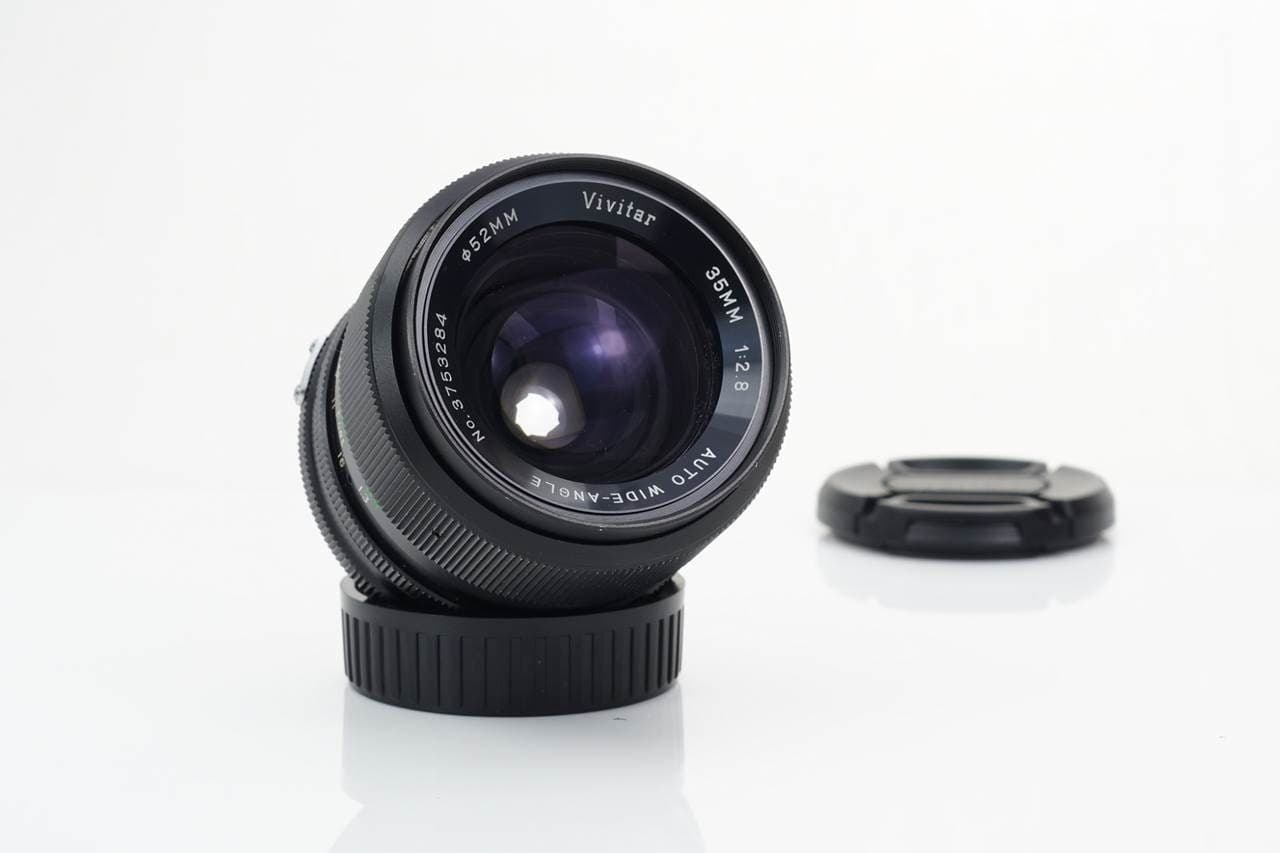
The specific lens named here, a 'Vivitar 35mm f3.5', is not directly documented in the available reviews, which instead cover related but distinct Vivitar optics. Vivitar was a rebadging house rather than a manufacturer, sourcing lenses from various Japanese makers including Komine, Tokina, Cosina, and Kiron. As the Komine-made Vivitar 35mm f2.8 review notes, a single Vivitar focal length could appear from multiple manufacturers with different serial-number prefixes and optical formulas (Tokina T4/TX/fixed mount versions, a Cosina-made 9xxxx-serial version, a Kiron-made 22xxxx-serial version, and a rare 1960s chrome-nose version). This makes identifying and pinning down any single Vivitar 35mm challenging without the serial number. No established nickname or community jargon for a 'Vivitar 35mm f3.5' is evidenced in the reviews. Cult appreciation for vintage Vivitar glass, per the reviews, centers on affordability and a 'cinematic,' 'very 60s and 70s look' that is hard to replicate with modern lenses.
Verdict: Insufficient review evidence exists for a specific 'Vivitar 35mm f3.5.' Buyers should first confirm the exact variant and manufacturer via serial number. Broadly, vintage Vivitar wide/standard glass is prized as inexpensive, characterful optics offering a cinematic 60s/70s look, best used stopped down for sharpness and wide open for vintage character.
Unknown for the f3.5 variant; related Vivitar 35-105 f3.5 zoom shows chromatic aberration and color spread wide open, like a diffusion filter, clearing by f5.6.
Unknown for the f3.5; related Vivitar 35-105 f3.5 is a bit soft wide open but great at f5.6 or slower.
Insufficient review evidence exists for a specific 'Vivitar 35mm f3.5.' Buyers should first confirm the exact variant and manufacturer via serial number. Broadly, vintage Vivitar wide/standard glass is prized as inexpensive, characterful optics offering a cinematic 60s/70s look, best used stopped down for sharpness and wide open for vintage character.