Production
-
Country
Japan
Optical
-
Updated
Jul 4, 2026
Pentax K
Production
-
Country
Japan
Optical
-
Updated
Jul 4, 2026
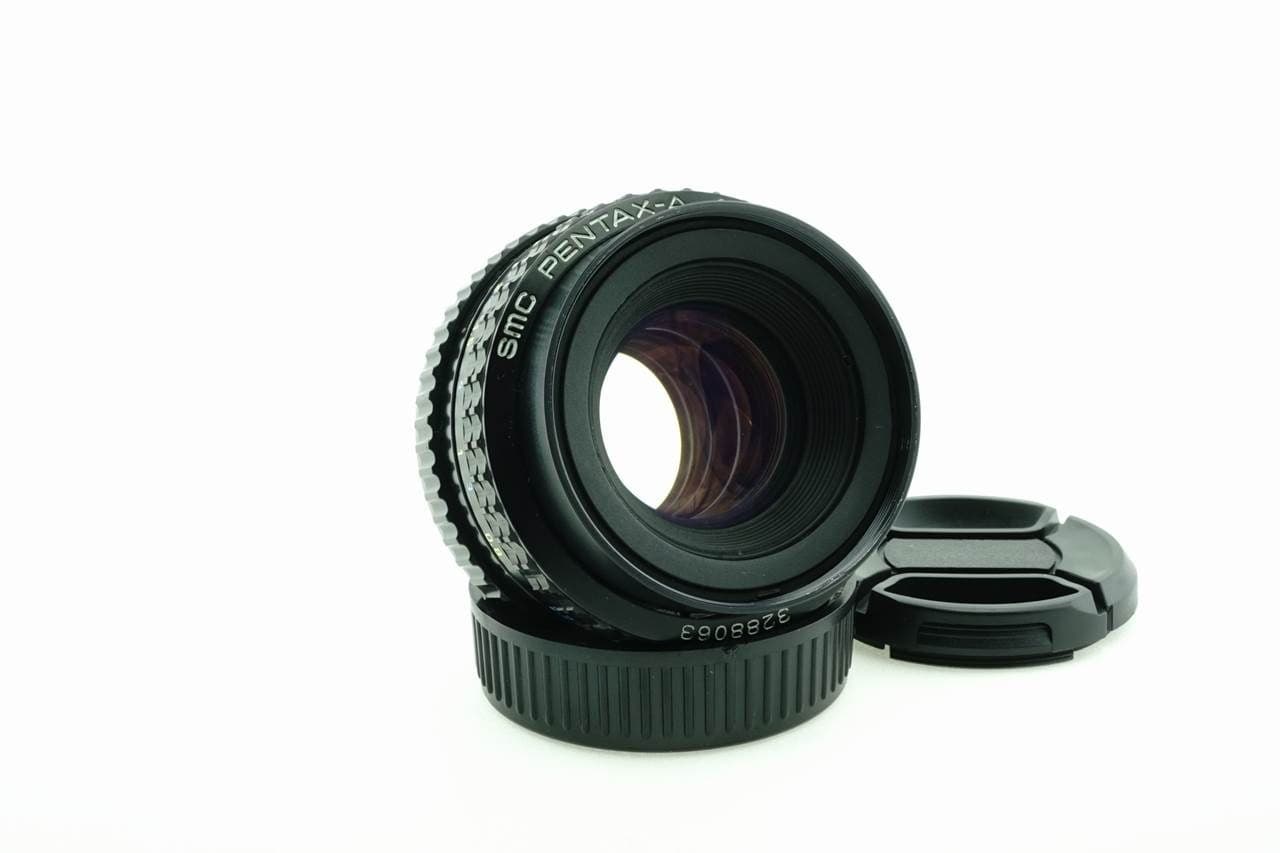
The reviews provided concern the Takumar family of lenses made by the Asahi Optical Co., Ltd., the Japanese company founded by Kumao Kajiwara (who named the lenses after his painter brother, Takuma Kajiwara) that eventually became Pentax and is now a subsidiary of Ricoh. Asahi Optical produced the famous Spotmatic camera (introduced 1964, an early through-the-lens metering SLR) and a wide range of M42 screw-mount Takumar lenses. The most celebrated of the family is the Super-Takumar 55mm f1.8, described in the reviews as 'an all-time classic and one of the best vintage lenses commonly available today' — inexpensive, solidly built, and delivering good image quality with plenty of character. The 55mm f1.8 line evolved through several named tiers: Takumar (1958), Auto-Takumar, Super-Takumar, Super-Multi-Coated Takumar, and finally SMC Takumar (through the mid-1970s). Note that the reviews describe M42 screw-mount Takumar lenses, whereas the lens named here is a 'Pentax K' mount Pentax-M — the K-mount successor line — for which the supplied reviews offer no direct evidence. One established piece of jargon that the reviews DO support is 'radioactive': certain Takumars use thoriated glass and exhibit slight radioactivity (and associated yellowing). People love these lenses for their affordable price, solid all-metal build, and rendering character. Company renaming to Pentax Corporation occurred as late as 2002.
Verdict: The supplied reviews document the M42 Super-Takumar 55mm f1.8 and SMC Takumar 105mm f2.8 rather than this specific Pentax-M K-mount lens, so a definitive rendering verdict cannot be grounded in the evidence. What the reviews do establish is that Asahi's Takumar/Pentax primes are prized for affordable, solidly built, all-metal bodies with superb focus feel and pleasing character — making them excellent, characterful choices for enthusiasts adapting vintage glass. Specific traits of this Pentax-M lens are unknown from the provided sources.
The supplied reviews document the M42 Super-Takumar 55mm f1.8 and SMC Takumar 105mm f2.8 rather than this specific Pentax-M K-mount lens, so a definitive rendering verdict cannot be grounded in the evidence. What the reviews do establish is that Asahi's Takumar/Pentax primes are prized for affordable, solidly built, all-metal bodies with superb focus feel and pleasing character — making them excellent, characterful choices for enthusiasts adapting vintage glass. Specific traits of this Pentax-M lens are unknown from the provided sources.