Production
1978
Country
-
Optical
-
Updated
Jul 1, 2026
Nikon AI-S · 70mm · f/2.8
Production
1978
Country
-
Optical
-
Updated
Jul 1, 2026
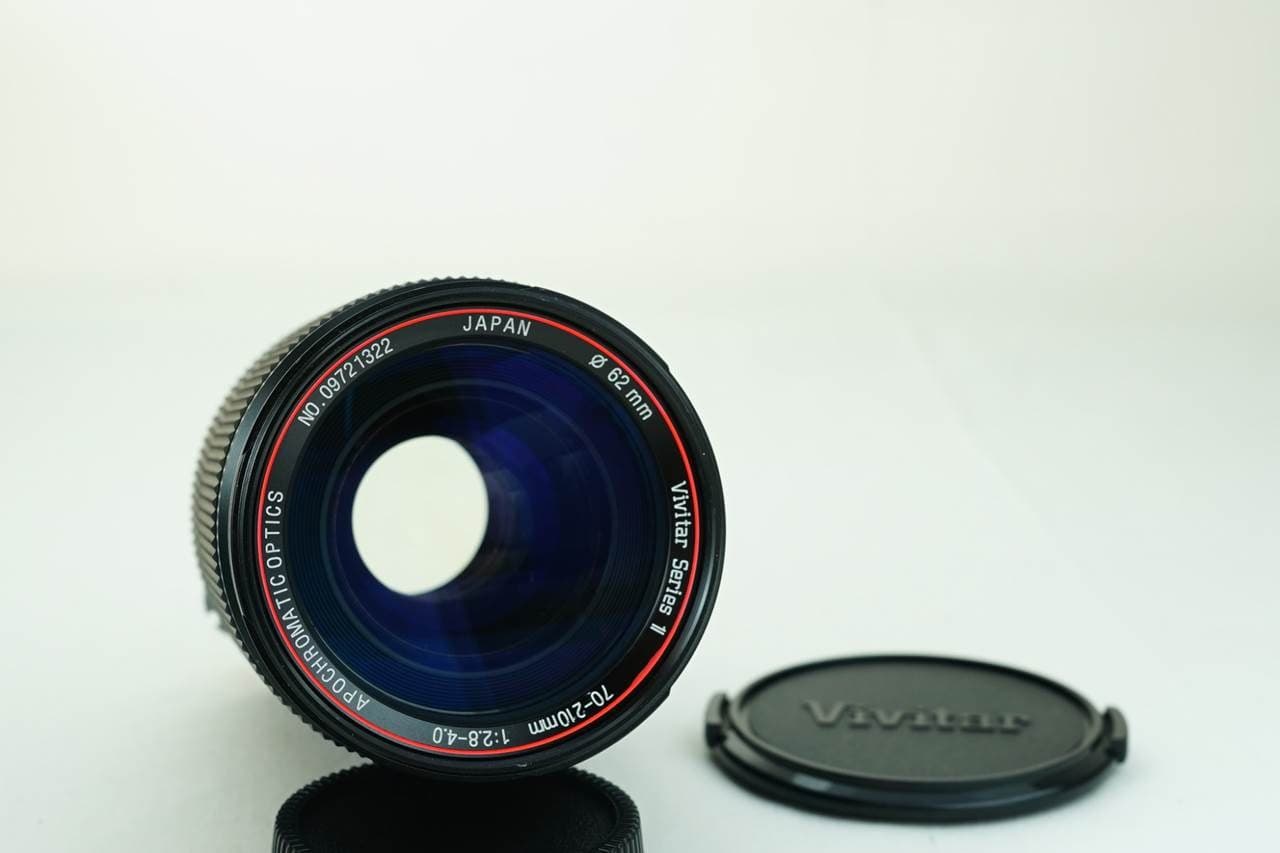
The Vivitar Series 1 70-210mm is described by Ken Rockwell as 'the classic of classics of third-party lenses.' Like many Vivitar lenses, it was not made by Vivitar itself but by 'fourth parties,' with the design varying over the years. Apocryphal data cited by Rockwell suggests the classic version he reviewed was made by Kino Precision (the same maker behind Kiron-branded lenses) in December 1978. Rockwell notes this particular version was the one his 'smart friends' carried when he was a photo editor at a New York newspaper between 1980 and 1984. The lens earned a cult following for offering very high optical performance at a price that today sells 'for next to nothing' (around $30 used, per Rockwell). Reviewers consistently praise its smooth, pleasing bokeh and its useful macro capability. NOTE: The reviews provided all describe the f/3.5 version; an f/2.8 variant is not evidenced in these sources.
Verdict: The Vivitar Series 1 70-210mm is a legendary, bargain-priced manual-focus telephoto zoom celebrated for smooth, never-busy bokeh, genuine character, and 'Very Good' optical quality — ideal for portrait and nature shooters on FX/film or manual-focus bodies who don't mind stopping down for peak sharpness. Just beware the reversed focus ring, the gear-shift macro, and the need to buy an AI version. (Note: available sources document the f/3.5 version; the f/2.8 designation in this listing is not corroborated by these reviews.)
Super smooth, never busy, and very pleasing across all versions with no bubbles or swirls.
Not particularly sharp wide open with blooming and softness (worst at 70mm), improving considerably when stopped down; rated 'Very Good' overall by Rockwell.
Wide-open shots on the fourth version show blooming and reduced contrast that improves when stopped down.
The Vivitar Series 1 70-210mm is a legendary, bargain-priced manual-focus telephoto zoom celebrated for smooth, never-busy bokeh, genuine character, and 'Very Good' optical quality — ideal for portrait and nature shooters on FX/film or manual-focus bodies who don't mind stopping down for peak sharpness. Just beware the reversed focus ring, the gear-shift macro, and the need to buy an AI version. (Note: available sources document the f/3.5 version; the f/2.8 designation in this listing is not corroborated by these reviews.)