Production
1938 – 1953
Country
Germany
Optical
3 elements in 3 groups (Cooke triplet / Zeiss 'Triotar')
Updated
Jul 13, 2026
M42 · 135mm · f/4
Production
1938 – 1953
Country
Germany
Optical
3 elements in 3 groups (Cooke triplet / Zeiss 'Triotar')
Updated
Jul 13, 2026
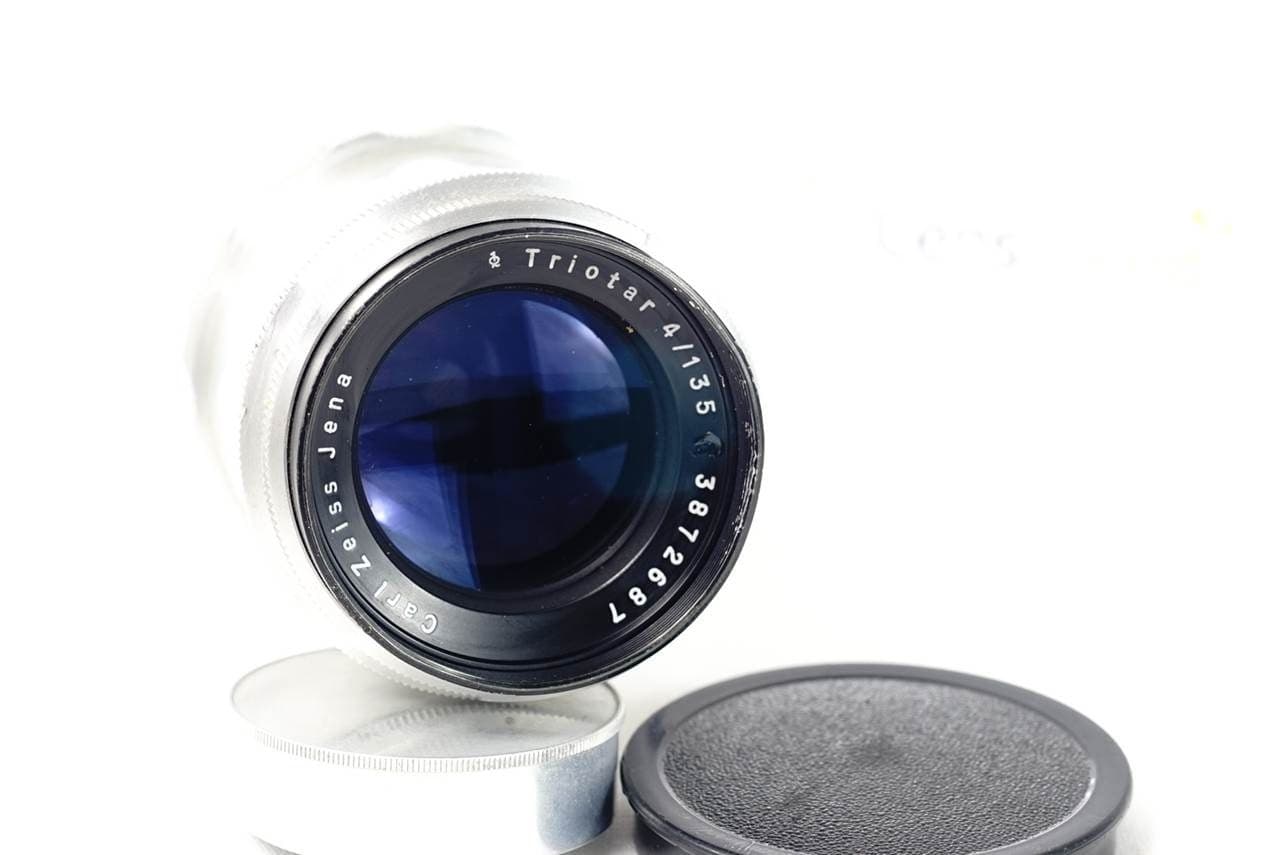
The Carl Zeiss Jena Triotar 135mm f/4 is a post-war telephoto from one of the most storied names in optics, built on the classic Cooke triplet formula that Zeiss branded 'Triotar' — a simple, economical three-element/three-group design that Zeiss deployed across several focal lengths. Sources place this M42 screw-mount version's production in the 1938–1953 window, straddling the era when Zeiss introduced anti-reflective coatings; coated examples carry the famous red letter 'T' engraved on the front, denoting the T-coating rather than any nickname. Beyond that 'T' marking, the reviews are explicit that the lens carries no established nickname. Its cult following rests on a combination that's unusual for a budget triplet: reviewers repeatedly call it exceptionally sharp ('sharp, sharp, sharp'), praise its colour rendering, and single out an unusually generous 15-blade preset diaphragm that keeps the aperture near-circular for smooth out-of-focus rendering. Add a tank-like, all-metal build described as 'indestructible,' and you have an affordable classic that punches above its simple optical formula — which is exactly why triplet enthusiasts and vintage shooters seek it out.
Verdict: The Carl Zeiss Jena Triotar 135mm f/4 is for the shooter who wants classic Zeiss sharpness and genuinely lovely bokeh from a simple triplet, and who doesn't mind working for it. Its 15-blade preset aperture yields smooth, rounded out-of-focus rendering, its colour is well-liked, and it's sharp enough to earn five-star praise — all in a tank-like metal body. The trade-off is handling: it's big, heavy, slippery and slow to focus, so it rewards patient, deliberate shooting over run-and-gun use. If you value rendering and build over convenience, it's a satisfying, characterful telephoto; if you want a light, quick lens, look elsewhere.
Beautiful, smooth bokeh with highlights kept near-circular by the unusually high 15-blade preset aperture.
Well-regarded colour rendering repeatedly cited by owners as a strength, though not specifically warm or cool.
Rated exceptionally sharp ('sharp, sharp, sharp'), earning five-star optics and user sharpness scores around 4.67/5.
The Carl Zeiss Jena Triotar 135mm f/4 is for the shooter who wants classic Zeiss sharpness and genuinely lovely bokeh from a simple triplet, and who doesn't mind working for it. Its 15-blade preset aperture yields smooth, rounded out-of-focus rendering, its colour is well-liked, and it's sharp enough to earn five-star praise — all in a tank-like metal body. The trade-off is handling: it's big, heavy, slippery and slow to focus, so it rewards patient, deliberate shooting over run-and-gun use. If you value rendering and build over convenience, it's a satisfying, characterful telephoto; if you want a light, quick lens, look elsewhere.