Production
1973
Country
-
Optical
10 elements in 9 groups
Updated
Jul 1, 2026
Canon FD · 20mm · f/2.8
Production
1973
Country
-
Optical
10 elements in 9 groups
Updated
Jul 1, 2026
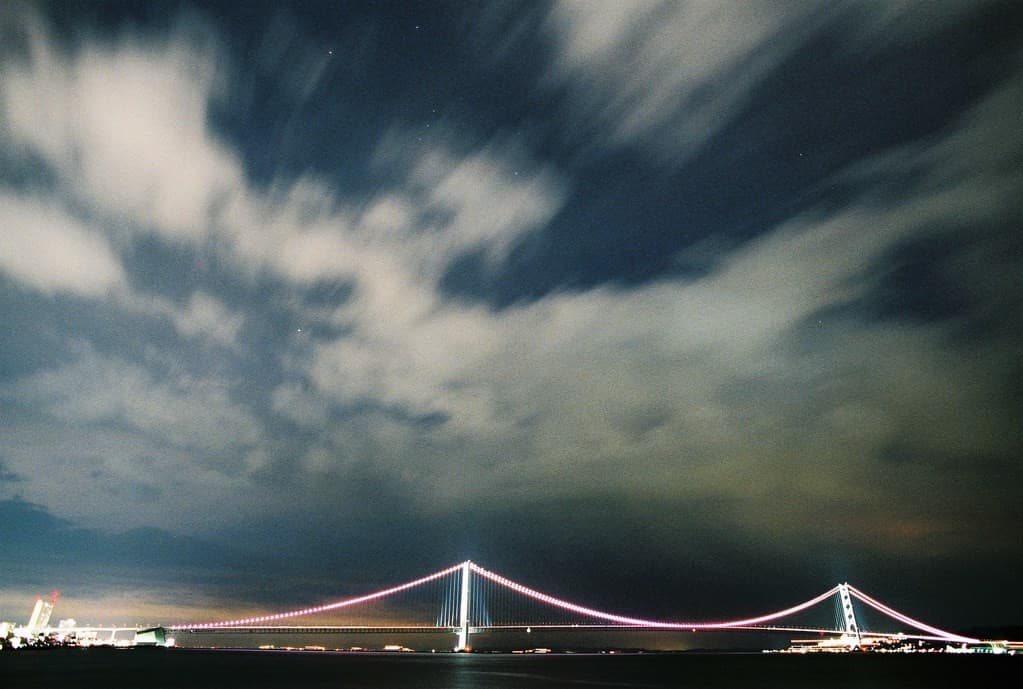
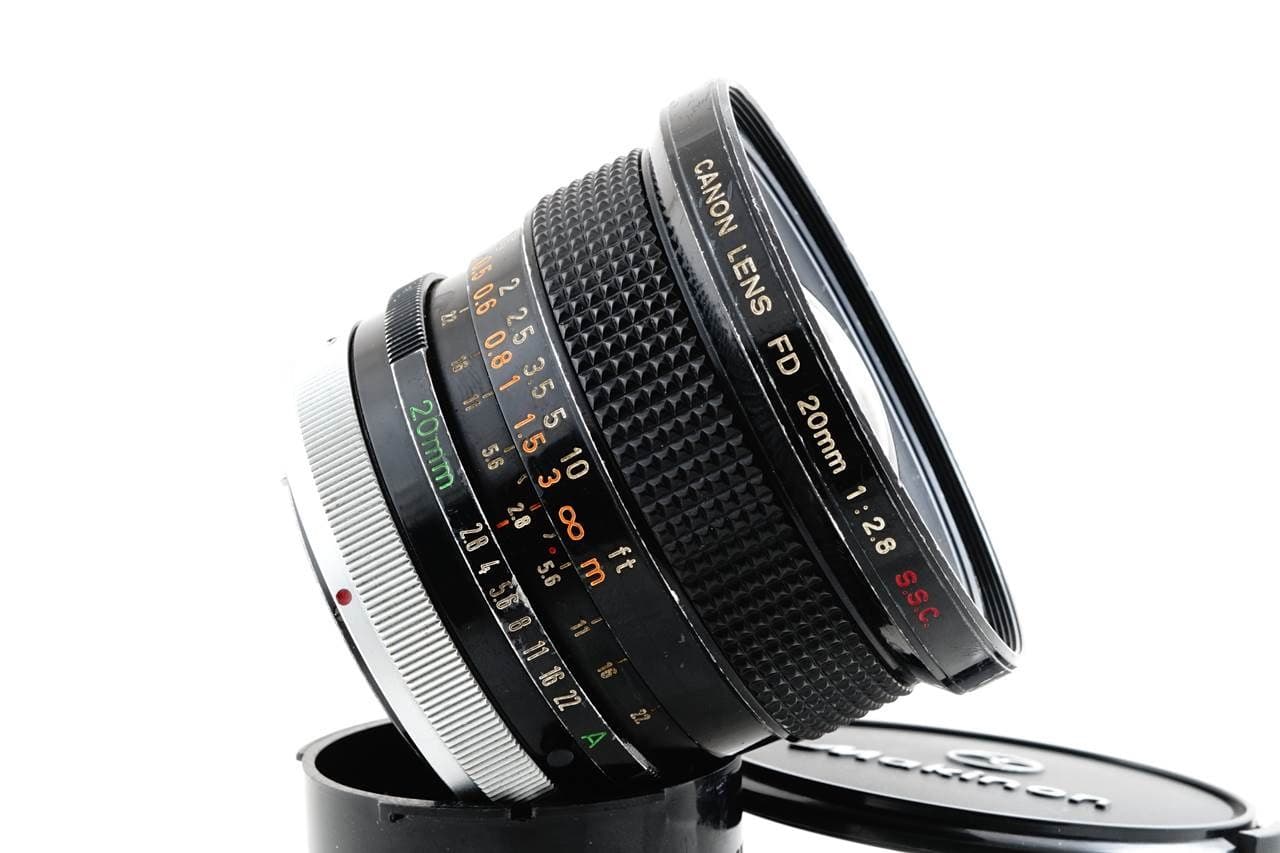
The Canon 20mm f/2.8 in FD mount traces to Canon's ultra-wide FD lineup that began with the FD 20mm f/2.8 S.S.C. released in March 1973, one of the first serious ultra-wide primes Canon offered. The S.S.C. designation refers to Canon's Super Spectra Coating, a high-grade multi-coating introduced in the early 1970s to reduce flare and ghosting and to improve contrast, color rendering, and light transmission over the standard S.C. coating. The design was later carried into the New FD (NFD) era, with the Canon New FD 20mm f/2.8 arriving in 1979 as a lighter, restyled evolution (9 groups / 10 elements, 305g). Notably, Canon never gave the 20mm the aspherical (ASPH) treatment that made siblings like the FD 24mm f/1.4 S.S.C. ASPH so rare and expensive, which kept the 20mm relatively affordable. No established nickname exists for this lens. Its cult following rests on being an affordable, lightweight, fast (f/2.8) ultra-wide with excellent sharpness and pleasing, slightly vintage rendering that adapts beautifully to modern mirrorless bodies like the Sony A7.
Verdict: The Canon FD 20mm f/2.8 is an affordable, lightweight, and genuinely sharp ultra-wide that punches above its price. It's ideal for landscape and architecture shooters who work stopped down, film enthusiasts wanting a fast wide with slightly vintage rendering, and mirrorless adapters seeking a characterful ultra-wide. Just accept the minor moustache distortion and the large 72mm filter thread as the price of admission.
Quite nice for an ultra-wide, pleasing especially when the background is not too busy.
Pleasing color rendering with a slightly vintage feel, aided by S.S.C. coating.
Very sharp overall with excellent corner sharpness stopped down (f/8-16); acceptable but softer wide open.
Flare common for the focal length; S.S.C. coating designed to reduce flare and ghosting.
Excellent contrast reported, particularly stopped down, credited to S.S.C. multi-coating.
The Canon FD 20mm f/2.8 is an affordable, lightweight, and genuinely sharp ultra-wide that punches above its price. It's ideal for landscape and architecture shooters who work stopped down, film enthusiasts wanting a fast wide with slightly vintage rendering, and mirrorless adapters seeking a characterful ultra-wide. Just accept the minor moustache distortion and the large 72mm filter thread as the price of admission.