Production
1959 – 2005
Country
Japan
Optical
5 elements in 4 groups
Updated
Jul 1, 2026
Nikon AI · 105mm · f/2.5
Production
1959 – 2005
Country
Japan
Optical
5 elements in 4 groups
Updated
Jul 1, 2026
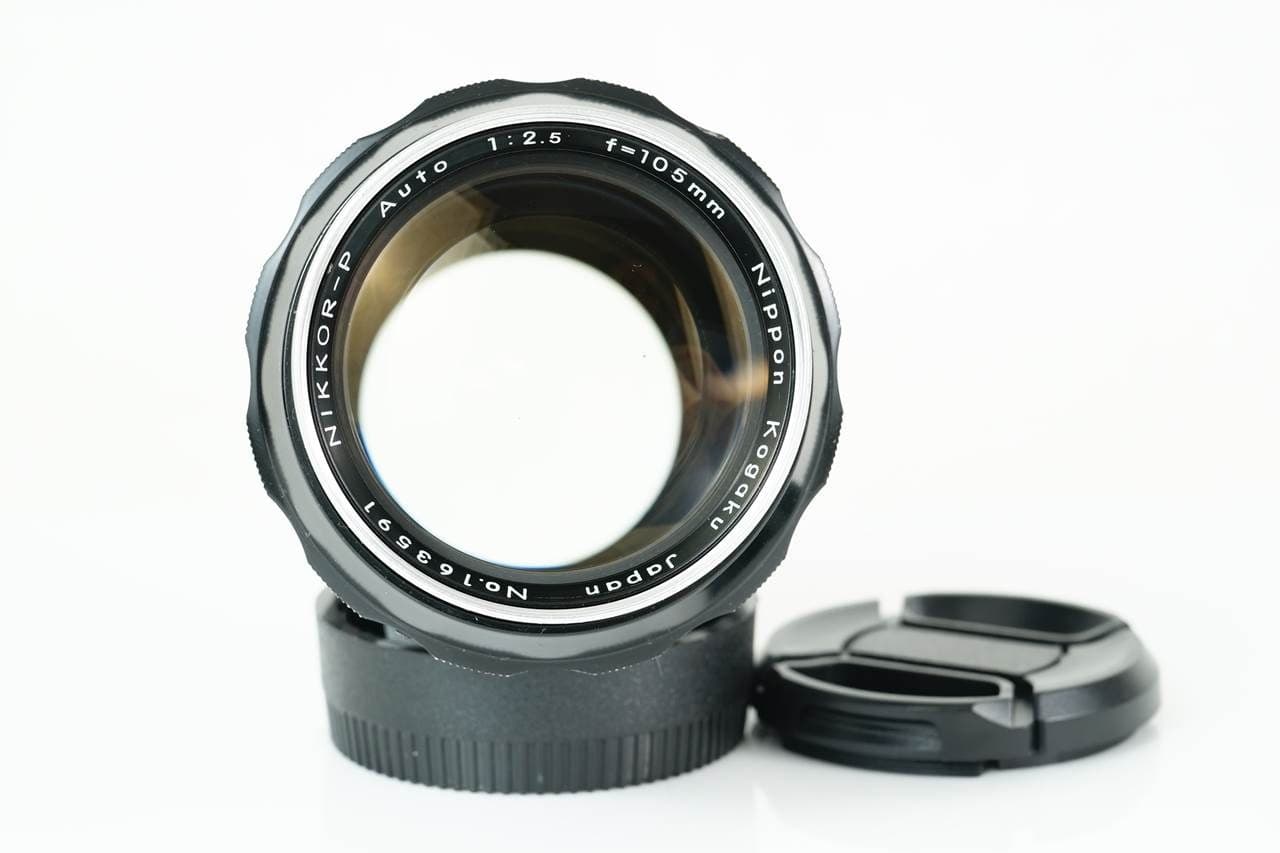
The Nikon 105mm f/2.5 is one of the most storied telephoto primes ever made. Nikon produced a 105mm fast prime version from 1959 to 2005, spanning the early Nikkor-P (a five-element design) through the AI-S generation reviewed here. It was popular with photographers, especially photojournalists, from the late 1950s to the 1990s, before autofocus 80-200mm f/2.8 and later 70-200mm f/2.8 zooms became the pro standard and pushed it out of working bags. Its legendary status is cemented by history: Steve McCurry used a 105mm f/2.5 for his iconic 'Afghan Girl' shot that graced the June 1985 cover of National Geographic. The lens developed a cult following partly because it was, as one reviewer put it, 'known for its bokeh before most people even knew bokeh had a name.' People love it for its compact, well-made all-metal construction, its rewarding manual-focus experience that 'makes you think, be smart,' and rendering that reviewers describe as clinically sharp yet possessing a genuine character wide open. No established nickname is evidenced in these reviews.
Verdict: The Nikon 105mm f/2.5 is a definitive classic portrait and short-telephoto lens for photographers who want modern-grade sharpness paired with genuinely smooth, characterful bokeh. Compact, robust, historically significant, and widely available at affordable prices, it's a no-brainer for anyone comfortable with manual focus who wants reach beyond 50mm with beautiful subject separation.
A defining strength with 'magical,' smooth character and soft feathered falloff both fore and aft of the subject, with no swirl or bubble artifacts.
Clinically sharp and on par with modern optics, usable wide open at f/2.5 and progressively sharper stopped down, with sharp corners by f/5.6.
Light falloff present at f/2.5 through f/4, gone by f/5.6 with sharp corners.
The Nikon 105mm f/2.5 is a definitive classic portrait and short-telephoto lens for photographers who want modern-grade sharpness paired with genuinely smooth, characterful bokeh. Compact, robust, historically significant, and widely available at affordable prices, it's a no-brainer for anyone comfortable with manual focus who wants reach beyond 50mm with beautiful subject separation.