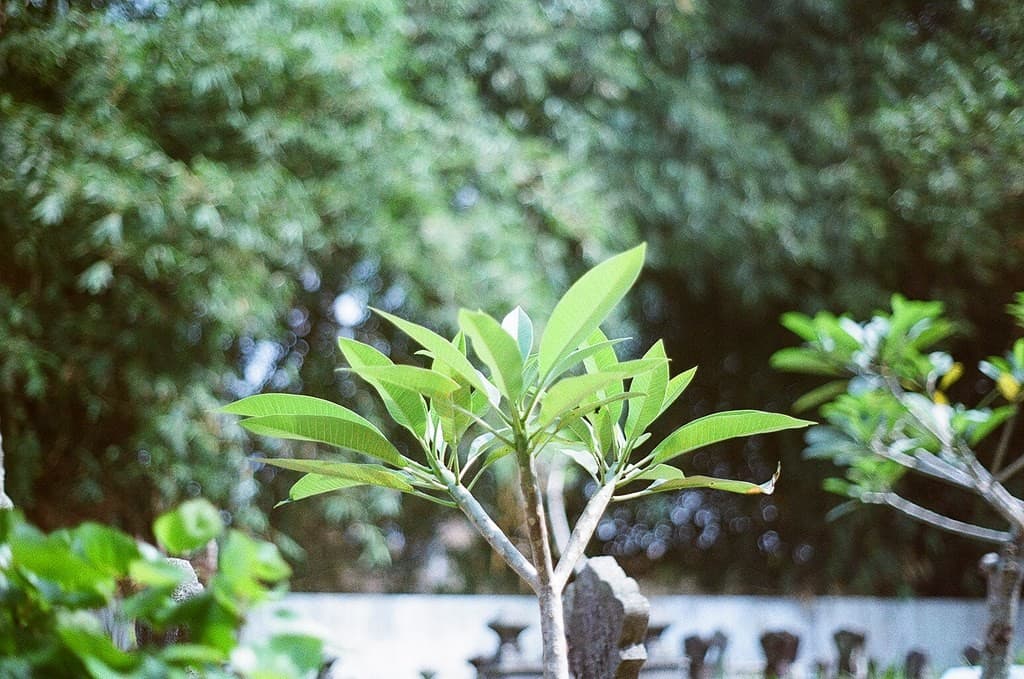
Production
1958 – 1967
Country
Japan
Optical
6 elements in 5 groups
Updated
Jul 16, 2026
Minolta SR · 55mm · f/2
Production
1958 – 1967
Country
Japan
Optical
6 elements in 5 groups
Updated
Jul 16, 2026
The Rokkor-PF is one of the cornerstone standard-lens families from Minolta, a Japanese maker (founded 1928, camera division active until Sony took over in 2003) that was one of the most innovative optical houses of the 20th century — first with TTL metering on the SR-T, an early adopter of computer-aided lens design, and a firm whose reputation led to a well-documented cooperation with Leica. The 'PF' is a period Minolta construction code, not a coating claim: P = Penta (five groups) and F = Six (six elements), so every Rokkor-PF is a classic 6-elements-in-5-groups design. Note that on the MC lenses the letters 'MC' likewise mean 'Meter Coupled' (communicating the set aperture to the camera meter), not multi-coating. The designation spans several focal lengths — the Auto Rokkor-PF 55mm f/2 (introduced 1958, four versions), the MC Rokkor-PF 58mm f/1.4 (MC I from 1966, MC II from 1969), and the MC Rokkor-PF 100mm f/2.5 (1969) all wear it. The 58mm f/1.4 in particular is described as a legendary piece of glass among vintage enthusiasts and is 'sometimes referred to as the bokeh king of its era,' loved for its dreamy wide-open look that firms into a fairly sharp performer stopped down. A useful bit of lore: unlike the faster 58mm f/1.2 (which is radioactive) and some rival 58mm designs, the Rokkor-PF f/1.4 does not use Thorium elements, so it is not prone to the glass-yellowing that plagues those lenses. The cult following rests on that combination of legendary rendering, tank-like all-metal build, and famously cheap used pricing.
Verdict: This is a character-first family for photographers who prize mood over clinical resolution: shoot it wide open and you get the gentle, dreamy, low-contrast look that made the 58mm f/1.4 a fabled 'bokeh king,' then stop down and it becomes a genuinely competent, detailed standard lens. It will frustrate anyone chasing corner-to-corner sharpness or high contrast on the cheap, but for those who want a beautifully built, endlessly affordable all-metal classic with a distinctive soft-to-sharp dual personality, the Rokkor-PF is a joy.
Very good center and good midframe wide open with only the extreme corners soft, rising to very good/excellent center and very good midframe by f/2.8; corners lag until stopped down further.
Low global contrast wide open, improving when stopped down but never truly brilliant.
Moderate wide open (~1.9EV at f/2), roughly ~0.9EV by f/2.8 and ~0.4EV by f/4, described as average for a normal lens.
This is a character-first family for photographers who prize mood over clinical resolution: shoot it wide open and you get the gentle, dreamy, low-contrast look that made the 58mm f/1.4 a fabled 'bokeh king,' then stop down and it becomes a genuinely competent, detailed standard lens. It will frustrate anyone chasing corner-to-corner sharpness or high contrast on the cheap, but for those who want a beautifully built, endlessly affordable all-metal classic with a distinctive soft-to-sharp dual personality, the Rokkor-PF is a joy.