Production
1965 – 1975
Country
Japan
Optical
7 elements in 6 groups
Updated
Jul 16, 2026
M42 · 50mm · f/1.4
Production
1965 – 1975
Country
Japan
Optical
7 elements in 6 groups
Updated
Jul 16, 2026
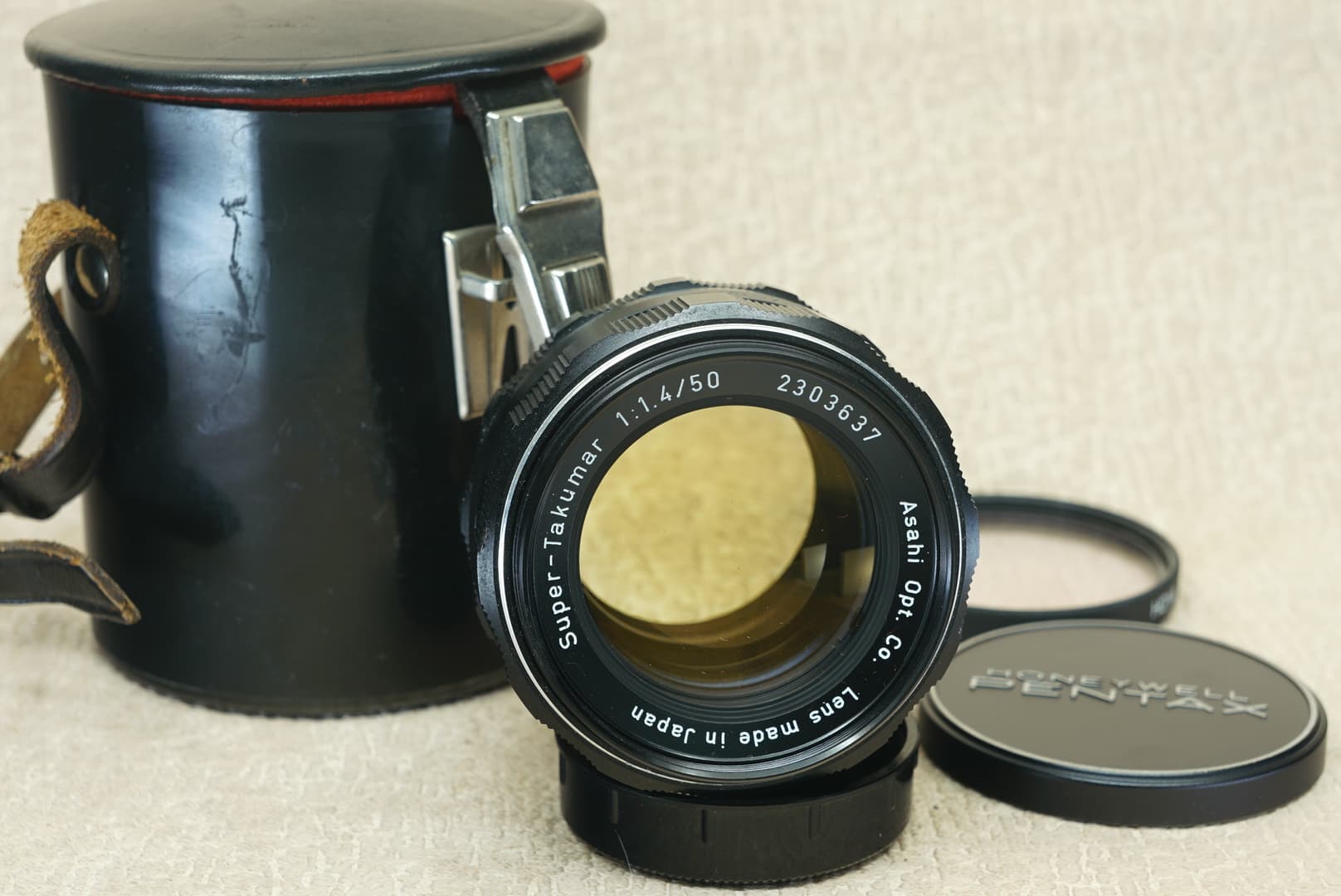
The 'Takumar 7 Elements' refers to the 7-element optical revisions of Asahi Optical Co.'s (Pentax) legendary 50mm f/1.4 Takumar line, produced in M42 screw mount from the mid-1960s through the 1970s. According to the reviews, the story begins in 1964 with the original 'Super Takumar 50mm f/1.4', which used an unusually high count of 8 elements in a deliberate effort to 'one-up' Zeiss, then regarded as the finest lens makers in the world. Legend has it that this 8-element design was more expensive to manufacture than Pentax could charge for it, so it was replaced in 1965 by a more financially viable 7-element 'Super Takumar', earning the whole line the community nickname 'Planar Killer'. This 7-element formula continued through the 1971-1972 'Super-Multi-Coated Takumar' (7 elements in 6 groups) and the later 'SMC Takumar' produced until 1975. The Super-Multi-Coating (SMC) introduced on these later versions was a genuine game-changer at the time, significantly reducing flare and improving contrast, setting a standard that influenced modern multi-coating technologies. Notably, the reviews establish that the later 7-element iterations used a RADIOACTIVE glass in the rear element, reportedly to aid sharpness — though reviewers note the radiation level is incredibly low and not a real safety concern. The lens has 'garnered something of a legendary reputation online,' beloved for its build quality, sharpness, bokeh, character, and its historical status as a Zeiss-challenger.
Verdict: The 7-element Takumar 50mm f/1.4 is a legendary M42 classic for photographers who want a beautifully built, sharp vintage standard lens with genuine character and historical pedigree as a 'Planar Killer.' Its silky focus, satisfying aperture clicks, and durability make it a joy to use on modern mirrorless bodies via adapter. Buyers should choose their version deliberately — SMC for reduced flare, earlier versions for flare character — and be aware of the reversed focus ring and the (harmless) radioactive glass in later copies.
Known for its bokeh, which blurs backgrounds strongly at 45cm close focus, with no swirl or bubble effects.
Widely known for sharpness, reportedly aided by the radioactive rear element in later versions.
Has a propensity for flare in earlier/less-coated versions, significantly reduced in the Super-Multi-Coated versions.
Improved contrast on the Super-Multi-Coated versions thanks to SMC coating.
The 7-element Takumar 50mm f/1.4 is a legendary M42 classic for photographers who want a beautifully built, sharp vintage standard lens with genuine character and historical pedigree as a 'Planar Killer.' Its silky focus, satisfying aperture clicks, and durability make it a joy to use on modern mirrorless bodies via adapter. Buyers should choose their version deliberately — SMC for reduced flare, earlier versions for flare character — and be aware of the reversed focus ring and the (harmless) radioactive glass in later copies.