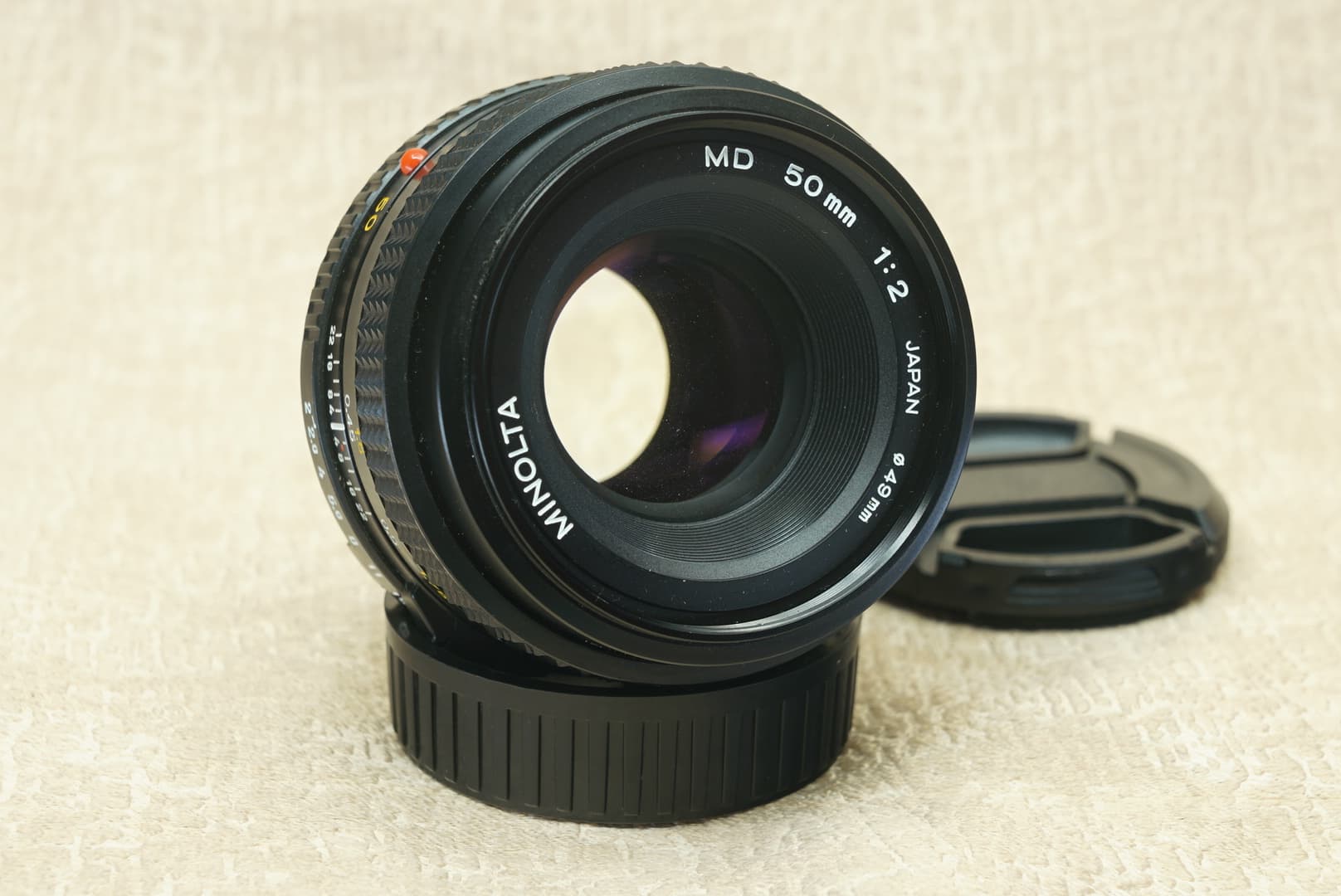
Minolta Minolta MD 50mm f2.0

Minolta MD · 50mm · f/2

No photo available for this lens

Production

1981

Country

-

Optical

6 elements in 5 groups

Updated

Jul 1, 2026

Overview

The Minolta MD 50mm 1:2 represents the entry-level standard prime in Minolta's SR-mount system, and it evolved through three distinct generations. The lineage began with the Minolta MC Rokkor 50mm 1:2 introduced in 1973, followed by the Minolta MD Rokkor 50mm 1:2 in 1977 (which retained a 55mm filter thread and weighed 230g). The version most commonly discussed here is the third, introduced in 1981: a significantly lighter (150g) redesign with a 49mm filter thread and what appears to be a new optical formula. As one of the smallest and cheapest Minolta lenses ever made, it was overshadowed by flashier siblings like the famous Minolta MC 1.2/58. No established nickname or community jargon is documented in the reviews for this specific lens. Its modest cult appeal stems from being an inexpensive, tiny, and surprisingly capable optic—particularly praised as an excellent lens for landscape photography and notable for its near-total absence of distortion, a rarity among 50mm lenses.

Verdict: The Minolta MD 50mm f/2 is a tiny, cheap, honest standard prime best suited to photographers who value portability, low distortion, and clean stopped-down performance—especially for landscape work. It is not a bokeh lens or a low-light showpiece, but as an ultra-affordable, distortion-free, sharp-by-f/2.8 optic, it offers exceptional value.
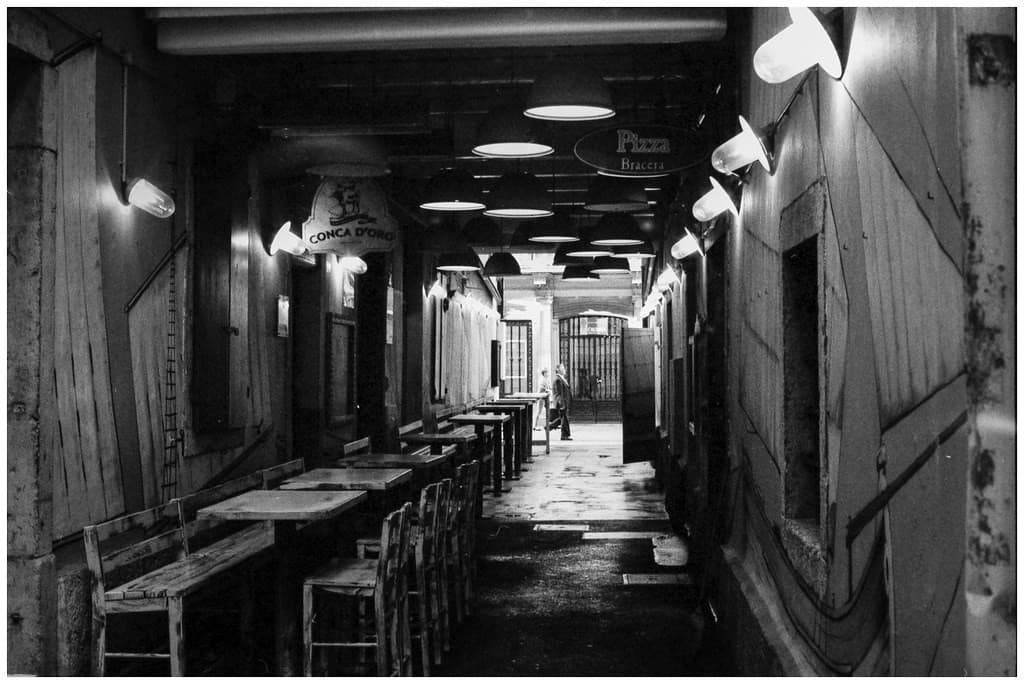

Optical Character

Bokeh

Neither a strength nor weakness; some outlining at f/2, outclassed by the MC 1.2/58.

Sharpness wide open

At f/2 center is very good and midframe sharp; corners have low contrast, improving to excellent center/midframe by f/2.8.

Flare resistance

About average; ugly flares shooting directly into the sun but minor contrast loss under moderate light.

Contrast

Low in far corners at f/2 but excellent in center and midframe by f/2.8.

Community Insights

What people love
  • Extremely small and light (150g)—the smallest SLR lens in the reviewer's collection and smaller than most M-mount lenses even with an adapter
  • Remarkably low price ($10-30 in good condition as of 2015)
  • Virtually no distortion, unusual for a 50mm lens, making it excellent for landscape work
  • Very well controlled lateral chromatic aberration
  • Recessed front element (~1cm) that protects the glass, allowing casual carry without a cap or hood
  • Aperture ring clicks nicely and the lens is genuinely capable stopped down
What people dislike
  • Build quality feels a little plasticky compared to the best manual lenses—only the barrel and mount are metal
  • Focusing ring resistance is higher than ideal and not the smoothest
  • Low corner contrast wide open at f/2
  • Ugly flares when shooting directly into the sun
  • Bokeh is unremarkable; outclassed by the Minolta MC 1.2/58
  • Axial chromatic aberration (bokeh fringing) visible at wider apertures
Pro Tips
  • Stop down to f/2.8 for excellent center and midframe sharpness with much better contrast
  • Use it as a landscape lens—its lack of distortion is a standout feature
  • Avoid shooting directly into the sun to prevent ugly flares; it handles moderate light sources well
  • The recessed front element means you can carry it casually, but a hood still helps with flare
  • For creamier out-of-focus rendering, consider the Minolta MC 1.2/58 instead

Sources (1)

Web-grounded synthesissecondary

The Minolta MD 50mm 1:2 represents the entry-level standard prime in Minolta's SR-mount system, and it evolved through three distinct generations. The lineage began with the Minolta MC Rokkor 50mm 1:2 introduced in 1973, followed by the Minolta MD Rokkor 50mm 1:2 in 1977 (which retained a 55mm filter thread and weighed 230g). The version most commonly discussed here is the third, introduced in 1981: a significantly lighter (150g) redesign with a 49mm filter thread and what appears to be a new optical formula. As one of the smallest and cheapest Minolta lenses ever made, it was overshadowed by flashier siblings like the famous Minolta MC 1.2/58. No established nickname or community jargon is documented in the reviews for this specific lens. Its modest cult appeal stems from being an inexpensive, tiny, and surprisingly capable optic—particularly praised as an excellent lens for landscape photography and notable for its near-total absence of distortion, a rarity among 50mm lenses.

Want Minolta Minolta MD 50mm f2.0?

Not in stock right now. Leave your LINE or email and we'll alert you the moment one arrives.

LINEEmail