Production
1977 – 1985
Country
Japan
Optical
Varies by focal length; Minolta original designs
Updated
Jul 16, 2026
Minolta MD/SR
Production
1977 – 1985
Country
Japan
Optical
Varies by focal length; Minolta original designs
Updated
Jul 16, 2026
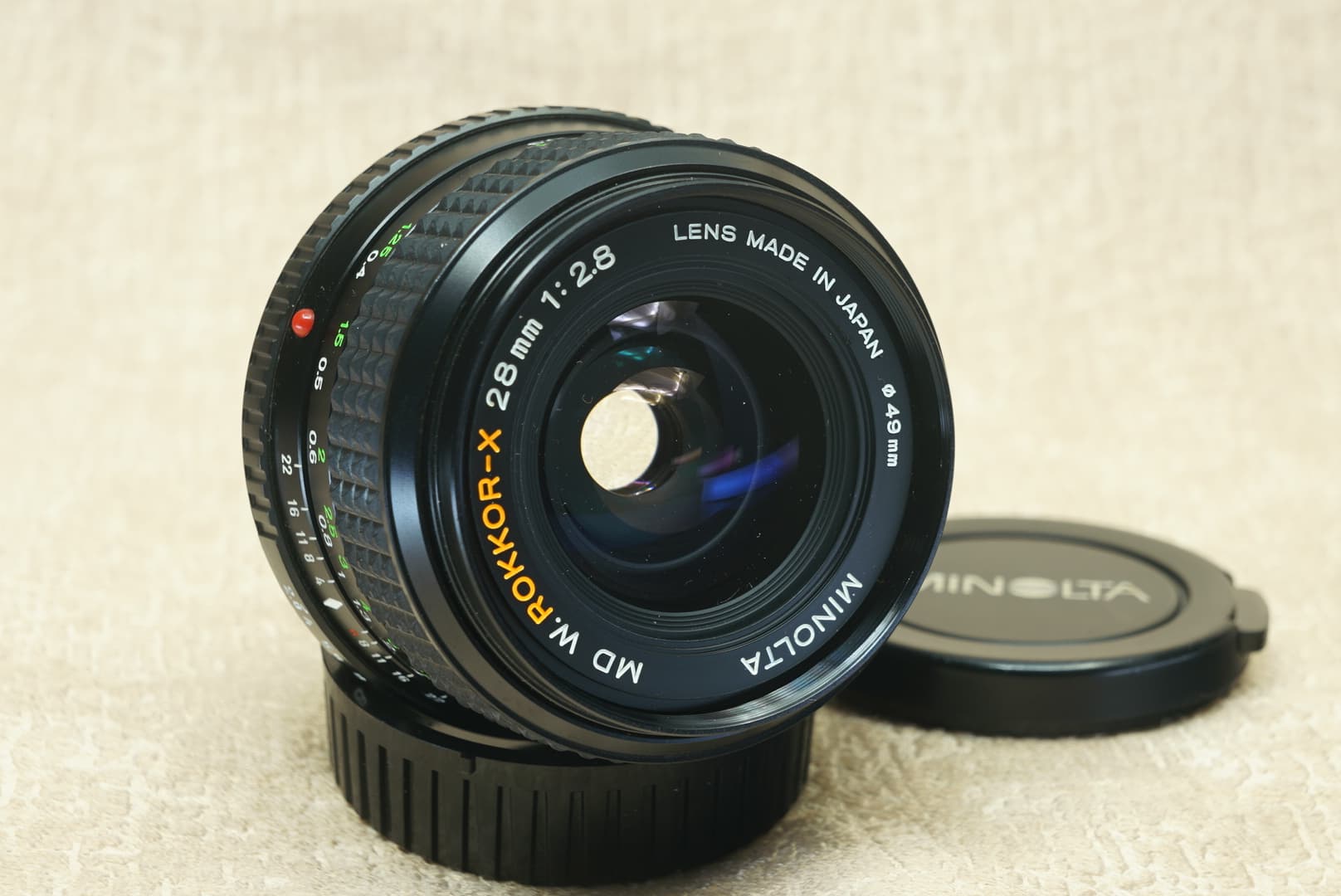
The Minolta MD mount system represents one of the most significant chapters in 35mm SLR history. Introduced in 1977 as an evolution of the earlier MC (Meter Coupled) mount, the MD mount added aperture communication for shutter-priority automatic exposure on cameras like the XD-7/XD-11. Minolta had been a pioneer in SLR development since the SR-2 in 1958, and by the MD era, they had refined their lens manufacturing to exceptional standards. The MD designation itself indicates lenses optimized for the company's automatic exposure systems, featuring a small tab that communicated the minimum aperture to the camera body. The MD line went through several generations: the early MD lenses (1977-1981) with their distinctive rubber focus grip, the MD-II or 'MD Celtic' budget line, and the celebrated MD-III or 'New MD' series (1981-1985) which featured a more compact design with improved coatings. Minolta's Rokkor heritage meant these lenses inherited decades of optical research, including their proprietary Achromatic Coating technology. The MD system developed a devoted following because Minolta offered exceptional quality at prices below Nikon and Canon equivalents. When Minolta abandoned the SR/MD mount for the autofocus A-mount in 1985, millions of superb MD lenses became orphaned, eventually finding new life in the mirrorless digital era. Today, the MD system is celebrated for offering 'Rokkor quality' at accessible prices, with certain focal lengths achieving near-legendary status among adapted lens enthusiasts.
Verdict: The Minolta MD system represents perhaps the best value in vintage SLR glass for photographers seeking organic rendering, excellent build quality, and comprehensive focal length coverage without the premium prices of Nikon or Canon equivalents. The lenses reward thoughtful shooting with images that have genuine character while remaining technically competent. They're ideal for portrait photographers, documentary shooters, and anyone building a versatile manual focus kit for mirrorless cameras. The New MD series in particular offers an unbeatable combination of compact size, optical quality, and accessible pricing. These are not exotic 'character' lenses that impose a strong signature on every image—they're refined, balanced tools that enhance rather than dominate. For photographers who want quality they can feel in their hands and see in their images without paying collector premiums, the MD system remains a compelling choice decades after production ended.
Generally smooth and unobtrusive across the range, with telephotos (135mm, 200mm) particularly noted for creamy backgrounds.
Neutral to slightly warm with accurate but not oversaturated rendition; greens tend toward natural tones rather than yellow-shifted.
Excellent center sharpness from wide open on most focal lengths, with corners catching up by f/5.6-f/8.
Multi-coated versions handle flare reasonably well for their era; strong backlight can produce warm-toned veiling flare and polygonal ghosts.
Moderate global contrast with good micro-contrast, especially in the New MD series.
Moderate vignetting wide open on faster lenses, typically clearing by f/4; more pronounced on wide-angle options.
Real adapters from our shop that fit this lens mount.
Standard · ฿540 · In stock
Standard · ฿540 · In stock
Standard · ฿540 · In stock
Standard · ฿1,250 · In stock
Standard · ฿890 · Out of stock
Standard · Out of stock
Standard · Out of stock
The Minolta MD system represents perhaps the best value in vintage SLR glass for photographers seeking organic rendering, excellent build quality, and comprehensive focal length coverage without the premium prices of Nikon or Canon equivalents. The lenses reward thoughtful shooting with images that have genuine character while remaining technically competent. They're ideal for portrait photographers, documentary shooters, and anyone building a versatile manual focus kit for mirrorless cameras. The New MD series in particular offers an unbeatable combination of compact size, optical quality, and accessible pricing. These are not exotic 'character' lenses that impose a strong signature on every image—they're refined, balanced tools that enhance rather than dominate. For photographers who want quality they can feel in their hands and see in their images without paying collector premiums, the MD system remains a compelling choice decades after production ended.