Production
1970 – 1972
Country
Japan
Optical
13 elements in 9 groups
Updated
Jul 16, 2026
Nikon Non-AI (F-mount) · 70mm · f/4
Production
1970 – 1972
Country
Japan
Optical
13 elements in 9 groups
Updated
Jul 16, 2026
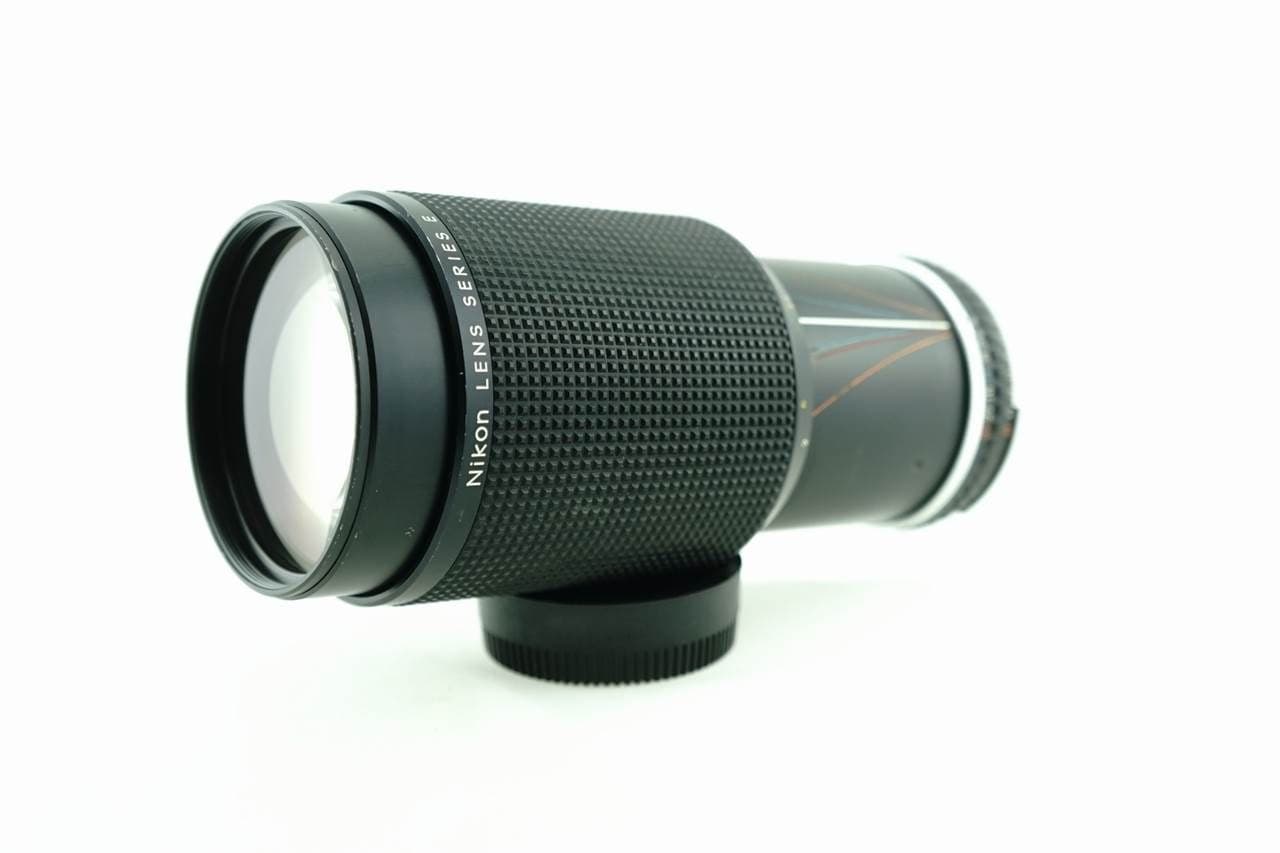
The Nikon 70-210mm f/4 Non-AI represents an early chapter in Nikon's push into consumer telephoto zoom territory during the early 1970s. Introduced around 1970-1972, this lens emerged during a transitional period when zoom lenses were still fighting for legitimacy against prime lenses in professional circles. Nikon's engineering philosophy at the time prioritized optical correction over convenience, resulting in a lens that was mechanically complex but optically conservative. The Non-AI designation places it firmly in the pre-1977 era, before Nikon implemented Automatic Indexing coupling for aperture communication. This lens was part of Nikon's strategy to offer a versatile telephoto range for wildlife and sports photographers who couldn't afford multiple prime lenses. While it never achieved cult status or earned any established community nicknames, it developed a modest following among Nikon collectors who appreciate its solid all-metal construction and the particular rendering character of early Nikon multi-coating (NIC - Nikon Integrated Coating). The lens represents a bridge between the era of fixed focal length dominance and the zoom revolution that would fully take hold in the 1980s. People who love this lens appreciate its manual focus feel, the satisfying mechanical dampening, and the fact that it delivers consistent f/4 throughout the zoom range—a genuine advantage over variable aperture competitors of the era.
Verdict: The Nikon 70-210mm f/4 Non-AI is a niche collector's piece and occasional-use lens rather than a practical everyday tool. It appeals to Nikon historians, those who appreciate the mechanical excellence of 1970s Japanese manufacturing, and photographers who specifically seek the warm, gentle rendering of early multi-coated telephoto zooms. The Non-AI mount limitation makes it impractical for most users without modification, and its optical performance, while respectable for its era, is thoroughly outclassed by modern designs. However, for those shooting adapted to mirrorless systems or on vintage Nikon bodies, and who value character over clinical perfection, this lens offers an authentic portal to a different era of photographic rendering. It is not legendary, not a hidden gem, but an honest workhorse of its time that can still produce compelling images in knowing hands.
Acceptable but unremarkable bokeh with mild outlining on out-of-focus highlights; pleasant for portraits but limited background separation due to f/4 aperture.
Warm with subtle amber cast in highlights, rich reds and yellows, slightly muted blues, and flattering warm skin tones characteristic of early NIC coatings.
Center sharpness good at f/4, very good by f/5.6-f/8; corners remain softer throughout with noticeable softness at 210mm wide open.
Moderate flare resistance; strong backlight produces veiling flare reducing contrast, with green and magenta ghost artifacts from bright point sources.
Moderate global contrast with subdued micro-contrast; lower contrast floor than modern zooms, improving notably when stopped down to f/8.
Noticeable vignetting at f/4 (approximately 1.5-2 stops in corners at 210mm), reducing to negligible levels by f/8.
Real adapters from our shop that fit this lens mount.
Standard · ฿325 · In stock
Standard · ฿385 · In stock
The Nikon 70-210mm f/4 Non-AI is a niche collector's piece and occasional-use lens rather than a practical everyday tool. It appeals to Nikon historians, those who appreciate the mechanical excellence of 1970s Japanese manufacturing, and photographers who specifically seek the warm, gentle rendering of early multi-coated telephoto zooms. The Non-AI mount limitation makes it impractical for most users without modification, and its optical performance, while respectable for its era, is thoroughly outclassed by modern designs. However, for those shooting adapted to mirrorless systems or on vintage Nikon bodies, and who value character over clinical perfection, this lens offers an authentic portal to a different era of photographic rendering. It is not legendary, not a hidden gem, but an honest workhorse of its time that can still produce compelling images in knowing hands.