Production
-
Country
-
Optical
-
Updated
Jul 16, 2026
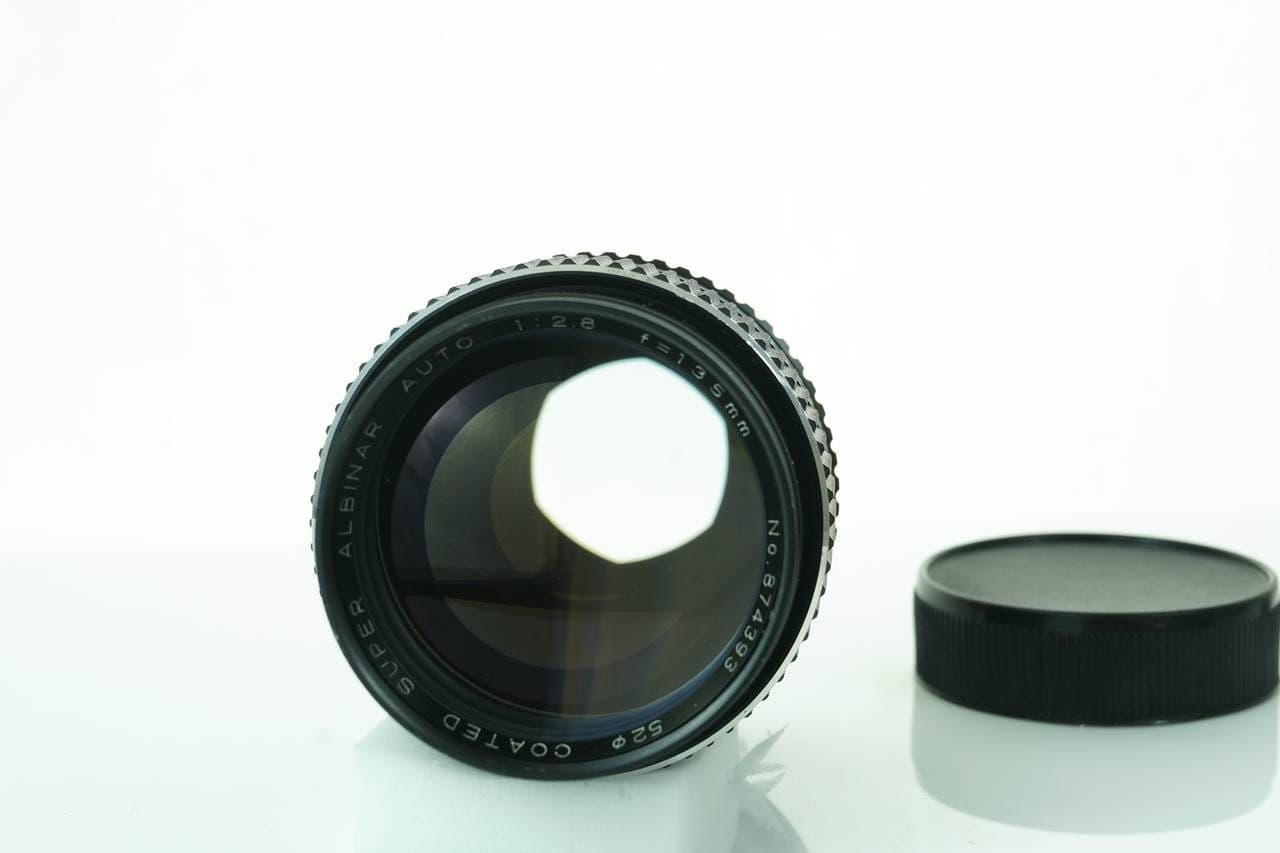
Nikon Non-AI · 135mm · f/2.8
Production
-
Country
-
Optical
-
Updated
Jul 16, 2026
Albinar was a prominent third-party lens brand that emerged during the 1970s and 1980s, primarily serving as a house brand for various photography retailers and distributors in the United States. Unlike major manufacturers such as Nikon or Canon, Albinar did not design or manufacture its own optics. Instead, the company sourced lenses from various OEM manufacturers, predominantly from Japan and South Korea, and rebranded them under the Albinar name. The 135mm f/2.8 in Nikon Non-AI mount represents a typical example of this era's third-party lens market, where budget-conscious photographers sought alternatives to expensive first-party glass. The actual manufacturer of this particular lens remains uncertain, though common OEM sources for Albinar included companies like Samyang, Cosina, and various smaller Japanese optical houses. The 135mm f/2.8 focal length and aperture combination was extremely popular during this period, as it offered a flattering portrait perspective with sufficient speed for indoor work without the premium price of manufacturer-branded telephotos. This lens has no established nicknames or cult following in the vintage lens community. It exists as a utilitarian tool rather than a sought-after collectible, appealing primarily to those interested in affordable manual focus portraiture or experimenters curious about budget optics from the film era.
Verdict: The Albinar 135mm f/2.8 in Nikon Non-AI mount serves as a functional but unremarkable budget telephoto from the third-party lens boom of the 1970s-80s. It is best suited for curious experimenters, students learning manual focus technique, or photographers seeking an inexpensive portrait lens where ultimate image quality is secondary to cost considerations. Those expecting distinctive character, collectible value, or performance rivaling first-party Nikkor lenses will be disappointed. However, for its typical asking price of under $40, it offers a low-risk introduction to vintage telephoto photography and can produce pleasing results when used within its limitations.
Average to below average with nervous/busy rendering, some outlining on bokeh balls, and lacks creaminess sought by portrait photographers.
Neutral to slightly cool color rendition, lacking saturation and warmth of premium Japanese lenses, skin tones may appear slightly desaturated.
Center sharpness is soft wide open, improving to acceptable by f/4 and peak at f/5.6-f/8; corner sharpness lags throughout aperture range.
Modest coating quality results in susceptibility to flare and veiling glare; ghosting artifacts may appear as colored blobs; lens hood strongly recommended.
Moderate global contrast with limited micro-contrast; wide open exhibits veiled quality, improving notably by f/5.6.
Noticeable vignetting wide open (approximately 1.5-2 stops in corners), diminishing progressively and negligible by f/5.6.
The Albinar 135mm f/2.8 in Nikon Non-AI mount serves as a functional but unremarkable budget telephoto from the third-party lens boom of the 1970s-80s. It is best suited for curious experimenters, students learning manual focus technique, or photographers seeking an inexpensive portrait lens where ultimate image quality is secondary to cost considerations. Those expecting distinctive character, collectible value, or performance rivaling first-party Nikkor lenses will be disappointed. However, for its typical asking price of under $40, it offers a low-risk introduction to vintage telephoto photography and can produce pleasing results when used within its limitations.