Lens Heritage/Meyer-Optik

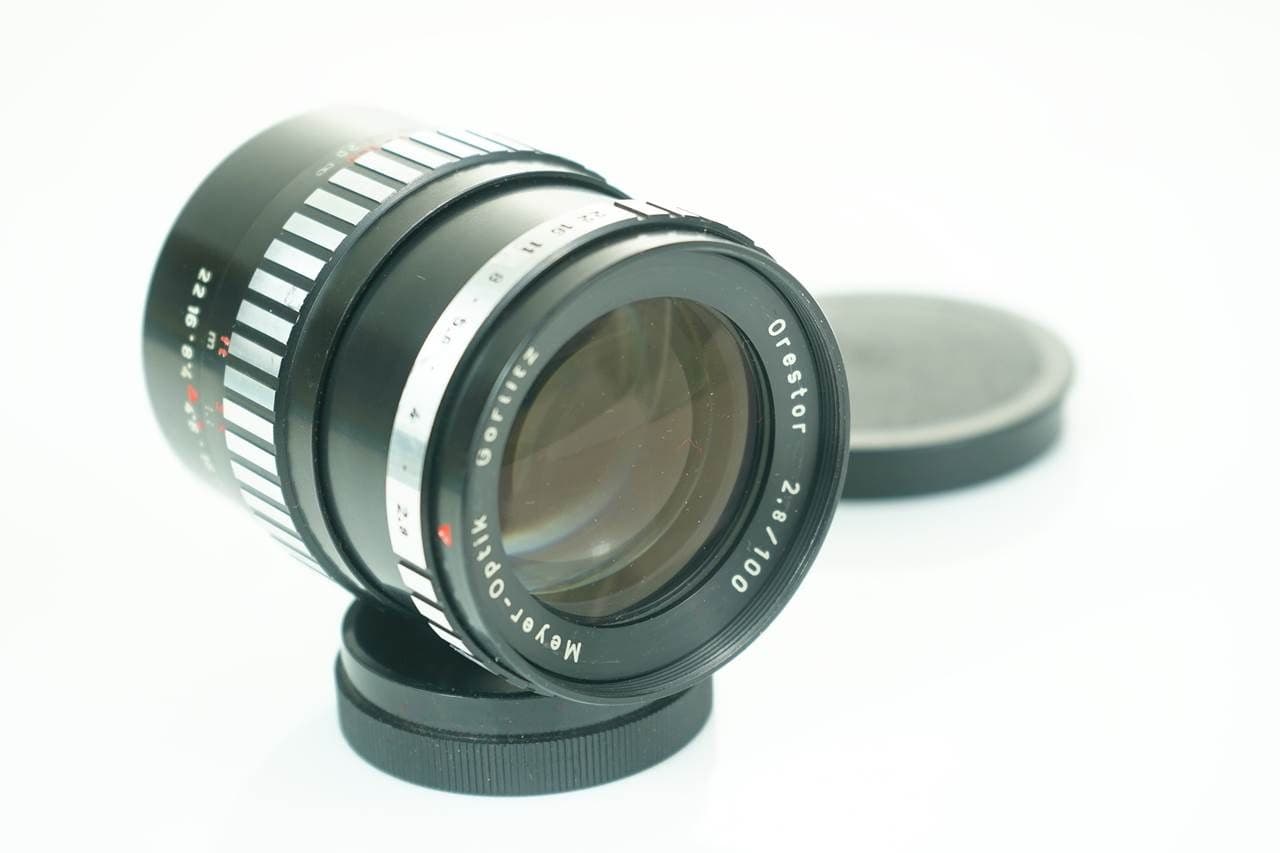
Meyer-Optik 100mm f2.8

M42 Screw Mount · 100mm · f/2.8

AI-assisted · from real reviewsUpdated 6 Feb 2026
No photo available for this lens

Production

1960 – 1979

Country

East Germany

Optical

6 elements in 4 groups

Updated

Feb 6, 2026

Overview

The Meyer-Optik Görlitz Trioplan 100mm f/2.8 is a triplet-formula lens with roots in the former DDR (East Germany), described in the reviews as 'Classic lens from former DDR.' It is 'based on a vintage formula that's known for crazy soap bubble bubble bokeh' and has, per the reviews, 'a bit of cult status and is loved (and loathed) in classic lens user circles.' Phillipreeve.net calls it 'one of the most hyped lenses of the moment,' noting that 'prices have exploded to absolutely crazy levels.' The lens exists in numerous versions and mounts (including M42 and Exakta bayonet), and was closely related to the Meyer-Optik Orestor / Pentacon 100mm f/2.8. The Trioplan brand was revived by OPC Optics as a modern remake, which one reviewer priced at 1,499€ (the original vintage copies sold roughly £130 a decade ago and now command £300-£600 or around $500). The reviews reference its famous 'soap bubble' rendering repeatedly; the effect is the primary reason for its devoted (and divided) following. No specific nickname beyond the descriptive 'soap bubble bokeh' association is supported by the reviews. People love it for the distinctive specular-highlight bokeh; detractors feel that same effect distracts from the subject.

Verdict: The Meyer-Optik Trioplan 100mm f/2.8 is a specialty character lens defined by its polarizing 'soap bubble' bokeh at f/2.8. It's for photographers who prize distinctive, painterly out-of-focus rendering and low-contrast, Biotar-like color, and who are willing to fight its poor flare resistance, tricky focusing, and inflated prices to get it. If you want that specific effect and enjoy the process, it's a joy; if you want an all-around portrait lens or clean subject isolation, cheaper alternatives serve better and the bubbles may simply distract.

Optical Character

Bokeh

Functional but slightly nervous bokeh.

Color

Neutral color rendering.

Sharpness wide open

Soft wide open, excellent sharpness from f4 onwards.

Flare resistance

Moderate flare resistance.

Contrast

Medium-high contrast, good overall.

Vignetting

Visible at f2.8, minimal by f4.

Community Insights

What people love
  • The signature 'soap bubble' bokeh at f/2.8, described as 'the most beautiful bokeh ever' by one reviewer, with fans saying 'every time I look at the bokeh, I fall in love a little bit more.'
  • Color rendering, compared favorably to older Zeiss Biotar lenses.
  • It can be genuinely sharp when stopped down, particularly on 24MP sensors.
  • The unique, low-contrast character that makes it fun for portraits and photo walks.
  • Metal construction and smooth focusing (the modern version's ring travels ~330 degrees and 'feels very smooth and is a pleasure to use').
  • Small size and, for the vintage versions, historically affordable pricing (Pentaxforums users cite ~$30-$102).
What people dislike
  • The bubble bokeh can distract from the subject; phillipreeve.net felt it 'usually distracts a lot from my subject and only very rarely adds to the image.'
  • Lousy flare resistance requiring you to shield the front with your hand, and an ineffective hood.
  • Hard to focus, worsened by the low contrast.
  • Exploded, 'absolutely crazy' prices on the vintage versions and the very expensive modern remake (~1,499€).
  • Delicate build on the thin vintage versions; the modern one lacks weather sealing and rubber gaskets.
  • Questionable ergonomic choices on the modern version (zone focusing scale deemed 'useless' at this focal length, no AF/AE contacts, declickable aperture).
Pro Tips
  • Shoot wide open at f/2.8 to maximize the soap bubble bokeh; stop down to f/4 or beyond for smooth, conventional bokeh.
  • Shield the front element with your hand to combat veiling flare, especially when backlighting the scene to create bubbles.
  • Stop down for critical sharpness; it can be quite sharp closed down and performs better on lower-resolution (24MP) sensors.
  • Compose deliberately so the attention-grabbing bokeh complements rather than fights your subject.
  • Prefer a high-blade-count version (14-15 blades) if round highlights matter to you.

Compatible Adapters

Real adapters from our shop that fit this lens mount.

Standard · ฿785 · In stock

Sources (3)

Web-grounded synthesissecondary

The Meyer-Optik Görlitz Trioplan 100mm f/2.8 is a triplet-formula lens with roots in the former DDR (East Germany), described in the reviews as 'Classic lens from former DDR.' It is 'based on a vintage formula that's known for crazy soap bubble bubble bokeh' and has, per the reviews, 'a bit of cult status and is loved (and loathed) in classic lens user circles.' Phillipreeve.net calls it 'one of the most hyped lenses of the moment,' noting that 'prices have exploded to absolutely crazy levels.' The lens exists in numerous versions and mounts (including M42 and Exakta bayonet), and was closely related to the Meyer-Optik Orestor / Pentacon 100mm f/2.8. The Trioplan brand was revived by OPC Optics as a modern remake, which one reviewer priced at 1,499€ (the original vintage copies sold roughly £130 a decade ago and now command £300-£600 or around $500). The reviews reference its famous 'soap bubble' rendering repeatedly; the effect is the primary reason for its devoted (and divided) following. No specific nickname beyond the descriptive 'soap bubble bokeh' association is supported by the reviews. People love it for the distinctive specular-highlight bokeh; detractors feel that same effect distracts from the subject.

DPReview ForumForum

Meyer-Optik's 100mm f2.8 telephoto represents the East German company's telephoto design philosophy. Built in the 1960s-70s, it offers solid performance for portrait and medium telephoto work. Modern photographers have rediscovered it as an affordable option for adapted systems.

MFlenses ForumForum

Meyer-Optik's 100mm f2.8 represents the East German optical house's contribution to telephoto design. Produced during the 1960s-1970s, this lens served photographers seeking moderate magnification with fast aperture. Meyer-Optik was known for innovative designs, and the 100mm f2.8 reflects this heritage with quality optics at affordable prices.

Want Meyer-Optik 100mm f2.8?

Not in stock right now. Leave your LINE or email and we'll alert you the moment one arrives.

LINEEmail