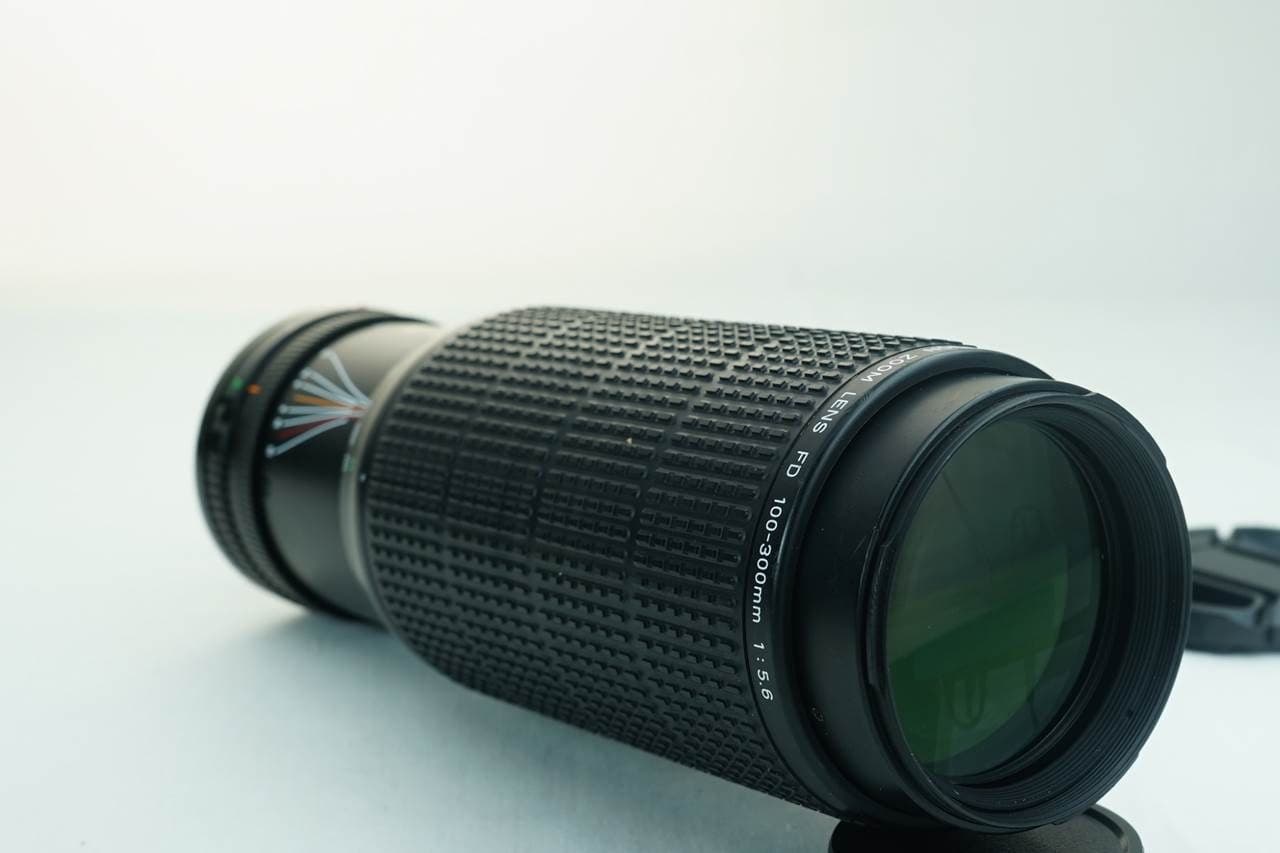
Canon Canon 100-300mm f5.6

Canon FD · 100mm · f/5.6

ยังไม่มีภาพสำหรับเลนส์นี้

ปีผลิต

1980

ผลิตที่

-

สูตรเลนส์

15 elements in 9 groups

อัปเดต

4 ก.ค. 2569

เรื่องราวของเลนส์

The Canon New FD 100-300mm f/5.6 was introduced in 1980 as an affordable, entry-level telephoto zoom for Canon's FD-mount SLR system. It was designed to give amateur photographers a long focal range at a modest price rather than to compete with Canon's premium optics. The reviews note it was produced as an affordable, large-focal-length zoom, and its cheap used prices (copies found mint for around €50) reflect that its appeal today is budget-driven vintage experimentation. Some adapted-lens users on modern mirrorless bodies (such as the Sony NEX-7) have found it a surprisingly capable performer for the money, praising its sharpness and color, while others find its performance at the long end disappointing. No established nicknames or community jargon are evidenced in the reviews for this lens. Its modest following stems from cheap availability, light weight, easy handling, and pleasingly rendered results when kept away from its weakest 200-300mm range.

สรุป: The Canon New FD 100-300mm f/5.6 is a cheap, lightweight, easy-handling entry-level telephoto zoom best suited to budget-minded vintage shooters and adapters who value good color and respectable sharpness in the 100-200mm range. It rewards those who keep it away from its weak, PF- and glow-prone 300mm end and who accept modest contrast, but anyone needing consistently sharp long-tele performance may prefer a 70-210mm f/4 instead.

คาแรกเตอร์ของภาพ

โบเก้

ผู้รีวิวคนหนึ่งบอกว่าให้โบเก้แบบครีมมี่และมีคาแร็กเตอร์ที่น่าสนใจ อย่างไรก็ตาม ส่วนที่อยู่นอกระนาบโฟกัสโดยรวมค่อนข้างขาดรายละเอียด

โทนสี

ให้สีสันที่ยอดเยี่ยมและสม่ำเสมอทั้งในทุกช่วงความยาวโฟกัสและทุกค่ารูรับแสง

ความคม (เปิดสุด)

ให้ความคมชัดดีมากและรายละเอียดระดับพิกเซลแม้เมื่อเปิดรูรับแสงกว้างสุดบนเซนเซอร์ APS‑C ความละเอียด 24MP แต่ความคมชัดจะลดลงอย่างเห็นได้ชัดและน่าผิดหวังเมื่อยิ่งเข้าใกล้ช่วง 300 มม.

คอนทราสต์

คอนทราสต์ถูกบรรยายว่าไม่ดีนัก แม้ในบริเวณที่ให้ความคมชัดดี

รีวิวจากผู้ใช้

ข้อดี
  • Very good, consistent color rendering across focal lengths and apertures
  • Good sharpness with pixel-level detail even wide open on APS-C, according to one reviewer
  • Impressively low chromatic aberration for its class
  • Cheap, lightweight and easy to handle
  • Solid build that remains smooth and free of play even in older copies; length doesn't change during zoom
  • A 'creamy bokeh' and interesting character noted by one reviewer
ข้อเสีย
  • Sharpness degrades quickly and disappoints between 200mm and 300mm
  • Unimpressive image quality at 300mm compared to modern lenses
  • Purple fringing (PF) and glow appear around 300mm, especially under bright NIR-heavy lighting, largely offsetting its low-CA advantage
  • Weak contrast even where the lens is sharp
  • Mushy focus and zoom rings with zoom and focus creep on some copies
  • The f/5.6 maximum aperture lets in relatively little light for the class
  • No tripod collar, and it is fairly long (about 8 inches / 172mm)
เทคนิคการใช้
  • Keep it in the 100-200mm range where sharpness is strongest and avoid pushing to 300mm where quality drops
  • Avoid bright, near-infrared-heavy lighting to minimize purple fringing and glow around 300mm
  • Expect to add contrast in post since the lens renders somewhat flat
  • Adapts well to modern mirrorless bodies like the Sony NEX where it can deliver pixel-level detail even wide open on APS-C
  • Support the barrel when shooting, as it has no tripod collar and changes length during focusing

แหล่งอ้างอิง (1)

Web-grounded synthesissecondary

The Canon New FD 100-300mm f/5.6 was introduced in 1980 as an affordable, entry-level telephoto zoom for Canon's FD-mount SLR system. It was designed to give amateur photographers a long focal range at a modest price rather than to compete with Canon's premium optics. The reviews note it was produced as an affordable, large-focal-length zoom, and its cheap used prices (copies found mint for around €50) reflect that its appeal today is budget-driven vintage experimentation. Some adapted-lens users on modern mirrorless bodies (such as the Sony NEX-7) have found it a surprisingly capable performer for the money, praising its sharpness and color, while others find its performance at the long end disappointing. No established nicknames or community jargon are evidenced in the reviews for this lens. Its modest following stems from cheap availability, light weight, easy handling, and pleasingly rendered results when kept away from its weakest 200-300mm range.

อยากได้Canon Canon 100-300mm f5.6?

ยังไม่มีในสต็อกตอนนี้ — ฝาก LINE หรืออีเมลไว้ เข้าเมื่อไหร่เราแจ้งทันที

LINEอีเมล