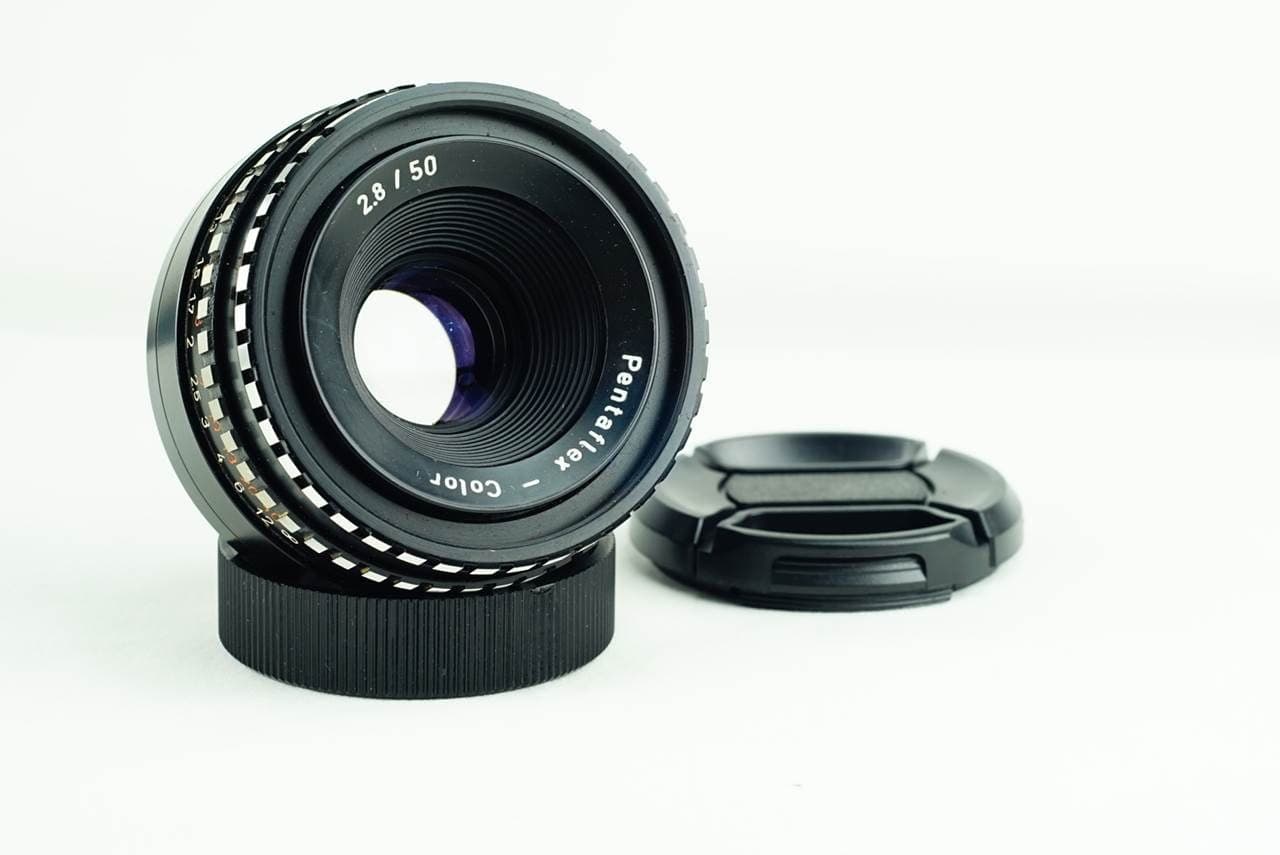
Lens Heritage/Pentaflex

Pentaflex Pentaflex 50mm f2.8

M42 · 50mm · f/2.8

ยังไม่มีภาพสำหรับเลนส์นี้

ปีผลิต

-

ผลิตที่

East Germany (DDR)

สูตรเลนส์

Cooke triplet, 3 elements in 3 groups, derived from the Trioplan 50 f/2.8.

อัปเดต

4 ก.ค. 2569

เรื่องราวของเลนส์

The 'Pentaflex Color 2.8/50' is one of the many rebadged names under which the Meyer-Optik Görlitz Domiplan 50mm f/2.8 was sold. According to the reviews, the Domiplan was produced in East Germany and, near the end of its production run, appeared under different names including 'Orestor 2.8/50', 'Automatic Lens 2.8/50', and 'Pentaflex Color 2.8/50'. The lens descends from the 'Trioplan 50 f/2.8' and uses a classic Cooke triplet design of 3 elements in 3 groups, the same fundamental optical formula as the famous Trioplan 100 f/2.8. It was designed as a budget, entry-level kit lens for Exakta and Praktica cameras. Despite being frequently criticized for its build quality and limited sharpness, the Domiplan family has developed a cult following for its quirky bokeh, vintage rendering, and extremely low cost, making it especially popular for close-up/experimental work when combined with extension tubes. No specific nickname for the 'Pentaflex Color' branding is evidenced in the reviews beyond it being one of the Domiplan's rebadges.

สรุป: The Pentaflex Color 2.8/50 is a rebadged Meyer-Optik Görlitz Domiplan — a cheap, all-metal Cooke triplet that trades sharpness and contrast for character. It's soft and blurry-cornered from f/2.8 to f/8, has somewhat muted colors, and its build is only middling, yet it resists flare beautifully and delivers quirky, cult-favorite bokeh at a rock-bottom price. This is a lens for experimental shooters, collectors, and close-up hobbyists who want vintage flavor and creative imperfection for pocket change — not for anyone chasing clinical resolution.

คาแรกเตอร์ของภาพ

โบเก้

โบเก้ที่มีเอกลักษณ์และชวนประหลาดใจ ได้รับความนิยมในกลุ่มผู้คลั่งไคล้; ลักษณะบับเบิล/สเวิร์ลในรายละเอียดยังไม่เป็นที่ทราบแน่ชัด

โทนสี

การถ่ายทอดสีค่อนข้างจางและอ่อนกว่าเลนส์รุ่นอื่น ๆ ในยุคนั้น

ความคม (เปิดสุด)

ให้ภาพค่อนข้างนุ่มและขอบกับมุมภาพพร่ามัวตั้งแต่ f/2.8 ถึง f/8 โดยเริ่มคมชัดขึ้นอย่างชัดเจนที่ประมาณ f/8–f/11

แฟลร์

ต้านแฟลร์ได้อย่างยอดเยี่ยม — แทบจะไม่เกิดแฟลร์ แม้จะถ่ายย้อนแสง

คอนทราสต์

คอนทราสต์ต่ำ โดยเฉพาะเมื่อเปิดรูรับแสงกว้างสุด

รีวิวจากผู้ใช้

ข้อดี
  • Quirky, surprising bokeh that has built a genuine cult following among experimental shooters
  • Excellent flare resistance — very difficult to provoke flare even shooting into the light
  • Extremely low cost, frequently found for around $20 and generally under $35
  • Compact, small, and lightweight, easy to carry and adapt
  • Its optical flaws become creative features, especially for close-up work with extension tubes
  • Charming vintage rendering that suits experimental and characterful photography
ข้อเสีย
  • Soft with blurry corners/edges from f/2.8 all the way to f/8
  • Low optical resolution and low contrast wide open
  • Somewhat weak color rendering compared to other lenses of the era
  • Focus ring with low travel makes precise focusing difficult
  • Long minimum focus distance of 0.75 m prevents true close-up work without tubes
  • No manual aperture stop-down switch — the aperture pin must be depressed manually or via a suitable adapter
  • Commonly criticized build quality despite being all-metal
เทคนิคการใช้
  • Stop down to f/8–f/11 for meaningfully improved sharpness; wide open is best used deliberately for its soft, dreamy look
  • Pair with extension tubes for close-up photography, where the lens's optical flaws turn into creative features
  • Use an M42 adapter that depresses or accommodates the auto aperture pin, since there's no manual stop-down switch
  • Lean into its rendering for experimental, character-driven images rather than technical work
  • Shoot toward the light with confidence — its strong flare resistance is one of its best traits

แหล่งอ้างอิง (1)

Web-grounded synthesissecondary

The 'Pentaflex Color 2.8/50' is one of the many rebadged names under which the Meyer-Optik Görlitz Domiplan 50mm f/2.8 was sold. According to the reviews, the Domiplan was produced in East Germany and, near the end of its production run, appeared under different names including 'Orestor 2.8/50', 'Automatic Lens 2.8/50', and 'Pentaflex Color 2.8/50'. The lens descends from the 'Trioplan 50 f/2.8' and uses a classic Cooke triplet design of 3 elements in 3 groups, the same fundamental optical formula as the famous Trioplan 100 f/2.8. It was designed as a budget, entry-level kit lens for Exakta and Praktica cameras. Despite being frequently criticized for its build quality and limited sharpness, the Domiplan family has developed a cult following for its quirky bokeh, vintage rendering, and extremely low cost, making it especially popular for close-up/experimental work when combined with extension tubes. No specific nickname for the 'Pentaflex Color' branding is evidenced in the reviews beyond it being one of the Domiplan's rebadges.

อยากได้Pentaflex Pentaflex 50mm f2.8?

ยังไม่มีในสต็อกตอนนี้ — ฝาก LINE หรืออีเมลไว้ เข้าเมื่อไหร่เราแจ้งทันที

LINEอีเมล