Lens Heritage/Meyer-optik

Meyer-optik Meyer-Optik 50mm f2.8

Exakta · 50mm · f/2.8

ยังไม่มีภาพสำหรับเลนส์นี้

ปีผลิต

1962 – 1979

ผลิตที่

East Germany (DDR)

สูตรเลนส์

Cooke triplet, 3 elements in 3 groups

อัปเดต

4 ก.ค. 2569

เรื่องราวของเลนส์

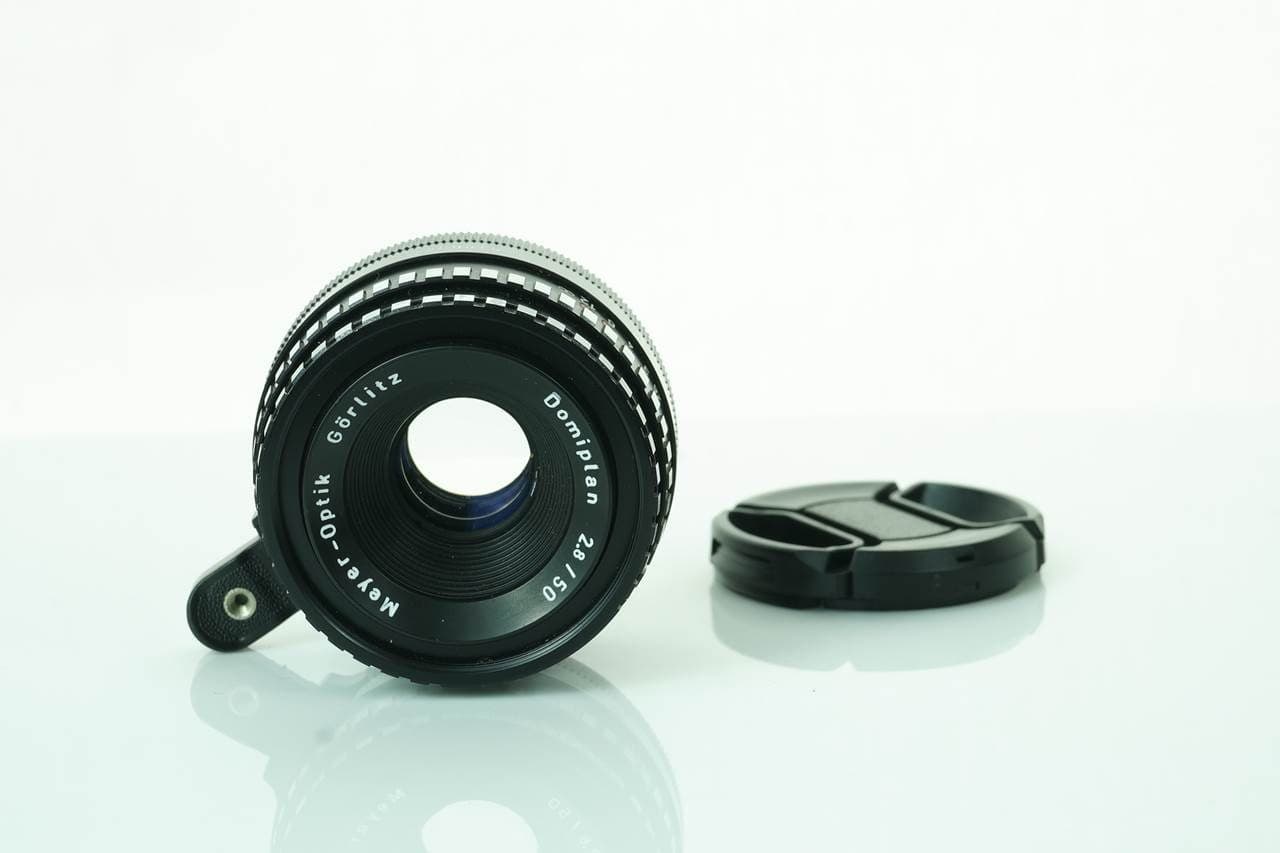
The Meyer-Optik Görlitz Domiplan 50mm f/2.8 is a classical anastigmatic triplet lens produced in East Germany. According to the manufacturer's 1960 brochure, it was designed as an 'inexpensive three-lens anastigmat of the proven triplet type,' combining a modern lens mount and a fully automatic pressure diaphragm with an extremely inexpensive three-lens construction. It served as the standard kit lens on EXA II cameras and was also bundled with many EXA I and Praktica cameras. Originally manufactured by Meyer Optik, production was later taken over by Pentacon in East Germany, which reportedly led to individual differences in quality and a controversial reputation. The pentaxforums database dates production from roughly 1962 to 1979. It has no established nickname, but it is frequently grouped among the 'Soap Bubble Bokeh' lenses due to its triplet design, sharing that trait with its more famous stablemate, the Trioplan. Despite being explicitly a cheap and simple lens from the start, it has gained a cult following for its quirky bokeh, vintage rendering, and ultra-low cost, with 88% of pentaxforums reviewers recommending it.

สรุป: The Meyer-Optik Görlitz Domiplan 50mm f/2.8 is a cheap, simple East German triplet that punches above its price for one reason: its quirky, sharply-outlined Soap Bubble Bokeh. It is the budget-conscious photographer's shortcut to the Trioplan look, ideal for those who enjoy vintage rendering and experimental bokeh and don't mind fiddly handling, a fragile aperture, and softness wide open. Buy it for creative fun, not for clinical performance.

คาแรกเตอร์ของภาพ

โบเก้

เป็นที่รู้จักในเรื่อง "Soap Bubble Bokeh" หรือโบเก้แบบฟองสบู่ ที่ให้ไฮไลต์เป็นฟองมีขอบคมชัดเจน โดยเฉพาะเมื่อมีแหล่งกำเนิดแสงอยู่ในเฟรม

ความคม (เปิดสุด)

เมื่อใช้รูรับแสงกว้างสุด ภาพจะนุ่มและมีความพร่าที่ขอบภาพอย่างสังเกตได้ แต่จะคมขึ้นอย่างมากที่ f/8–f/11 โดยบริเวณกลางภาพคมกว่ามุมภาพ

คอนทราสต์

คอนทราสต์ต่ำเมื่อใช้งานที่รูรับแสงกว้างสุด โดยจะดีขึ้นเมื่อหรี่รูรับแสงของเลนส์ลง

รีวิวจากผู้ใช้

ข้อดี
  • The distinctive Soap Bubble Bokeh, especially with background light sources, which is sharper-outlined than some rival triplet lenses
  • Ultra-low cost, making it one of the cheapest ways into soap-bubble rendering (average price around $20)
  • Very small, compact and lightweight body
  • A cheap and accessible alternative to the far more expensive Trioplan for achieving similar bubble bokeh
  • Quirky vintage rendering and good sharpness once stopped down
ข้อเสีย
  • Cheap-feeling build quality and materials
  • The aperture mechanism is prone to breaking, probably due to the cheap internal materials
  • The focusing ring is too narrow and sits too close to the aperture ring, making the lens fiddly to use
  • Soft rendering with low contrast wide open
  • Relatively long minimum focus distance of 0.75m, which limits close-up shooting
  • Inconsistent quality between samples due to split Meyer/Pentacon production history
เทคนิคการใช้
  • Compose with point light sources or bright dappled backgrounds to trigger the signature Soap Bubble Bokeh
  • Shoot wide open at f/2.8 for maximum bubble effect and vintage softness
  • Stop down to f/8–f/11 when you need real sharpness for general or close-up work
  • Use an adapter that properly depresses the aperture pin, since the lens has no manual stop-down switch
  • Respect the 0.75m minimum focus distance and plan subject distance accordingly

แหล่งอ้างอิง (1)

Web-grounded synthesissecondary

The Meyer-Optik Görlitz Domiplan 50mm f/2.8 is a classical anastigmatic triplet lens produced in East Germany. According to the manufacturer's 1960 brochure, it was designed as an 'inexpensive three-lens anastigmat of the proven triplet type,' combining a modern lens mount and a fully automatic pressure diaphragm with an extremely inexpensive three-lens construction. It served as the standard kit lens on EXA II cameras and was also bundled with many EXA I and Praktica cameras. Originally manufactured by Meyer Optik, production was later taken over by Pentacon in East Germany, which reportedly led to individual differences in quality and a controversial reputation. The pentaxforums database dates production from roughly 1962 to 1979. It has no established nickname, but it is frequently grouped among the 'Soap Bubble Bokeh' lenses due to its triplet design, sharing that trait with its more famous stablemate, the Trioplan. Despite being explicitly a cheap and simple lens from the start, it has gained a cult following for its quirky bokeh, vintage rendering, and ultra-low cost, with 88% of pentaxforums reviewers recommending it.

อยากได้Meyer-optik Meyer-Optik 50mm f2.8?

ยังไม่มีในสต็อกตอนนี้ — ฝาก LINE หรืออีเมลไว้ เข้าเมื่อไหร่เราแจ้งทันที

LINEอีเมล