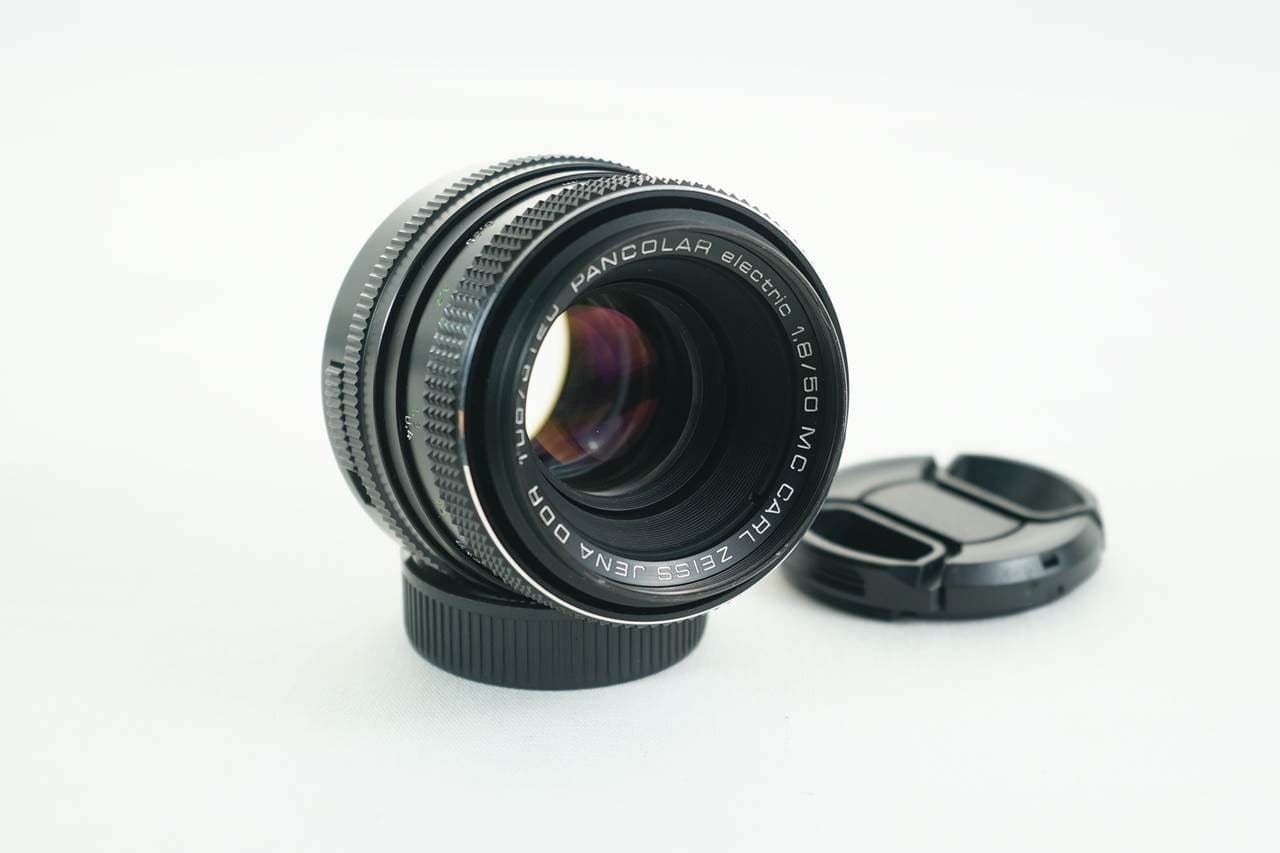
ปีผลิต
1964 – 1982
ผลิตที่
East Germany
สูตรเลนส์
6 elements in 4 groups (early) or 6 elements in 5 groups (later), Double Gauss.
อัปเดต
16 ก.ค. 2569
M42 · 50mm · f/1.8
ปีผลิต
1964 – 1982
ผลิตที่
East Germany
สูตรเลนส์
6 elements in 4 groups (early) or 6 elements in 5 groups (later), Double Gauss.
อัปเดต
16 ก.ค. 2569
เลนส์ที่ระบุว่า 'Carl Zeiss 50mm f/1.8' ใน M42 เมาท์ ตรงกับ Carl Zeiss Jena Pancolar 50mm f/1.8 ผลิตในเยอรมนีตะวันออกระหว่างปี 1964 ถึง 1982 (โดยมีการผลิตในตระกูลต่อเนื่องไปจนถึง 1990 ตามแหล่งข้อมูลบางแห่ง) Zeiss Jena ออกแบบ Pancolar 50mm f/2 ตัวแรกในปี 1960 เพื่อเสนอทางเลือกที่เร็วขึ้นและให้ประสิทธิภาพดีกว่า Tessar 50mm f/2.8 เมื่อผู้แข่งขันจากญี่ปุ่นเริ่มออกเลนส์ไพรม์มาตรฐาน f/1.8 Zeiss จึงตอบโต้ด้วยเลนส์ที่มีสเปคใกล้เคียง ทำให้เกิด Pancolar 50mm f/1.8 ในปี 1964 เลนส์ตัวนี้ถือเป็นหนึ่งในเลนส์ที่ดีที่สุดของยุคนั้นและยังคงได้รับความนิยมจนถึงปัจจุบัน รุ่นแรก (ถึงประมาณ 1967, ถึงรหัสซีเรียล 8552600) ใช้การออกแบบ Double Gauss แบบ 6 ชิ้นเลนส์/4 กลุ่ม ที่ใช้แก้วผสมธอเรียม/แลนทานัม ซึ่งมีความเป็นกัมมันตรังสีเล็กน้อยและอาจเกิดสีเหลืองหรือมีความขุ่นเล็กน้อยเมื่อเวลาผ่านไปถ้าไม่ได้รับแสง UV — ส่งผลให้เลนส์เหล่านี้ได้รับฉายาว่าเป็นกระจกวินเทจ 'กัมมันตรังสี' เลนส์รุ่นแรกเหล่านี้มาพร้อมกับงานตกแต่งแบบ 'zebra' (ผิวจับเป็นลายเงิน/ดำ) และโดยทั่วไปมี 8 ใบม่านรูรับแสง รุ่นต่อมาปรับมาใช้แก้วที่ปลอดภัยกว่า มีความเสถียรและมีดัชนีหักเหต่ำกว่า; เพื่อรักษาคุณภาพเชิงแสง สูตรเลนส์ถูกปรับเป็นการออกแบบที่ก้าวหน้าขึ้นเป็น 6 ชิ้นเลนส์/5 กลุ่ม และลดจำนวนใบม่านรูรับแสงลงเหลือ 6 ใบเพื่อลดต้นทุน รุ่นสุดท้ายสีดำที่เคลือบหลายชั้น (MC) ถือว่าปรับปรุงสุดท้ายที่สุด นักเล่นกล้องชื่นชมมันในเรื่องความคม คอนทราสต์ สีอิ่มและโบเก้ที่นุ่มนวล; Pentacon 50mm f/1.8 ได้รับแรงบันดาลใจจากเลนส์นี้ และมักถูกมองว่าเป็นก้าวขึ้นที่ชัดเจนจาก Tessar ที่มีสเปคถ่อมตัวกว่า คำว่า 'zebra' เป็นคำเรียกที่ยอมรับในชุมชนสำหรับงานจับลายแบบนั้น
สรุป: Carl Zeiss Jena Pancolar 50mm f/1.8 เป็นเลนส์ไพรม์วินเทจระดับพรีเมียมสำหรับผู้ใช้ M42 ที่ต้องการความคม ความคอนทราสต์สูง สีอิ่ม และโบเก้ที่นุ่มในตัวเรือนโลหะกะทัดรัด ทั้งยังให้ผลตอบแทนจากการโฟกัสด้วยมือหมุนอย่างพิถีพิถัน เหมาะสำหรับงานถ่ายบุคคลและการถ่ายในที่แสงน้อย ผู้สะสมควรตัดสินใจระหว่างคาแรกเตอร์ (และข้อควรระวัง) ของรุ่น zebra แบบกัมมันตรังสีรุ่นแรกกับรุ่นหลังสีดำ MC ที่สะอาดกว่าและเคลือบดีกว่า
ให้โบเก้ที่เรียบเนียนและน่าพอใจ โดยไม่มีลักษณะบิดเป็นวง (swirl) หรือเป็นฟอง (bubble)
ให้การถ่ายทอดสีที่เข้มและอิ่มตัว อย่างไรก็ตาม เลนส์รุ่น 'zebra' ยุคแรกที่ใช้แก้วทอเรียมอาจมีเฉดสีเหลืองปรากฏหากไม่ได้ผ่านการแก้เหลือง
ได้รับการยอมรับว่ามีความคมชัดดีในทุกรุ่นการผลิต และได้รับคะแนนความคมชัดจากผู้รีวิวในระดับสูง
ให้คอนทราสต์สูงและไมโครคอนทราสต์ที่โดดเด่นเป็นพิเศษ โดยเฉพาะในรุ่นที่มีการเคลือบหลายชั้น
Carl Zeiss Jena Pancolar 50mm f/1.8 เป็นเลนส์ไพรม์วินเทจระดับพรีเมียมสำหรับผู้ใช้ M42 ที่ต้องการความคม ความคอนทราสต์สูง สีอิ่ม และโบเก้ที่นุ่มในตัวเรือนโลหะกะทัดรัด ทั้งยังให้ผลตอบแทนจากการโฟกัสด้วยมือหมุนอย่างพิถีพิถัน เหมาะสำหรับงานถ่ายบุคคลและการถ่ายในที่แสงน้อย ผู้สะสมควรตัดสินใจระหว่างคาแรกเตอร์ (และข้อควรระวัง) ของรุ่น zebra แบบกัมมันตรังสีรุ่นแรกกับรุ่นหลังสีดำ MC ที่สะอาดกว่าและเคลือบดีกว่า