ปีผลิต
-
ผลิตที่
-
สูตรเลนส์
Xenotar structure (per Nikon's history of the original 1956 5cm f/3.5; element count of the AI 55mm f/3.5 unknown).
อัปเดต
1 ก.ค. 2569
Nikon AI · 55mm · f/3.5
ปีผลิต
-
ผลิตที่
-
สูตรเลนส์
Xenotar structure (per Nikon's history of the original 1956 5cm f/3.5; element count of the AI 55mm f/3.5 unknown).
อัปเดต
1 ก.ค. 2569
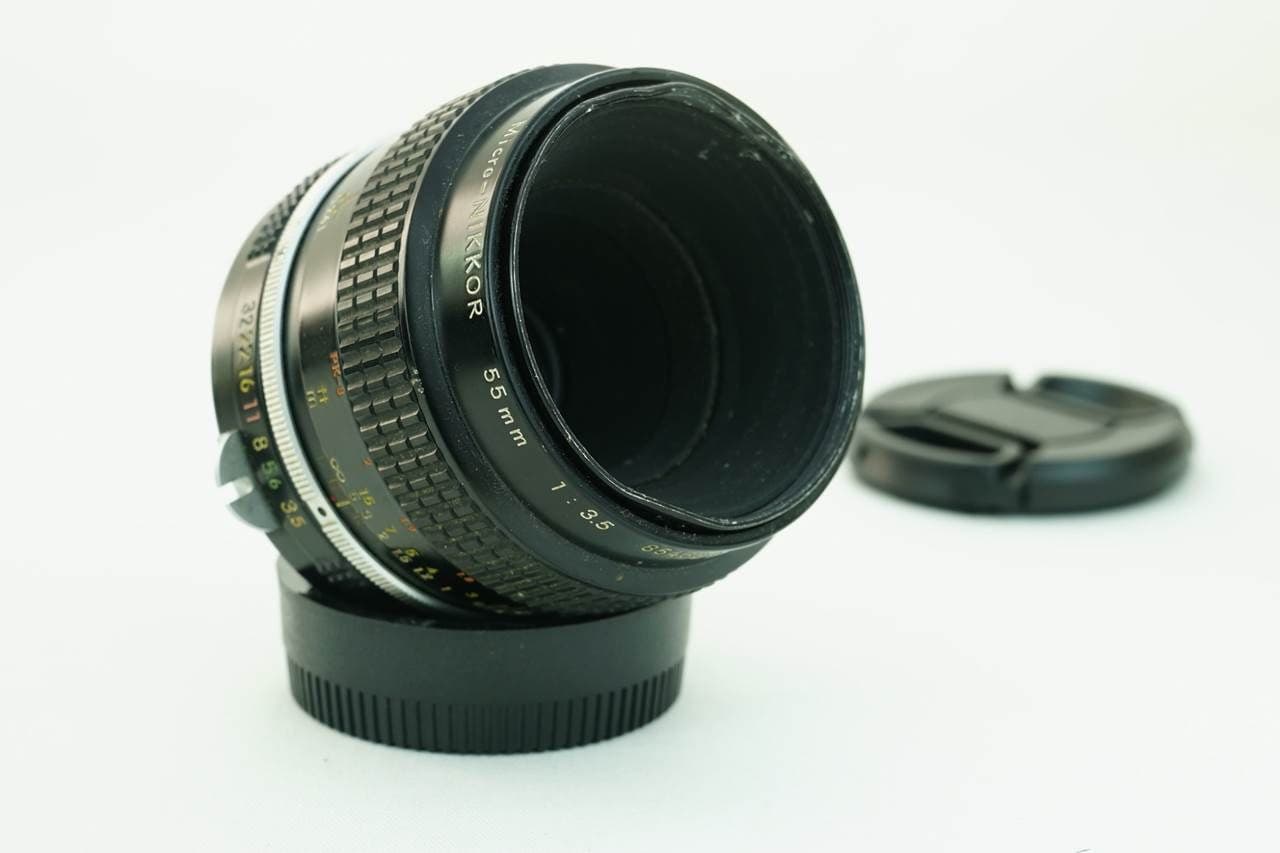
Micro-Nikkor 55mm f/3.5 สืบทอดสายเลือดมาจาก Micro Nikkor ตัวแรกสุด ซึ่งพัฒนาในยุคของ Nikon S เรนจ์ไฟน์เดอร์ เพื่อตอบสนองคำขอจากศาสตราจารย์ Zyun Koana แห่งมหาวิทยาลัยโตเกียว ตามประวัติศาสตร์ 'Thousand and One Nights' ของ Nikon (Tale 85) Hideo Azuma และนักออกแบบผู้ยิ่งใหญ่ Zenji Wakimoto รับภารกิจตามข้อกำหนดที่เข้มงวดของ Koana และ Micro-Nikkor 5cm f/3.5 สำหรับกล้อง Nikon S ก็ออกสู่ตลาดในปี 1956 โดยใช้โครงสร้าง Xenotar ที่โดดเด่น Wakimoto เริ่มแรกคาดว่าแบบ Gauss สมมาตรจะเหมาะสำหรับเลนส์ที่ต้องโฟกัสจากโฟกัสระยะอนันต์ไปจนถึงขนาดจริงขณะที่ต้องต้านความผันผวนของความคลาดสีที่ระยะใกล้ แต่ไม่มีย่าน Gauss ใดที่ให้กำลังแยกตามที่ Koana ต้องการ ในที่สุด Wakimoto ตัดสินใจใช้การจัดวางแบบ Xenotar ห้าเลนส์ ซึ่งสุดท้ายก็ทำให้บรรลุเป้าหมายด้านความละเอียด — ผลลัพธ์ที่ทำให้ Wakimoto งุนงง เพราะเขาเห็นว่าแบบ Gauss หกชิ้นน่าจะเหนือกว่าในทางทฤษฎีสำหรับการแก้ความคลาดทรงกลม, coma และ ความคลาดสี เขาจึงสรุปภายหลังว่าความสำเร็จของ Xenotar มาจากวิธีการแก้ความคลาดสีเฉพาะตัวและกลไกการก่อรูปภาพเป็นจุด เส้นสายประวัติศาสตร์นี้วางรากชื่อ Micro-Nikkor และทำให้กลายเป็นเลนส์ประจำตัวของ Wakimoto 55mm f/3.5 ผลิตในรุ่น Pre-AI (Nikkor-P) และรุ่น AI/K ผู้รีวิวระบุว่าไม่มีชื่อเล่นที่เป็นที่ยอมรับนอกเหนือจากตระกูล 'Micro Nikkor' เอง กลุ่มผู้คลั่งไคล้ของมันตั้งอยู่บนชื่อเสียงด้านการแสดงผลที่แทบจะไร้ที่ติในเชิงเทคนิคและลักษณะการเรนเดอร์ที่ผู้ใช้จำนวนมากหลงใหล — ผู้รีวิวคนหนึ่งจาก CasualPhotophile บังเอิญเจอ Nikkor-P 3.5/55 ขณะตามหาเลนส์มาตรฐานที่คมมากสำหรับภาพพอร์ตเทรตในสตูดิโอ และตอนนี้ชื่นชอบการเรนเดอร์ของมันในทุกสถานการณ์ แม้บนกล้องดิจิทัลความละเอียดสูงอย่าง Nikon D800
สรุป: Nikon Micro-Nikkor 55mm f/3.5 เป็นเลนส์มาตรฐาน/มาโครที่เกือบไร้ที่ติในเชิงเทคนิค โดยจุดเด่นคือความคมชัดและความละเอียดอันเป็นเอกลักษณ์ มีรากฐานการออกแบบจากโครงสร้าง Xenotar ของ Zenji Wakimoto เหมาะกับช่างภาพที่ให้ความสำคัญกับความคมชัดเชิงคลินิกและการเรนเดอร์สามมิติที่สะอาด — ตั้งแต่ภาพพอร์ตเทรตในสตูดิโอจนถึงงานใกล้ชิด — ในขณะเดียวกันยังให้โบเก้ที่ผู้ใช้หลายคนมองว่าเรียบและน่าใจชอบกว่ารุ่นทายาท มันเป็นเลนส์ที่ผู้คนรักในวิธีที่มันแสดงภาพ มากกว่าจะเป็นเพราะ 'character' วินเทจแบบเด่นชัด
ถูกยกย่องว่าสวยงามและช่วยให้การถ่ายทอดมิติของภาพดูเด่นขึ้น ให้ภาพที่นุ่มนวลกว่า 55mm f/2.8 AI‑S ที่ออกมาทีหลัง แต่อย่างไรก็ตาม บางคนมองว่าอยู่ในระดับปานกลางเท่านั้น
เอกลักษณ์/จุดเด่น: ให้ความคมชัดอย่างยิ่งที่ระนาบโฟกัสและแยกรายละเอียดได้ดีแม้กับเซ็นเซอร์ความละเอียดสูงอย่าง Nikon D800 โดยไม่สูญเสียความคมชัดเมื่อใช้ที่รูรับแสงกว้างสุด
Nikon Micro-Nikkor 55mm f/3.5 เป็นเลนส์มาตรฐาน/มาโครที่เกือบไร้ที่ติในเชิงเทคนิค โดยจุดเด่นคือความคมชัดและความละเอียดอันเป็นเอกลักษณ์ มีรากฐานการออกแบบจากโครงสร้าง Xenotar ของ Zenji Wakimoto เหมาะกับช่างภาพที่ให้ความสำคัญกับความคมชัดเชิงคลินิกและการเรนเดอร์สามมิติที่สะอาด — ตั้งแต่ภาพพอร์ตเทรตในสตูดิโอจนถึงงานใกล้ชิด — ในขณะเดียวกันยังให้โบเก้ที่ผู้ใช้หลายคนมองว่าเรียบและน่าใจชอบกว่ารุ่นทายาท มันเป็นเลนส์ที่ผู้คนรักในวิธีที่มันแสดงภาพ มากกว่าจะเป็นเพราะ 'character' วินเทจแบบเด่นชัด