ปีผลิต
1963 – 1968
ผลิตที่
West Germany
สูตรเลนส์
4 elements in 3 groups
อัปเดต
16 ก.พ. 2569
DKL (Deckel) · 135mm · f/4
ปีผลิต
1963 – 1968
ผลิตที่
West Germany
สูตรเลนส์
4 elements in 3 groups
อัปเดต
16 ก.พ. 2569
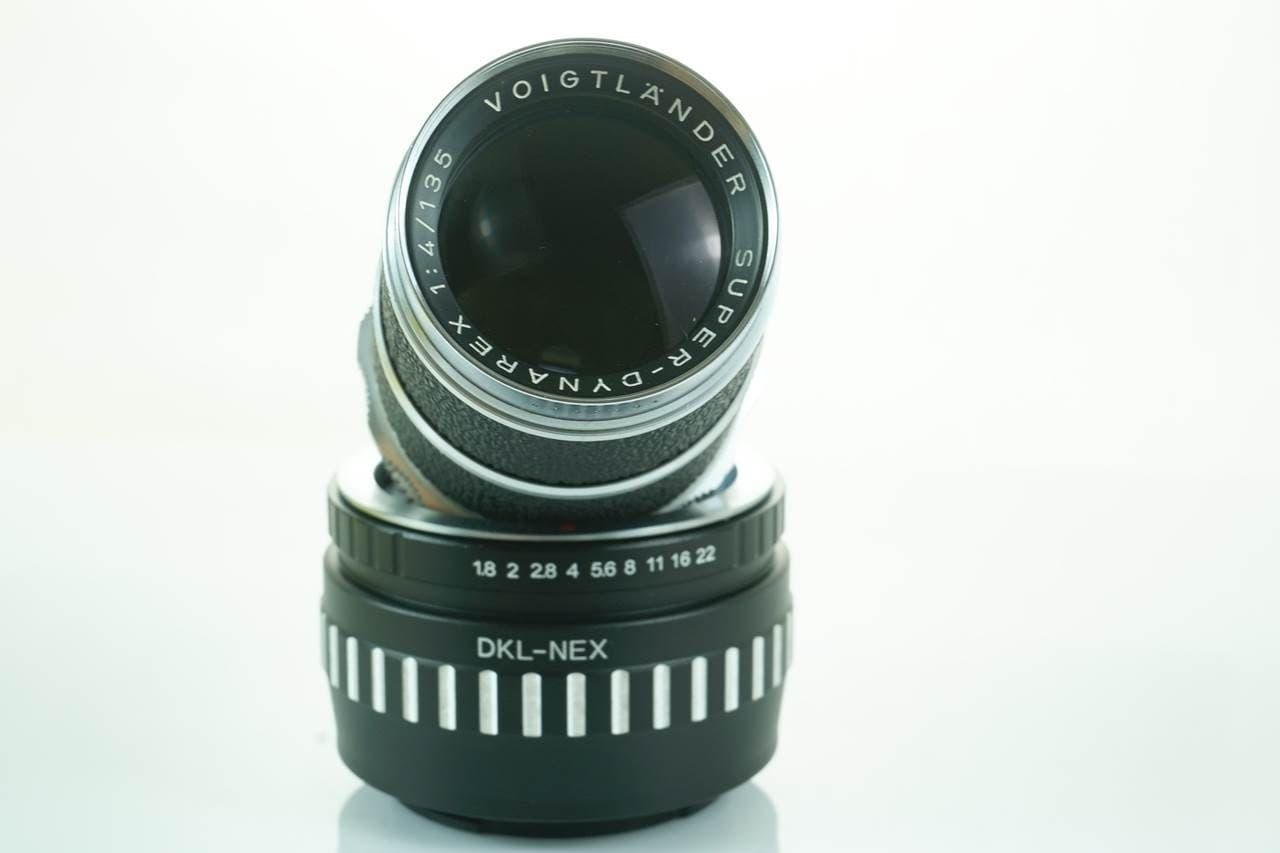
The Voigtländer Super-Dynarex 135mm f/4 represents the company's mid-1960s push into the telephoto market during their DKL (Deckel) mount era. Developed in Braunschweig, Germany, this lens was part of Voigtländer's prestigious Dynarex telephoto line, which sat alongside the legendary Septon, Nokton, and Color-Skopar designs. The 'Super' designation indicated an improved optical formula over earlier Dynarex iterations, featuring enhanced coating technology and refined glass elements. This was a period when Voigtländer was still operating independently before the Zeiss Ikon merger and subsequent Rollei acquisition. The f/4 maximum aperture was a deliberate choice, prioritizing compact size and optical excellence over speed—a philosophy that defined German precision optics of the era. While never achieving the cult status of the 50mm Septon or the Color-Ultron, the Super-Dynarex 135mm has quietly earned respect among vintage lens enthusiasts who appreciate its distinctly Germanic rendering. It lacks widely established nicknames in the community, though Voigtländer DKL lenses collectively are sometimes referred to as 'Bessamatic glass' after the camera system they were designed for. Collectors and shooters prize it for its exceptional build quality and the signature Voigtländer color science that differs subtly from contemporary Zeiss or Leitz offerings.
สรุป: The Voigtländer Super-Dynarex 135mm f/4 is a refined, underappreciated telephoto that rewards patient photographers who value rendering character over specification sheets. It suits portrait and nature photographers seeking authentic German optical heritage without the premium pricing of equivalent Zeiss or Leitz glass. Those expecting dramatic bokeh or low-light prowess should look elsewhere, but shooters who appreciate subtle micro-contrast, honest color reproduction, and exceptional mechanical quality will find this lens a compelling choice. It's an ideal second telephoto for vintage lens collectors who want to explore Voigtländer's distinct optical personality beyond their celebrated standard lenses.
นุ่มนวลแต่ไม่เด่นชัดที่ f/4; วงกลมที่มีขอบนุ่มพร้อมการขีดเส้นขอบน้อยที่สุด และเบลอพื้นหลังอย่างราบรื่นโดยไม่มีการหมุนวนที่สำคัญ
พาเลตต์สีที่เป็นกลางถึงอุ่นเล็กน้อย พร้อมการรักษาความอิ่มสีในเงาที่ยอดเยี่ยม; สีแดงและโทนสีดินมีความเข้มข้นโดยเฉพาะอย่างยิ่ง
ความคมชัดที่ยอดเยี่ยมในจุดกลางจากค่ารูรับแสง f/4 โดยมีประสิทธิภาพสูงสุดระหว่าง f/5.6 ถึง f/8; มุมภาพจะมีความคมชัดน้อยกว่าขณะเปิดรูรับแสงกว้าง แต่จะมีความละเอียดดีขึ้นเมื่อใช้ค่ารูรับแสง f/5.6
เลนส์ที่มีการเคลือบเพียงชั้นเดียวทำให้เกิดการกระจายแสงและการสูญเสียความคมชัดเมื่อถ่ายภาพในแสงที่สว่างจัด; การใช้ฮูดที่ลึกจึงเป็นสิ่งจำเป็น.
ความคอนทราสต์ทั่วโลกอยู่ในระดับปานกลาง พร้อมกับไมโครคอนทราสต์ที่น่าประทับใจซึ่งช่วยเพิ่มพื้นผิวและรายละเอียดที่ละเอียดอ่อน; เงายังคงรายละเอียดได้ดี.
มีการเกิด vignetting ปานกลางเมื่อเปิดรูรับแสงกว้าง (ประมาณ 1.5 สตอปในมุมสุดขอบ); จะลดลงอย่างมากเมื่อใช้รูรับแสง f/5.6 และจะไม่สำคัญเมื่อใช้ f/8.
The Voigtländer Super-Dynarex 135mm f/4 is a refined, underappreciated telephoto that rewards patient photographers who value rendering character over specification sheets. It suits portrait and nature photographers seeking authentic German optical heritage without the premium pricing of equivalent Zeiss or Leitz glass. Those expecting dramatic bokeh or low-light prowess should look elsewhere, but shooters who appreciate subtle micro-contrast, honest color reproduction, and exceptional mechanical quality will find this lens a compelling choice. It's an ideal second telephoto for vintage lens collectors who want to explore Voigtländer's distinct optical personality beyond their celebrated standard lenses.