ปีผลิต
1977 – 1981
ผลิตที่
Japan
สูตรเลนส์
7 elements in 6 groups, Double-Gauss derivative design
อัปเดต
6 ก.ค. 2569
Nikon AI · 50mm · f/1.4
ปีผลิต
1977 – 1981
ผลิตที่
Japan
สูตรเลนส์
7 elements in 6 groups, Double-Gauss derivative design
อัปเดต
6 ก.ค. 2569
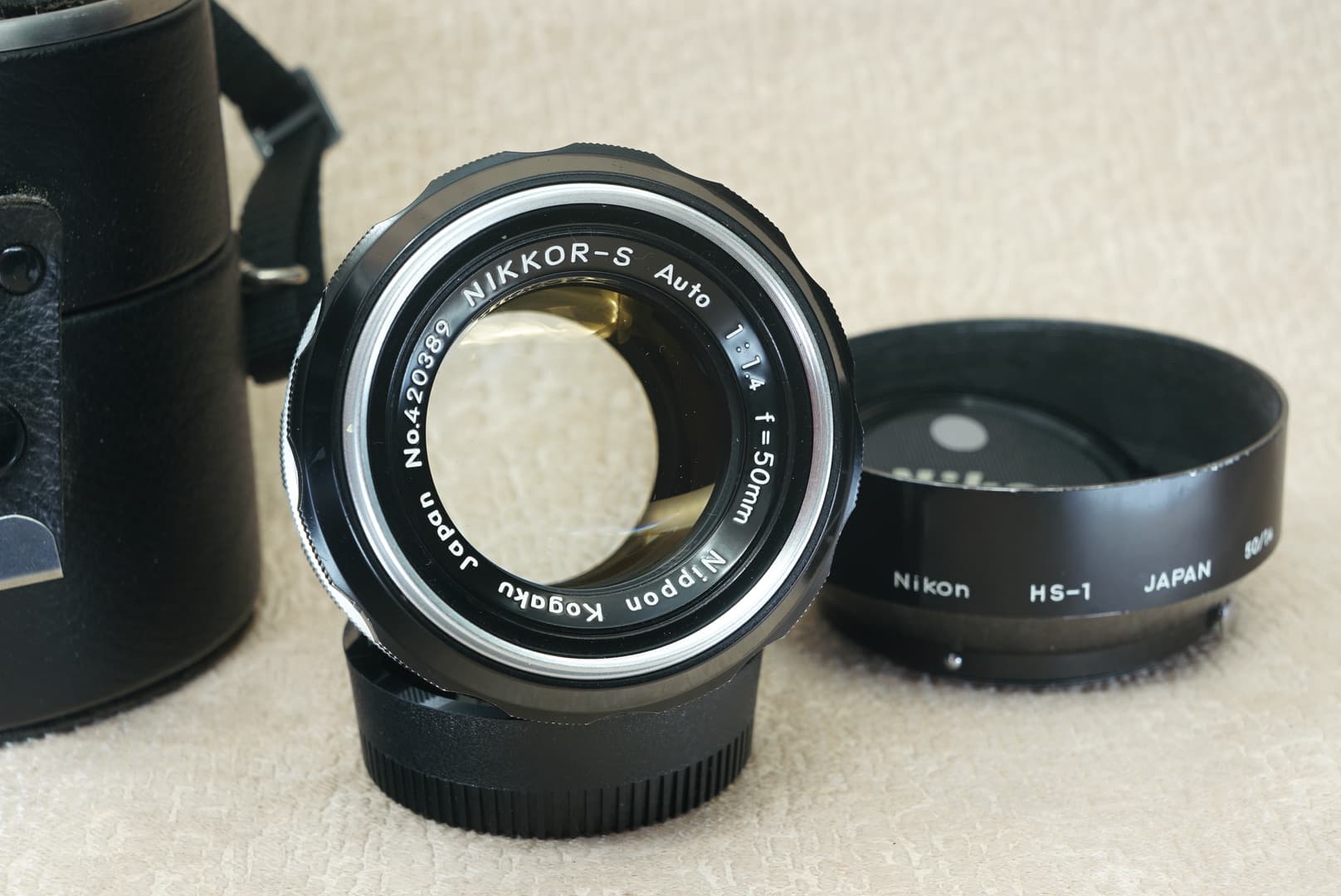
The Nikon Nikkor 50mm f/1.4 AI represents a pivotal moment in Nikon's F-mount history, introduced in 1977 as part of the Automatic Maximum Aperture Indexing (AI) system overhaul. This wasn't merely a cosmetic update—it fundamentally changed how Nikon lenses communicated with camera bodies, replacing the dangerous 'fork' coupling of pre-AI lenses with a machined ridge on the aperture ring that safely indexed maximum aperture. The optical formula itself was refined from the earlier Nikkor-S and Nikkor-N Auto versions, incorporating Nikon's improved Nikon Integrated Coating (NIC) multicoating technology. Nikon engineers retained the proven 7-element, 6-group Double-Gauss derivative design but optimized coatings for better flare resistance and color neutrality. While it never acquired dramatic community nicknames like some Soviet or German lenses, the 50mm f/1.4 AI became simply 'the standard' against which other normal lenses were measured. Its cult following stems from representing peak mechanical Nikon craftsmanship—the era before autofocus and cost-cutting plastic construction. Photographers who used these professionally in the late 1970s and 1980s developed deep muscle memory with the buttery 7-blade aperture ring and silky helicoid focus. Today's devotees prize it as an affordable entry into vintage Nikon glass that delivers genuinely professional results, particularly portrait and street photographers seeking organic rendering without the clinical precision of modern optics.
สรุป: The Nikon Nikkor 50mm f/1.4 AI is the quintessential 'serious amateur to working professional' standard lens of its era—mechanically superb, optically capable, and aesthetically timeless. It's ideal for photographers who appreciate the tactile experience of manual focus and want organic, film-era rendering without the quirks or compromises of more exotic vintage glass. Portrait photographers will love the wide-open glow and skin-friendly color science. Street photographers will value its compact size and hyperfocal reliability stopped down. Those seeking absolute clinical sharpness wide open should look to modern aspherical designs, but they'll sacrifice the dimensional character that makes this lens special. Buy this lens if you want an affordable, robust gateway into the Nikon manual focus ecosystem—and keep it forever as a reference for what 'the Nikon look' truly means.
เรียบเนียนและเป็นกลางพร้อมกับโบเก้ที่นุ่มนวลเมื่อเปิดรูรับแสงกว้าง มีการขีดเส้นขอบน้อยมาก และมีจุดไฮไลต์ที่มีลักษณะเป็นรูปเจ็ดเหลี่ยมเล็กน้อยเมื่อปรับรูรับแสงลงต่ำกว่า f/2 เนื่องจากมีใบรูรับแสง 7 ใบ
มีอุณหภูมิสีที่อบอุ่นเล็กน้อยและเป็นธรรมชาติ พร้อมการสร้างโทนสีผิวที่ยอดเยี่ยม สีแดงและสีเหลืองมีความเข้มข้นแต่ไม่มากเกินไป อบอุ่นกว่ารุ่น Nikkor สมัยใหม่
ความคมชัดที่กลางภาพดีแต่ไม่โดดเด่นเมื่อเปิดรูรับแสงกว้าง; จะดีเยี่ยมเมื่อที่ f/2.8 โดยมีประสิทธิภาพสูงสุดที่ f/5.6-f/8 ทั่วทั้งเฟรม.
การเคลือบหลายชั้นของ NIC สามารถจัดการกับแสงตรงได้อย่างเหมาะสม แต่ควรคาดหวังถึงการเกิดแสงแฟลร์ที่มีโทนสีอบอุ่นและการเกิดภาพซ้อนสีเขียว/ม่วงเมื่อมีแหล่งแสงจุดสว่าง.
คอนทราสต์ทั่วโลกอยู่ในระดับปานกลางเมื่อเปิดรูรับแสงกว้างเนื่องจากการสะท้อนแสงและความผิดปกติแบบทรงกลม ซึ่งจะเพิ่มขึ้นอย่างมีนัยสำคัญเมื่อใช้รูรับแสง f/2.8 และยังคงรักษาลักษณะโทนสีแบบฟิล์มไว้ได้ตลอดเวลา
มีการเบลอที่ f/1.4 (ประมาณ 1.5-2 สต็อปที่มุมในกล้องฟูลเฟรม) ลดลงเหลือประมาณ 0.5 สต็อปที่ f/2.8 และจะไม่สำคัญอีกต่อไปที่ f/4
อะแดปเตอร์จริงจากร้านที่ใช้กับเมาท์ของเลนส์นี้ได้
Standard · ฿540 · มีสินค้า
Standard · ฿540 · มีสินค้า
Standard · ฿540 · มีสินค้า
Standard · ฿1,250 · มีสินค้า
Standard · หมด
The Nikon Nikkor 50mm f/1.4 AI is the quintessential 'serious amateur to working professional' standard lens of its era—mechanically superb, optically capable, and aesthetically timeless. It's ideal for photographers who appreciate the tactile experience of manual focus and want organic, film-era rendering without the quirks or compromises of more exotic vintage glass. Portrait photographers will love the wide-open glow and skin-friendly color science. Street photographers will value its compact size and hyperfocal reliability stopped down. Those seeking absolute clinical sharpness wide open should look to modern aspherical designs, but they'll sacrifice the dimensional character that makes this lens special. Buy this lens if you want an affordable, robust gateway into the Nikon manual focus ecosystem—and keep it forever as a reference for what 'the Nikon look' truly means.