เลนส์มือหมุน
|
เลือกชมตำนานเลนส์บทความAI แนะนำ
เข้าสู่ระบบ
Lens Heritage/Pentacon

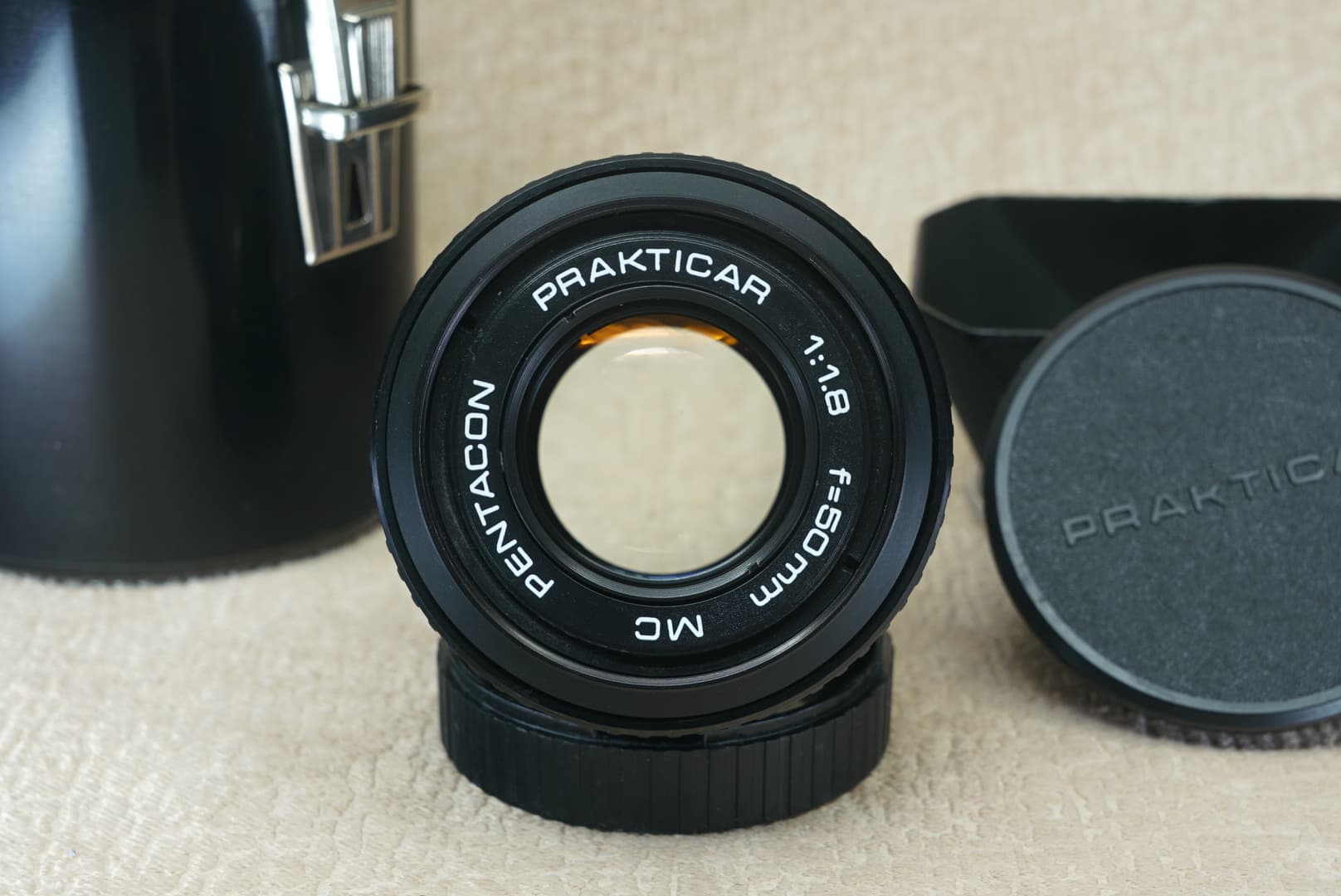
Pentacon Pentacon 50mm f1.8

M42 screw mount · 50mm · f/1.8

Pentacon Pentacon 50mm f1.8 heritage lens body

ปีผลิต

1968 – 1979

ผลิตที่

East Germany (DDR)

สูตรเลนส์

Double-Gauss derivative, 6 elements in 4 groups

อัปเดต

1 ก.พ. 2569

เรื่องราวของเลนส์

The Pentacon 50mm f/1.8 was produced by VEB Pentacon in Dresden, East Germany, a company that emerged from the remnants of several prestigious pre-war German optical manufacturers including Zeiss Ikon, Meyer-Optik Görlitz, and others consolidated under state ownership in the German Democratic Republic. Production began in the late 1960s and continued through the 1970s. The lens was designed as an affordable standard lens for Praktica cameras, which were workhorses of the Eastern Bloc photographic industry. Unlike the more prestigious Carl Zeiss Jena lenses, Pentacon-branded optics were positioned as budget alternatives, though they still benefited from the region's deep optical heritage. The lens utilized a relatively simple double-Gauss derived formula, optimized for cost-effective mass production while maintaining respectable performance. Within the vintage lens community, this lens is sometimes grouped under the broader 'Iron Curtain' designation referring to Eastern European optics, though it lacks a specific individual nickname. It has developed a modest cult following among budget-conscious vintage shooters who appreciate its character-rich rendering at a fraction of the cost of Carl Zeiss Jena equivalents. The lens represents an interesting piece of Cold War industrial history, where state-controlled factories attempted to democratize photography behind the Iron Curtain.

สรุป: The Pentacon 50mm f/1.8 is the thinking photographer's budget vintage lens - it won't wow you with optical excellence, but it delivers consistent character and genuine East German heritage at a price point that makes experimentation risk-free. It's ideal for photographers exploring vintage rendering who aren't ready to invest in premium Carl Zeiss Jena glass, portrait shooters seeking organic softness without digital filters, and collectors interested in Cold War-era photographic history. This is not a lens for pixel-peepers or anyone requiring corner-to-corner sharpness. Instead, it rewards those who value mood over measurement and story over specification.

คาแรกเตอร์ของภาพ

โบเก้

โดยทั่วไปแล้วมีความนุ่มนวลแต่ไม่มีอะไรโดดเด่น โดยมีวงกลมไฮไลต์ที่ขอบนุ่ม ไม่มีเอฟเฟกต์แหวนหัวหอมมากนัก และมีความกระวนกระวายเล็กน้อยในพื้นหลังที่ซับซ้อน

โทนสี

อบอุ่นโดยมีความอิ่มตัวที่ลดลง ให้โทนสีผิวทองที่ดูน่าชื่นชม และมีการบิดเบือนสีที่เห็นได้ชัดในโทนม่วง/เขียวที่ขอบกรอบภาพ

ความคม (เปิดสุด)

กลางภาพมีความคมชัดในระดับที่น่าพอใจเมื่อเปิดรูรับแสงกว้าง พร้อมกับมีอาการเรืองแสง โดยจะมีการปรับปรุงอย่างเห็นได้ชัดเมื่อใช้รูรับแสงที่ f/2.8 และจะคมชัดที่สุดที่ f/5.6 ถึง f/8 ขณะที่มุมภาพยังคงมีความนุ่มนวลตลอดช่วงรูรับแสง

แฟลร์

มีแนวโน้มที่จะเกิดการแผ่แสงและภาพซ้อน; รุ่นที่เคลือบเดี่ยวจะมีความไวต่อปัญหานี้สูง ในขณะที่รุ่นที่เคลือบหลายชั้นจะทำงานได้ดีกว่า แต่ยังคงแสดงลักษณะเฉพาะเมื่อถ่ายในสภาพแสงย้อน.

คอนทราสต์

คอนทราสต์ทั่วโลกอยู่ในระดับปานกลางพร้อมกับไมโครคอนทราสต์ที่ลดลง; คอนทราสต์จะลดลงอย่างเห็นได้ชัดเมื่อเปิดรูรับแสงกว้าง และจะดีขึ้นอย่างมีนัยสำคัญเมื่อปรับรูรับแสงลงไปที่ f/4 หรือน้อยกว่า

วิกเน็ตติ้ง

มีการเกิด vignetting ที่ชัดเจนเมื่อเปิดรูรับแสงกว้าง (ประมาณ 1.5-2 สต็อปที่มุม) ซึ่งจะลดลงอย่างต่อเนื่องและแทบจะไม่สังเกตเห็นเมื่อใช้รูรับแสงที่ f/4

รีวิวจากผู้ใช้

ข้อดี
  • Extremely affordable entry point into vintage German glass, often available for under $30
  • Pleasant, character-rich rendering that adds vintage atmosphere without heavy post-processing
  • Solid all-metal construction that feels substantial and durable despite budget positioning
  • Smooth focusing action with adequate throw for precise manual focus
  • Flattering portrait rendering with gentle skin smoothing effect wide open
  • Historical interest as an artifact of East German optical industry
  • Lightweight and compact compared to many vintage 50mm alternatives
ข้อเสีย
  • Soft wide-open performance that limits use for critical work
  • Corner softness persists even when stopped down significantly
  • Chromatic aberration is pronounced in high-contrast scenes
  • Flare resistance is poor, especially on single-coated versions
  • Build quality, while decent, does not match Carl Zeiss Jena equivalents
  • Unremarkable bokeh that can appear busy in complex backgrounds
  • M42 mount requires adapters for modern cameras, adding bulk and potential complications
เทคนิคการใช้
  • Use a lens hood religiously - the single-coated versions especially benefit enormously from flare protection
  • Embrace f/2.8-f/4 as your working aperture range for best balance of character and sharpness
  • For the dreamiest portraits, shoot wide open in soft, diffused light to maximize the glow effect
  • Focus slightly past your subject when shooting wide open to compensate for field curvature
  • Pair with cameras that have good shadow recovery - the low contrast leaves headroom for post-processing
  • Consider using this lens for video work where the soft rendering can reduce moiré and aliasing
  • Clean the front element carefully - uncoated or lightly coated glass scratches more easily than modern lenses

ภาพตัวอย่าง

แหล่งอ้างอิง (1)

LLM generated secondaryAI สรุป

The Pentacon 50mm f/1.8 was produced by VEB Pentacon in Dresden, East Germany, a company that emerged from the remnants of several prestigious pre-war German optical manufacturers including Zeiss Ikon, Meyer-Optik Görlitz, and others consolidated under state ownership in the German Democratic Republic. Production began in the late 1960s and continued through the 1970s. The lens was designed as an affordable standard lens for Praktica cameras, which were workhorses of the Eastern Bloc photographic industry. Unlike the more prestigious Carl Zeiss Jena lenses, Pentacon-branded optics were positioned as budget alternatives, though they still benefited from the region's deep optical heritage. The lens utilized a relatively simple double-Gauss derived formula, optimized for cost-effective mass production while maintaining respectable performance. Within the vintage lens community, this lens is sometimes grouped under the broader 'Iron Curtain' designation referring to Eastern European optics, though it lacks a specific individual nickname. It has developed a modest cult following among budget-conscious vintage shooters who appreciate its character-rich rendering at a fraction of the cost of Carl Zeiss Jena equivalents. The lens represents an interesting piece of Cold War industrial history, where state-controlled factories attempted to democratize photography behind the Iron Curtain.