Production
1987
Country
Japan (probable, OEM uncertain)
Optical
-
Updated
Feb 4, 2026
Canon FD · 70mm · f/4.5
Production
1987
Country
Japan (probable, OEM uncertain)
Optical
-
Updated
Feb 4, 2026
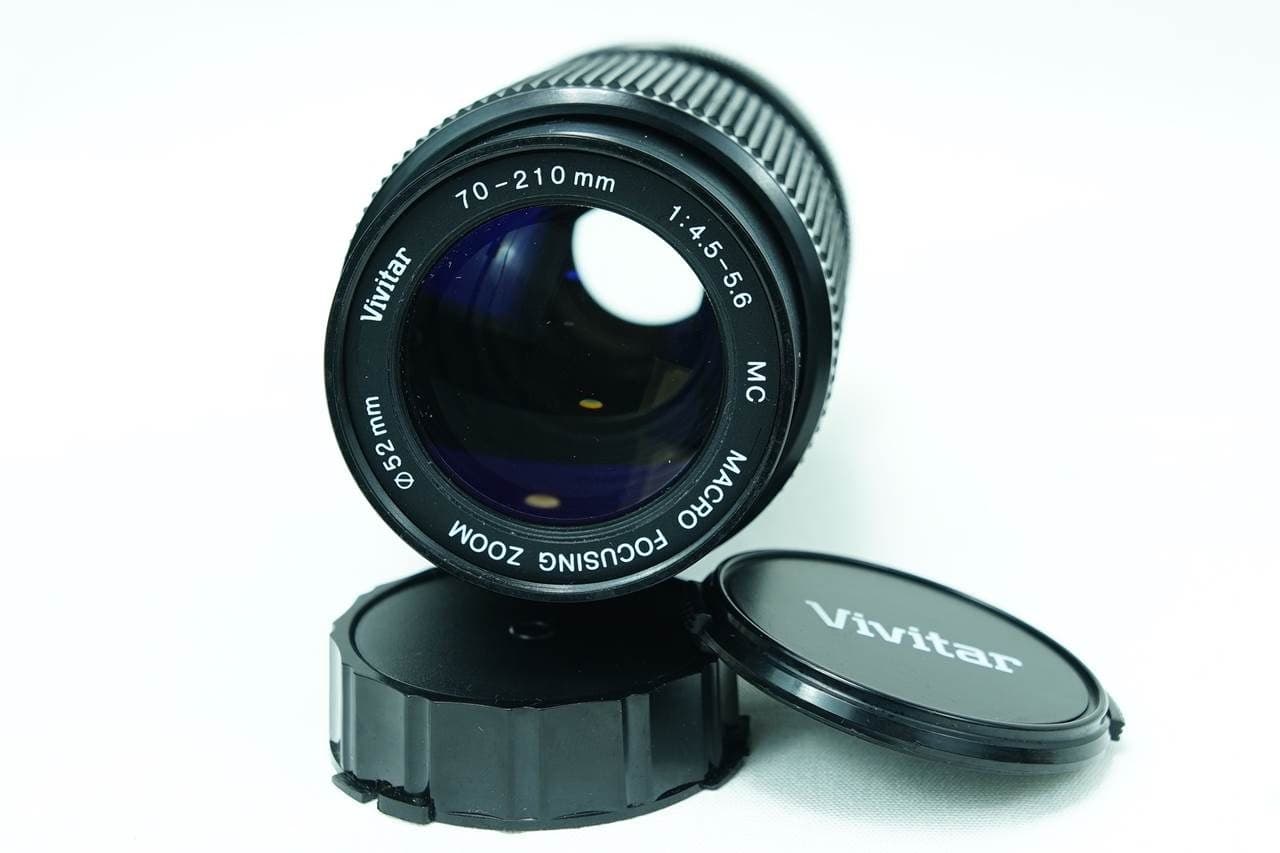
The Vivitar 70-210mm f/4.5-5.6 Macro Focusing Zoom represents the final evolution of Vivitar's consumer-grade telephoto zoom strategy from the late 1980s. Vivitar, the American marketing company headquartered in Santa Monica, California, never manufactured its own lenses but instead contracted various OEM manufacturers, primarily in Japan and Korea, to produce optics under the Vivitar brand. This particular lens was part of the 'Series 1' budget alternative line, designed to offer focal length versatility at an extremely aggressive price point during an era when Japanese camera manufacturers were pushing autofocus technology. The lens was likely manufactured by Cosina, Kiron (Kino Precision), or possibly Korean manufacturers like Samyang, though definitive OEM attribution remains elusive for this specific model. Unlike its prestigious Series 1 siblings which earned genuine cult followings (such as the legendary 70-210mm f/2.8-4 designed by Kiron), this variable aperture version was positioned as an entry-level option for budget-conscious photographers upgrading from kit lenses. It carries no established nicknames in the photography community and has not developed a cult following. The lens represents the compromises inherent in 1980s consumer zoom design: maximum focal range and minimum cost, achieved through simplified optical formulas and plastic construction elements. It was sold during the twilight years of manual focus supremacy, just before autofocus rendered many third-party manual focus zooms obsolete virtually overnight.
Verdict: The Vivitar 70-210mm f/4.5-5.6 Macro Focusing Zoom is an honest budget lens from an era of compromises—it delivered acceptable telephoto reach to photographers who couldn't afford premium glass. Today, it serves best as an ultra-cheap introduction to vintage telephoto photography for complete beginners, a backup lens, or a 'beater' lens for harsh conditions where risking expensive glass would be unwise. It holds no collectible value and produces no distinctive rendering that would attract creative shooters seeking vintage character. For anyone willing to spend even marginally more ($50-100), superior options abound—including Vivitar's own Series 1 70-210mm f/2.8-4, which offers genuinely compelling performance. This lens is for the pragmatist who needs telephoto reach immediately, cheaply, and with zero emotional investment in the outcome.
Unremarkable and often busy bokeh with oval highlights wide open becoming polygonal stopped down, exhibiting nervous characteristics with complex backgrounds.
Neutral to slightly cool color rendering with modest saturation, lacking richness of premium coatings.
Center sharpness acceptable at mid-focal lengths (100-135mm) stopped to f/8, soft wide open throughout, corners remain compromised even stopped down.
Poor flare resistance with pronounced ghosting artifacts and veiling flare significantly reducing contrast in backlit situations.
Low to moderate contrast wide open, improving when stopped down to f/8-11, with weak micro-contrast throughout.
Pronounced vignetting wide open at both zoom extremes, may require 2+ stops correction, improves by f/8 but never fully disappears.
The Vivitar 70-210mm f/4.5-5.6 Macro Focusing Zoom is an honest budget lens from an era of compromises—it delivered acceptable telephoto reach to photographers who couldn't afford premium glass. Today, it serves best as an ultra-cheap introduction to vintage telephoto photography for complete beginners, a backup lens, or a 'beater' lens for harsh conditions where risking expensive glass would be unwise. It holds no collectible value and produces no distinctive rendering that would attract creative shooters seeking vintage character. For anyone willing to spend even marginally more ($50-100), superior options abound—including Vivitar's own Series 1 70-210mm f/2.8-4, which offers genuinely compelling performance. This lens is for the pragmatist who needs telephoto reach immediately, cheaply, and with zero emotional investment in the outcome.