Production
1962 – 1971
Country
Japan
Optical
8 elements in 6 groups, modified Planar-type with thorium oxide elements.
Updated
Feb 4, 2026
M42 · 50mm · f/1.4
Production
1962 – 1971
Country
Japan
Optical
8 elements in 6 groups, modified Planar-type with thorium oxide elements.
Updated
Feb 4, 2026
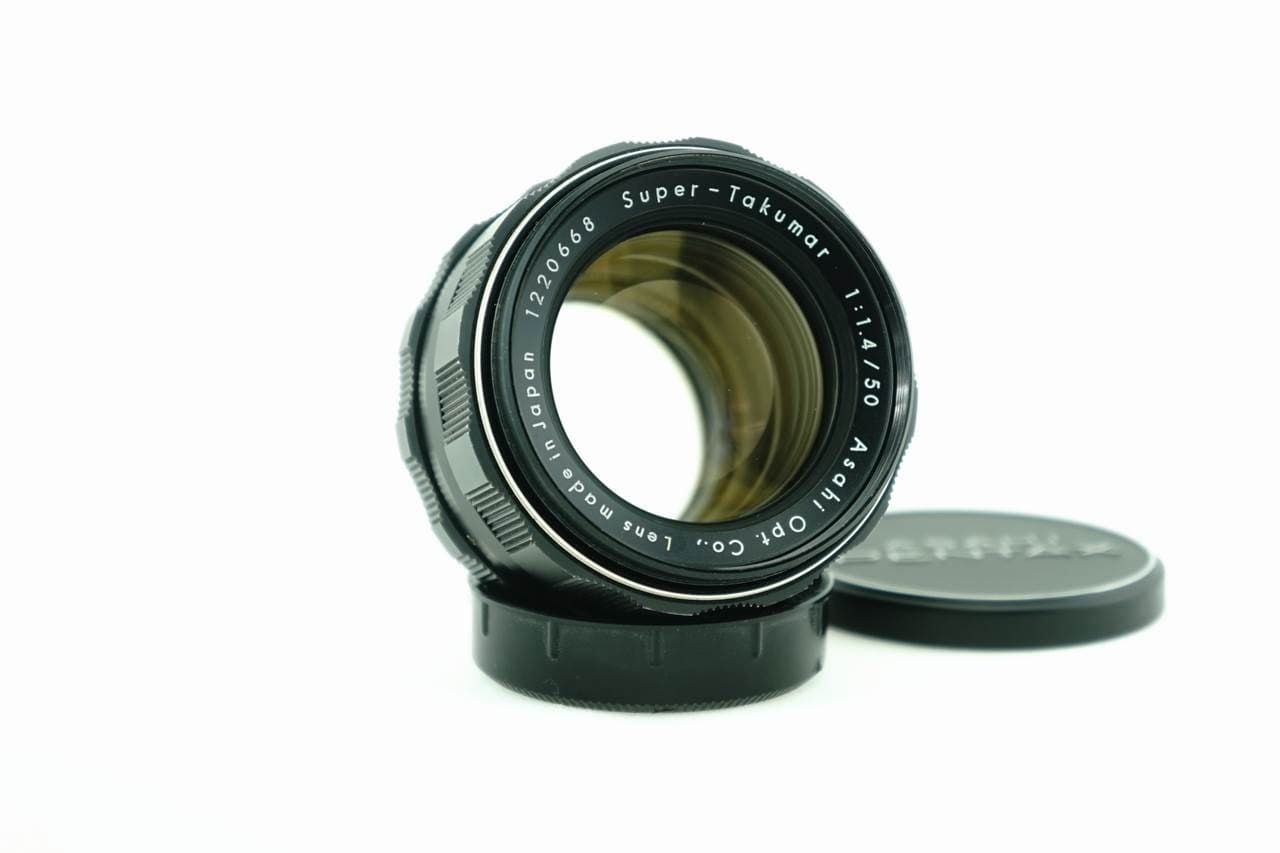
The Takumar 8 Elements refers specifically to the Super-Takumar 50mm f/1.4 featuring an 8-element optical design, produced by Asahi Optical Co. (Pentax) from approximately 1962 to 1971. This lens represents the pinnacle of Takumar 50mm development and is distinct from the later 7-element version. Asahi Optical was competing directly with the German and Japanese optical giants of the era, and the 8-element design was their answer to achieving superior correction for a fast f/1.4 aperture. The lens is often referred to as the 'Radioactive Takumar' or simply '8-element Tak' within collector circles, owing to the thorium oxide used in the rear element group to achieve high refractive index glass for better aberration correction. This thorium content causes the glass to yellow over time, a characteristic that has become both infamous and beloved. The cult following stems from multiple factors: the perceived 'magical' rendering quality attributed to its radioactive elements, the exceptional build quality typical of golden-era Japanese manufacturing, and the distinctive warm-yet-creamy image character. Many photographers specifically seek out yellowed copies, believing the thorium glass contributes to the lens's unique rendering even after UV de-yellowing. The 8-element version is considered superior to the subsequent 7-element Super-Multi-Coated Takumar by many enthusiasts who prize its smoother bokeh and more 'organic' rendering.
Verdict: The 8-element Super-Takumar 50mm f/1.4 is essential for photographers seeking vintage character without sacrificing technical quality. It rewards those who appreciate manual focus craft and understand how to leverage its optical personality. Ideal for portrait photographers, street shooters seeking a filmic look, and collectors wanting a historically significant lens that remains highly practical. Not recommended for those requiring clinical perfection, fast autofocus, or maximum flare resistance. This lens represents the golden age of Japanese optics and delivers images with soul.
Smooth and creamy bokeh with 8-blade aperture producing slightly octagonal highlights when stopped down; gradual out-of-focus transitions with less harshness than 7-element version.
Distinctively warm due to thorium yellowing with rich amber and golden tones; reds and skin tones rendered beautifully, greens tend toward olive.
Excellent center sharpness even wide open at f/1.4 with gentle softness flattering for skin; corners improve by f/2.8 and peak at f/5.6-f/8.
Single-coated elements susceptible to veiling flare and ghosting with magenta/green polygon artifacts; proper hood essential for controlled shooting.
Moderate global contrast wide open, increasing significantly stopped down; exceptional micro-contrast for the era with good shadow detail retention.
Noticeable vignetting wide open (1.5-2 stops in corners), largely eliminated by f/2.8.
The 8-element Super-Takumar 50mm f/1.4 is essential for photographers seeking vintage character without sacrificing technical quality. It rewards those who appreciate manual focus craft and understand how to leverage its optical personality. Ideal for portrait photographers, street shooters seeking a filmic look, and collectors wanting a historically significant lens that remains highly practical. Not recommended for those requiring clinical perfection, fast autofocus, or maximum flare resistance. This lens represents the golden age of Japanese optics and delivers images with soul.